
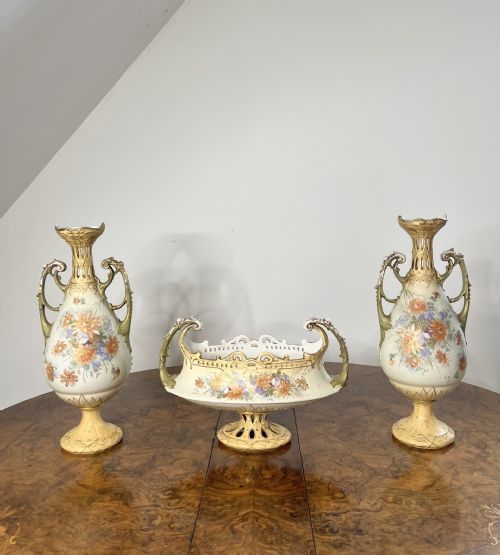


Victorian Floral Mantel Vases
Victorian floral mantel vases bring exuberant 19th-century botanical ornamentation and rich porcelain or bronze forms straight to the domestic hearth.
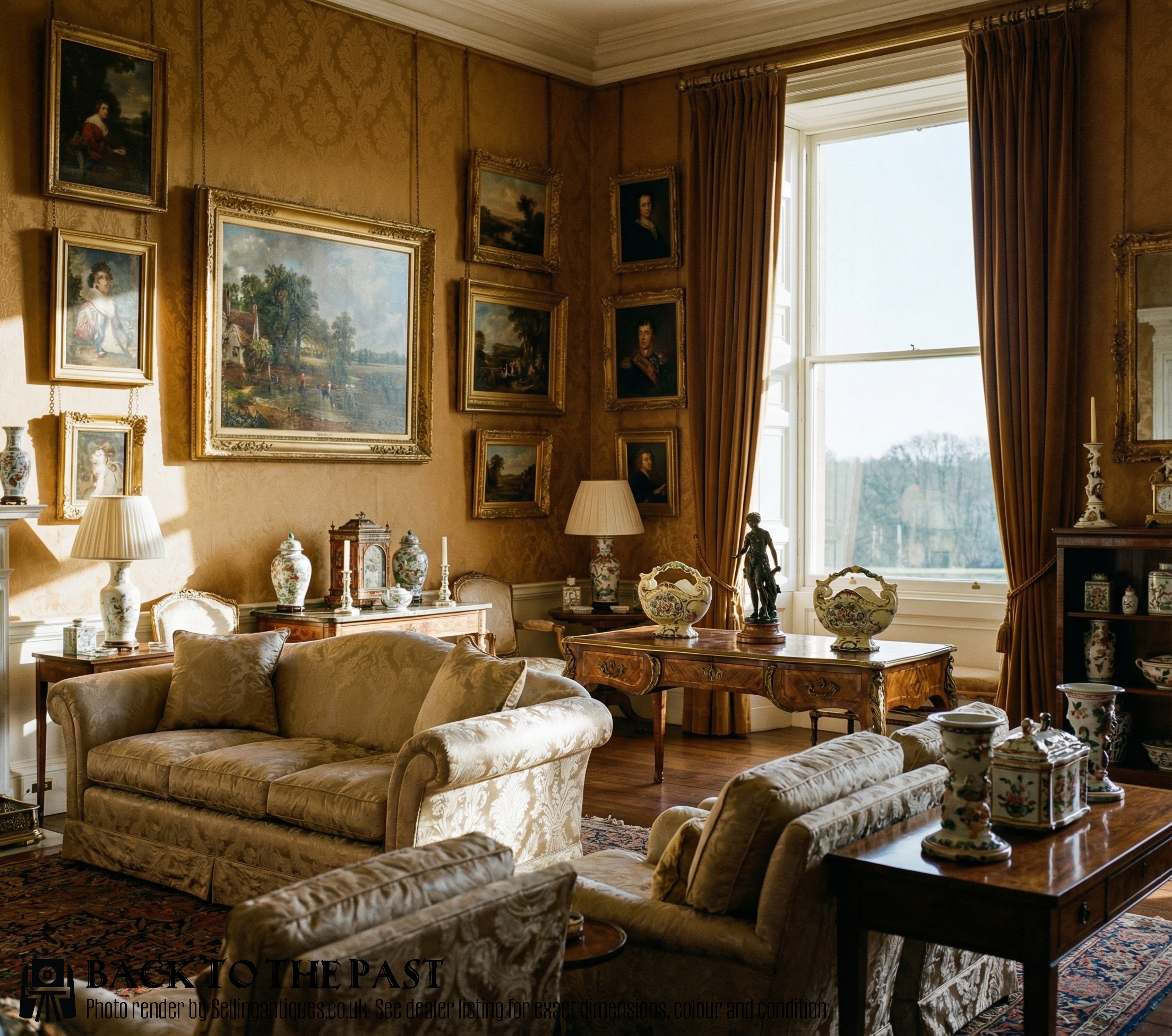
Victorian Floral Mantel Vases
Victorian floral mantel vases comprise decorative vessels, lidded urns, and garniture sets designed specifically to sit upon a fireplace mantelpiece. These pieces frequently emerge as pairs or multi-piece clock garnitures intended for symmetrical display.
The selections span mid-Victorian and late 19th-century origins, alongside continental and Japanese Meiji period imports that reached British homes during the era. Forms range from baluster silhouettes and classical urns to elaborate centrepieces adorned with botanical motifs.
Buyers encounter porcelain, bronze, and enamel constructions displaying hand-painted floral designs and gilt accents. The Victorian appetite for domestic display ensures these mantel vases vary from intimate cabinet pairs to substantial garniture components.
How they were made
Potters and founders utilised porcelain, bronze, brass, and glass as primary bodies, applying glazes and enamel to seal the surfaces. Artisans built up these foundations through traditional casting and throwing techniques before decorating.
Makers applied hand-painted floral designs directly onto the porcelain or enamel grounds, frequently incorporating gold leaf and gilt detailing to catch the flickering light of the hearth. Bronze baluster vases benefited from precise metal casting and patination.
Firing processes in British, continental, and Japanese kilns fixed the vibrant colours and glazes, while garniture sets required careful matching of proportions across multiple vessels to ensure a cohesive mantel display.
Victorian mantel garnitures occasionally include side vases with lids shaped like tiny architectural domes to guard against hearth soot.
What varies in quality
The refinement of the hand-painted floral design dictates the distinction between standard production and superior artistic achievement. Expert brushwork and subtle colour blending elevate specific examples far above repetitive transfer-printed alternatives.
The weight and integrity of the porcelain or bronze body, combined with the crispness of the gilt work and gold leaf application, indicate the maker's original investment of time and materials. Substantial bronze baluster forms and well-balanced lidded urns demonstrate greater structural ambition.
Completeness within garniture sets and the survival of matching side vases or clock components heavily influence the integrity of the grouping. Original gilding condition and the absence of clumsy restoration preserve the authentic character of the period.
Jacob Petit·Royal Vienna·Royal Worcester·Royal Crown Derby·Doulton
The Victorian Floral Mantel Vases Glossary
- Garniture set
- A symmetrical arrangement of three or more decorative vases or urns designed to stand together on a mantelpiece. These sets frequently incorporated a central clock flanked by matching side vases.
- Baluster
- An architectural vase form characterised by a swollen lower portion that tapers towards a narrow neck. This silhouette proved popular for both ceramic and bronze mantel vessels.
- Gilt
- A thin layer of gold applied to the surface of porcelain, bronze, or brass to create decorative highlights. This finish reflects ambient room light and accents the floral motifs.
- Old Paris porcelain
- A term covering various hard-paste porcelain works produced by numerous independent factories in and around Paris during the 19th century. These pieces often feature hand-painted floral designs and rich gilding.
- Enamel
- A glassy substance fused to metal or ceramic surfaces through firing to provide durable colour and decoration. It creates vibrant hues on decorative urns and vases.
Victorian Floral Mantel Vases: Frequently Asked Questions
What is a mantel garniture?
A mantel garniture is a matched set of decorative vessels, often comprising a central clock and two side vases, designed to be displayed together on a fireplace shelf.
During the 19th century, these sets provided a balanced focal point for the main living rooms of Victorian homes.
How were these vases displayed?
Owners placed them prominently along the mantelpiece above the fireplace, often arranging pairs symmetrically around a mirror, clock, or other central hearth ornament.
Their brightly coloured floral designs and gilt highlights were chosen to brighten darker Victorian interiors and catch the light.
Are bronze and porcelain vases from the same period?
Both porcelain and bronze vessels were produced concurrently during the Victorian era, influenced by European revival styles and Japanese Meiji imports.
Manufacturers used different materials depending on the aesthetic requirements of the interior and the prevailing fashion for domestic ornamentation.
How do I spot hand-painted florals?
Hand-painted floral designs show subtle variations in brushstrokes, pigment thickness, and colour shading under magnification, lacking the uniform dot pattern of mechanical printing.
Victorian artisans executed these botanical studies directly onto the glazed porcelain or enamel surfaces before a final firing.