



Antique Glass Tantalus
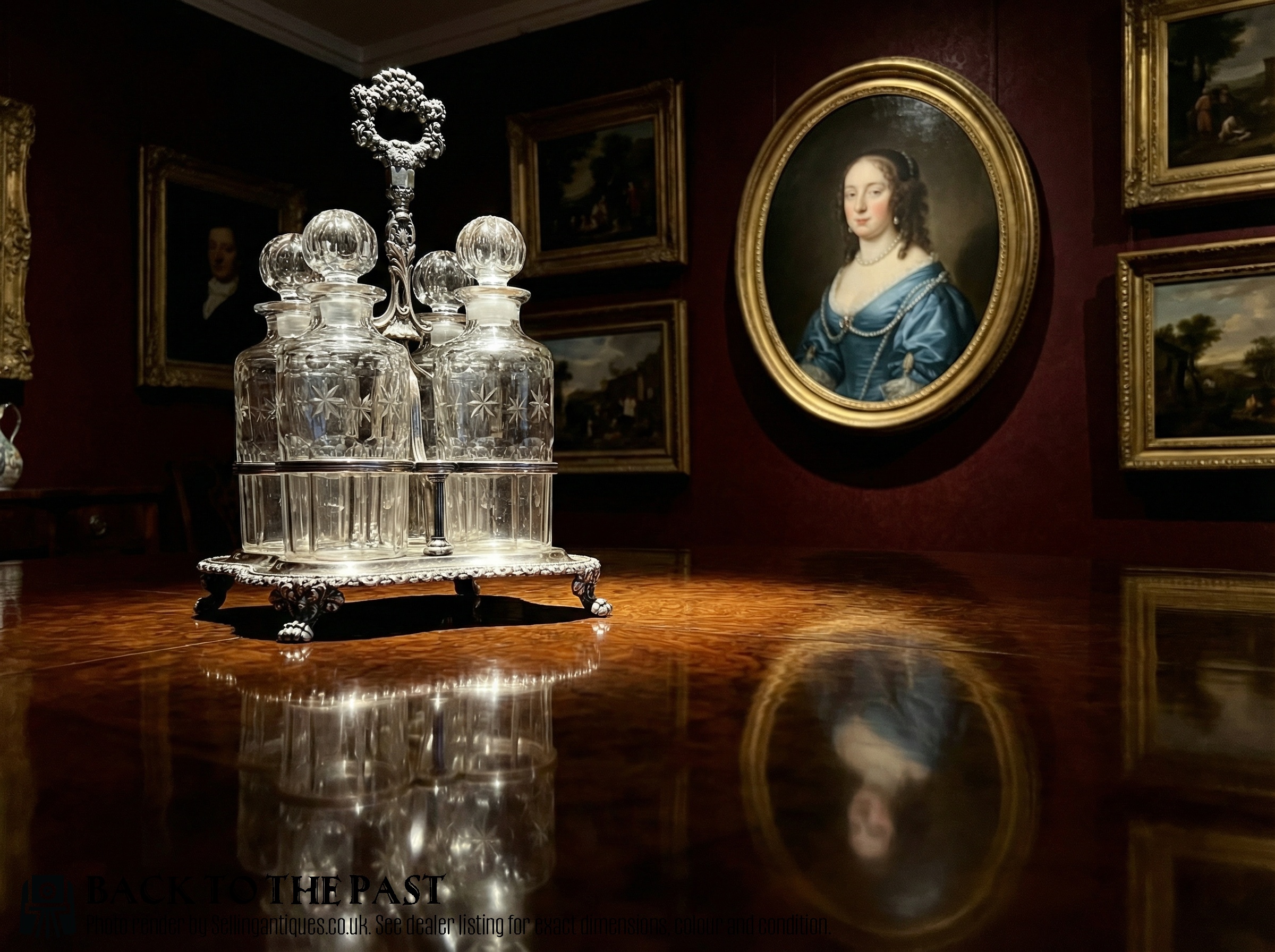
An antique glass tantalus holds locked decanters to secure fine spirits from unauthorised guests while displaying cut crystal.
Antique Glass Tantalus
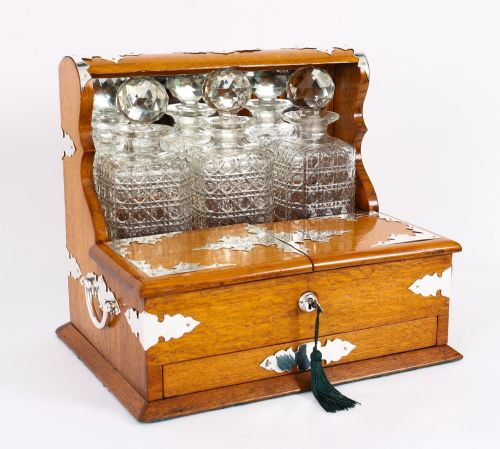
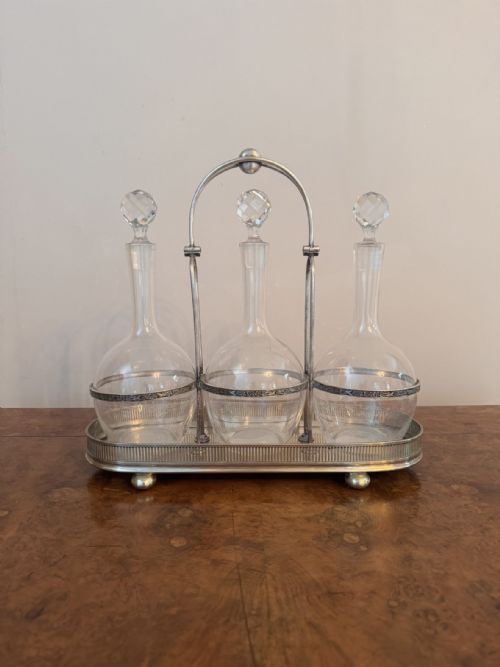
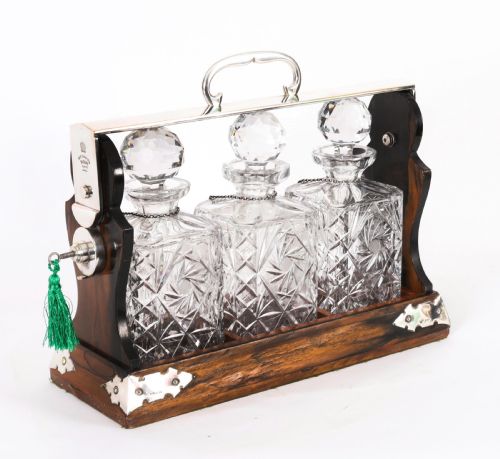
An antique glass tantalus is a locking barware stand designed to secure decanters containing spirits within oak, mahogany, coromandel, or walnut frames. These drinking cabinets emerged during the nineteenth century, appearing frequently in Victorian and Edwardian iterations alongside later French cave a liqueur designs.
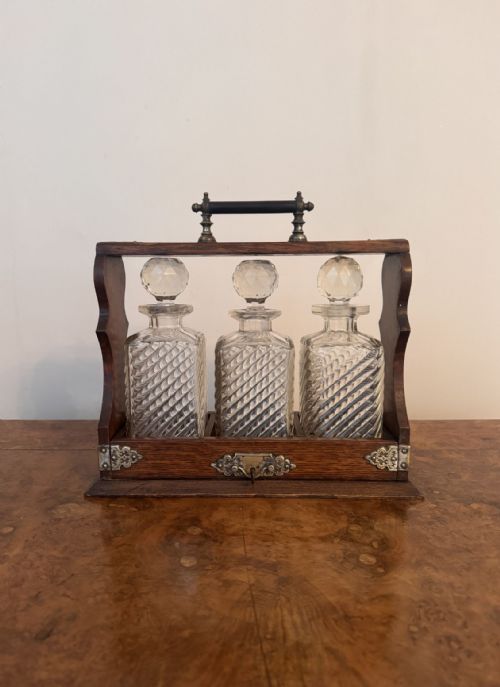
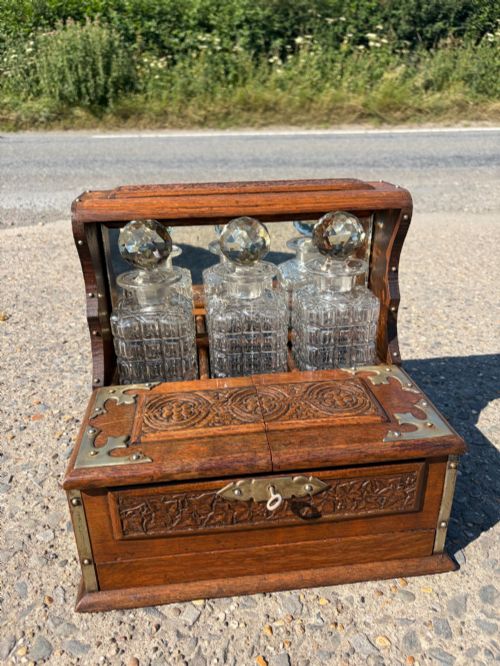
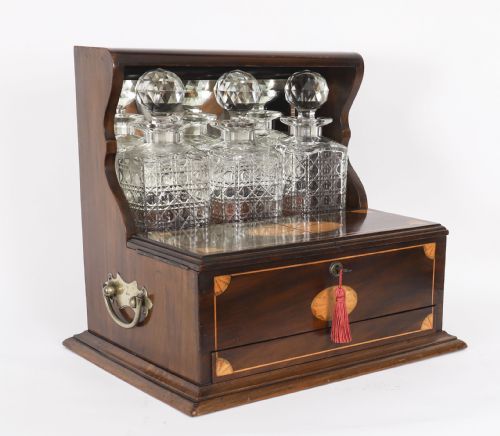
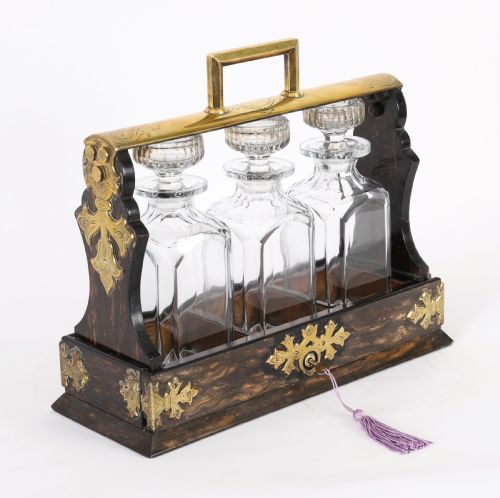
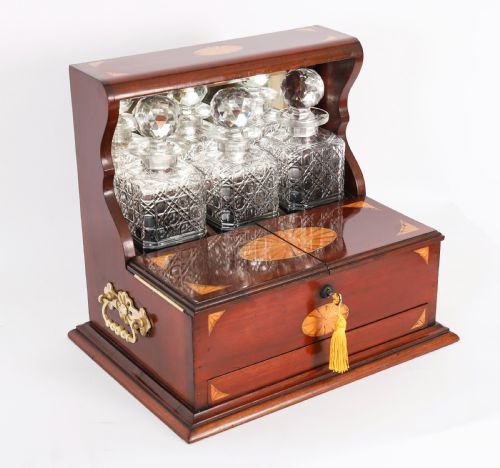
The version most commonly met on this page is the three-bottle oak or coromandel frame fitted with cut crystal decanters and a silver-plated locking mechanism. Such pieces often incorporate brass mounts, marquetry stringing, or integrated games compendiums with cards and counters.
Alternative forms span single-bottle cased pieces, four-decanter boxes, and French ormolu-mounted glass liquor cinders. They serve as functional barware that combines secure storage with ornamental display.
How they were made
Frames are constructed from dense hardwoods like oak, mahogany, walnut, and exotic coromandel, frequently enhanced with brass handles, hinges, and inlay. Cabinetmakers joined these timbers to withstand the weight of heavy glass bottles and the stress of locking mechanisms.
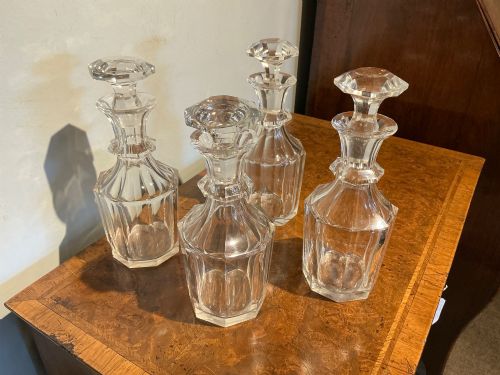
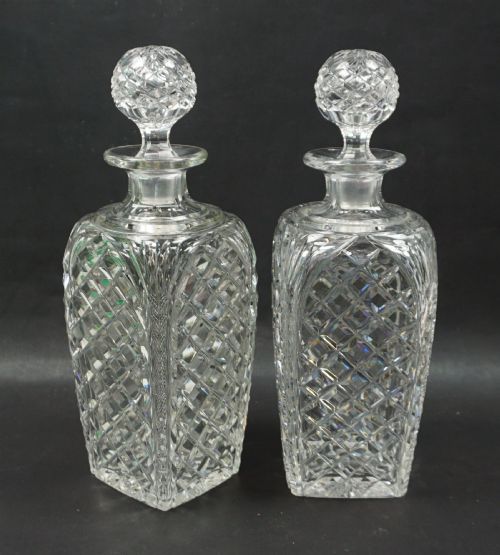
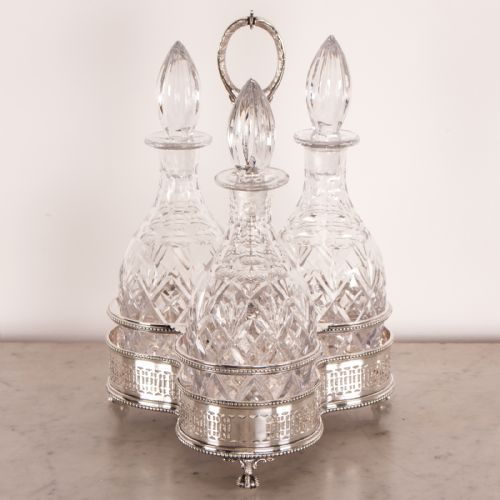
Decanters and stoppers utilise heavy lead glass or crystal, shaped through blowing and deep wheel-cutting to scatter light across geometric patterns. Metal components rely on silver plating, brass, or ormolu, secured to the wood to restrain the glass necks when the locking bar engages.
Several tantalus sets double as games compendiums, ensuring guests could gamble while being kept at a safe distance from the whisky.
What varies in quality
Quality rests in the weight and clarity of the crystal decanters, the precision of the wood joinery, and the complexity of the locking mechanism. Superior examples feature matching numbered stoppers, robust silver-plated mounts, and integrated games drawers with complete internal fittings.
Makers integrated structural elements such as brass framing and marquetry stringing to elevate utilitarian containers into formal drawing-room furnishings. Plain timber cases with moulded glass sit at the accessible end of the scale, while heavily mounted coromandel with fully functioning locking bars represent more ambitious production.
Betjemann·Walker And Hall·Elkington·Baccarat
The Antique Glass Tantalus Glossary
- Tantalus
- A locking drink cabinet that holds decanters by their necks so the stoppers cannot be removed while the bar is engaged. It derives its name from the mythological figure punished by eternal thirst.
- Cave a Liqueur
- A French portable liquor chest, often lined with velvet or mirror glass and fitted with gilt or ormolu mounts to house small decanters and glasses. These canteens display continental craftsmanship distinct from English tantalus frames.
- Compendium
- A multi-purpose box combining a tantalus with compartments for playing cards, dice, and games counters. These dual-function items suited Victorian and Edwardian entertaining spaces.
- Coromandel
- A dense, heavily figured timber from South East Asia used for luxury nineteenth-century cabinet work. Its dark grain and golden contrasting streaks make it a prized material for tantalus frames.
- Silver Plate
- A layer of silver fused to a base metal, commonly utilised for the locking bars, handles, and gallery rails of late Victorian and Edwardian barware.
Antique Glass Tantalus: Frequently Asked Questions
How does a tantalus lock work?
A vertical metal bar passes across the necks of the glass decanters and secures into a baseplate governed by a key-operated lock. When engaged, the bar prevents the stoppers from being lifted or the bottles from being removed from their stalls.
Opening the lock allows the bar to swing or lift clear, releasing the decanters for pouring while keeping the bottles anchored during transport.
What is a cave a liqueur?
A cave a liqueur is the French equivalent of a tantalus, typically presented as a hinged box or cabinet lined with velvet to hold small decanters and cordial glasses.
These pieces often feature ormolu mounts and marquetry, designed to sit on a side table for after-dinner service rather than featuring an external locking metal bar.
How do I care for wooden frames?
Maintain the timber by applying a microcrystalline wax to nourish the grain and protect the polished surface from moisture rings left by glasses.
Avoid placing wooden frames near direct heat sources or in damp environments, which can cause the timbers to warp and the brass or silver-plated mounts to tarnish.
Are the stoppers original to the decanters?
Original stoppers generally share the same cut-glass pattern, tint, and internal grinding marks as the neck of the matching decanter.
Inspect the ground-glass fittings for matching numbers or shared wear patterns to confirm whether the decanters retain their original factory-paired components.