
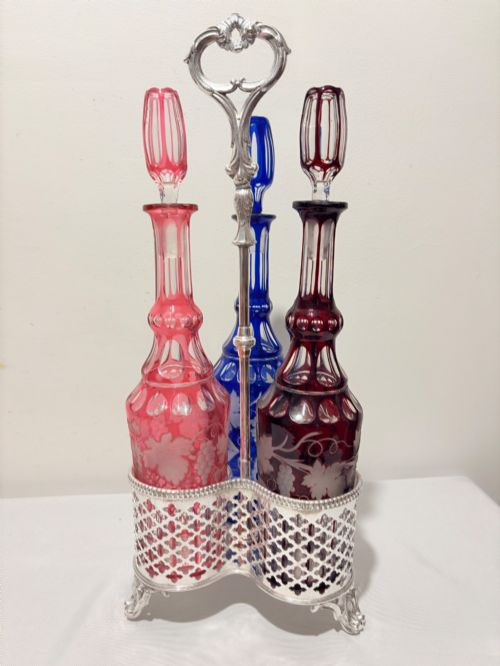
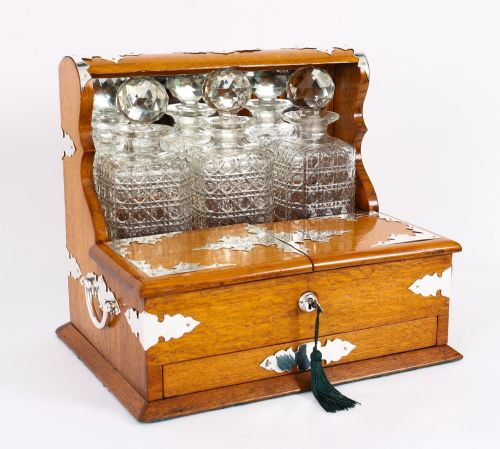
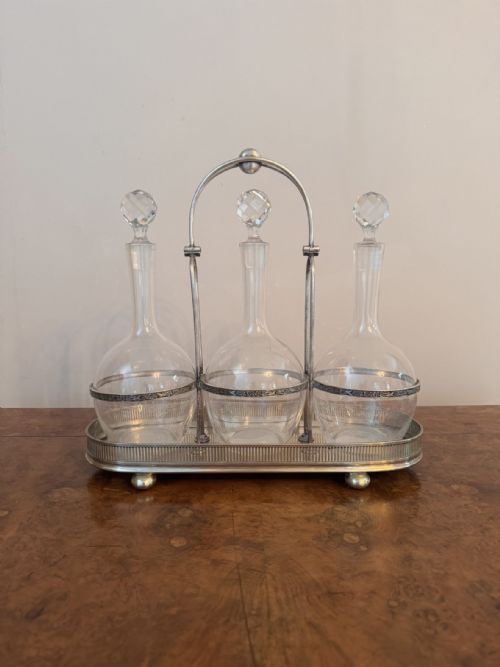
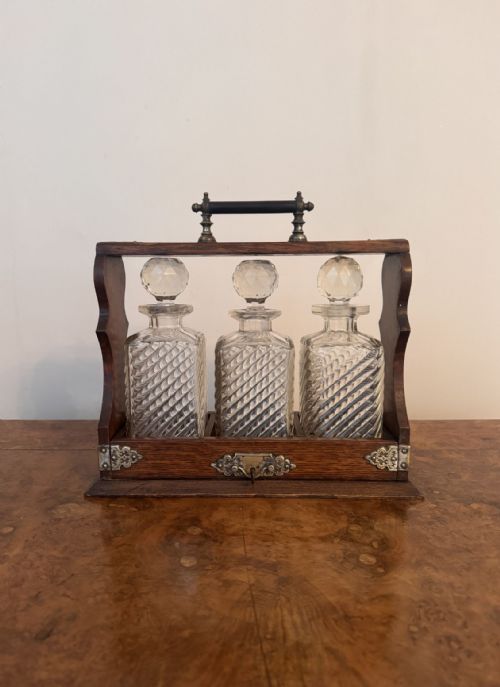
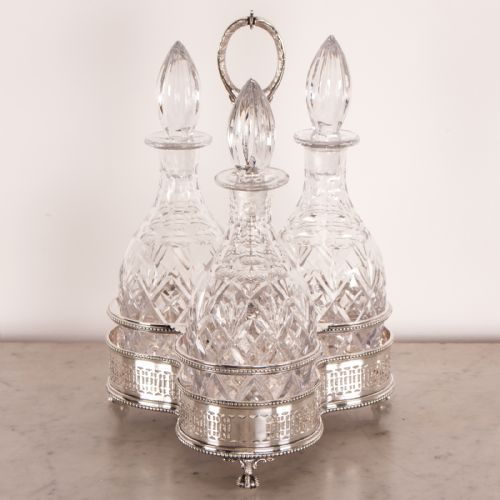


Antique Silver Tantalus Set
An antique silver tantalus set locks away spirits in style, combining heavy oak or coromandel frameworks with gleaming silver plate and cut crystal decanters.
Antique Silver Tantalus Set
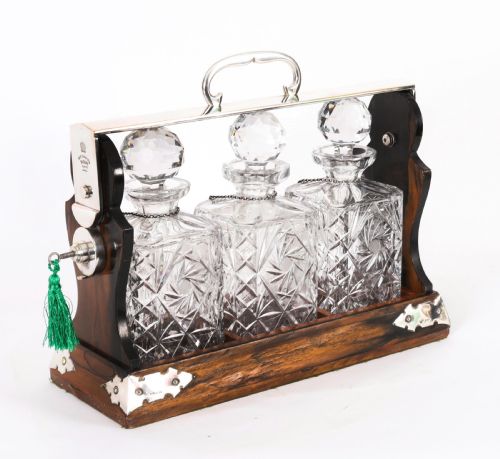
An antique silver tantalus set houses cut crystal decanters inside a lockable wooden frame secured by metal mechanisms. These pieces served as after-dinner bars in Victorian and Edwardian homes, keeping expensive spirits safe from unauthorized access by staff or guests.
Pieces span from the 1860s through the Edwardian era and into the 1920s, showing shifts from ornate mid-Victorian frames to sturdy oak dry bars. Makers utilised precious hardwoods like coromandel and blonde oak to house cut glass crystal barrels and decanters.
Materials and construction methods
Craftsmen built the framework using solid oak, coromandel, or mahogany, often housing them with integrated brass handles and locks. Woodworkers joined the timber compartments securely to support the heavy weight of full glass decanters during transport or daily use.
Metalworkers applied silver plate or Old Sheffield plate over base metals to create the locking mechanisms, swing frames, and bottle collars. Glassblowers and cutters produced heavy cut crystal decanters, frosted barrels, and tot pails designed to fit precisely into the frames.
Listings feature oak, coromandel, and mahogany woods paired with silver plate, brass, cut crystal, and frosted glass across Victorian and Edwardian periods.
Distinguishing features of superior examples
The sophistication of the locking mechanism separates standard production pieces from finer masterworks. Elaborate spring-loaded bars that release all three decanters simultaneously demand precise engineering compared to simpler drop-down locking plates.
Walker and Hall·Betjemann·Elkington·The Goldsmith Co·Hukin and Heath·Philip Ashberry·Mappin Brothers
The Antique Silver Tantalus Set Glossary
- Tantalus
- A locking drink cabinet or stand that holds decanters securely by their stoppers so the bottles cannot be removed without a key. The name derives from Greek mythology, as the drinks remain visible yet tantalisingly out of reach.
- Games compendium
- A multi-game box often built into the base or sides of a tantalus, containing items for cards, chess, or dominoes. These combined units served as complete after-dinner entertainment centres.
- Old Sheffield plate
- An early form of composite metal made by fusing a thin sheet of silver to a thicker copper base before rolling them together. This technique predates modern electroplating and leaves subtle copper edges visible on wear points.
- Coromandel
- A dense, heavily figured tropical hardwood imported from Asia, prized for dark brown grain patterns with contrasting lighter streaks. Cabinetmakers reserved this expensive timber for luxury Victorian boxes and tantalus frames.
- Cruet
- A small stand supporting glass bottles or cruets for condiments, oils, or liqueurs, sharing similar silver-plated framework designs with barware stands.
Antique Silver Tantalus Set: Frequently Asked Questions
How does the locking mechanism work?
A key turns the lock to lower or release the metal retention bar running across the glass stoppers. When locked, the bar prevents any decanter from being lifted out of the wooden base.
Opening the mechanism requires the original key or a well-matched replacement that operates the internal spring bolt. Many surviving sets lack working keys due to the passage of time.
Can I replace missing decanters?
Finding exact replacement decanters proves difficult because period cut crystal bottles were custom-fitted to individual wooden bases. Glass dimensions and neck heights varied significantly between makers.
Collectors usually seek sets where the decanters match the original cut glass pattern and fit securely into the designated frame apertures.
How do I care for the silver plate?
Clean silver-plated mounts gently using a soft cloth and specialised silver cream to avoid wearing through the thin metal layer to the base brass or copper. Regular light dusting preserves the polished finish.
Keep moisture away from the timber frames and leather gaming surfaces during cleaning to prevent warping or staining the antique wood.
Where were these pieces used?
Victorian and Edwardian hosts placed these sets on sideboards in dining rooms, libraries, or private studies for after-dinner hospitality. They allowed hosts to offer spirits to guests while keeping expensive contents secure from domestic staff.
Travelling variants accompanied owners on carriages or steamships, functioning as portable bars for gentlemen on the move.