
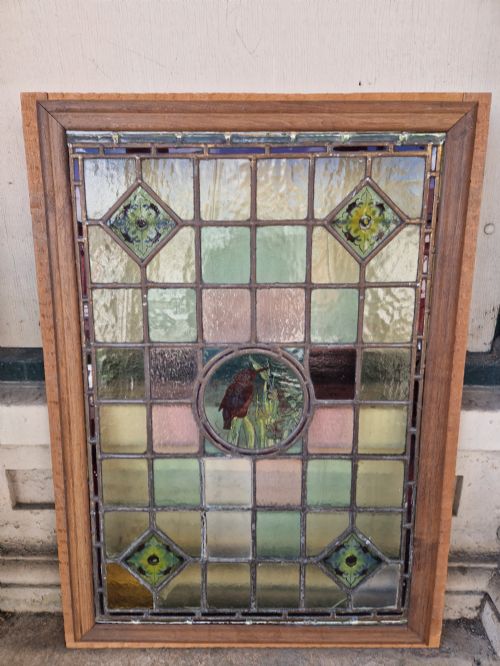


Antique Glass Suncatcher Panel
An antique glass suncatcher panel catches the shifting daylight through leaded and painted glass, bringing rich colour and historic character directly into any room.
Antique Glass Suncatcher Panel
An antique glass suncatcher panel is typically an architectural salvage window or stained glass panel dating from the Victorian, Edwardian, or early twentieth-century periods. These decorative pieces display various artistic styles such as Gothic Revival, Arts and Crafts, Art Nouveau, and Neo-Renaissance.
The versions most commonly met on this page include leaded glass windows featuring hand-painted scenes of knights, countryside views, birds on branches, floral arrangements, religious subjects, and amber bullseyes.
These works function primarily as window inserts or hanging decorative panels that transform interior lighting through coloured glass and traditional lead cames.
How they were made
Maker construction relies on pieces of coloured glass held together by lead channels, known as leaded glass, often framed in wood or pine surrounds. Artisans then applied detailed hand-painting directly onto the glass surface.
Makers incorporated specialist elements such as enamel detailing and glass bullseyes to add texture, depth, and varied light refraction across the panel.
Several panels feature hand-painted birds perched on branches alongside bullseyes designed to catch the early morning light.
What varies in quality
Quality separates standard geometric leadwork from panels featuring intricate, hand-painted pictorial scenes like knights, landscapes, or detailed bird studies. The artistic merit of the painted imagery dictates the overall standing of the piece.
The choice of glass components also alters the character, where standard coloured glass differs from panels incorporating textured amber bullseyes and skilled enamel work.
The Antique Glass Suncatcher Panel Glossary
- Lead cames
- The soft lead channels used to hold individual pieces of glass together in a window panel. These flexible strips form the structural grid of the design.
- Bullseye
- A round, convex centre of blown glass showing a concentric swirl pattern. These additions create distinct focal points and interesting light distortion within a panel.
- Architectural salvage
- Building elements removed from older structures for reuse or preservation. Many decorative glass panels originate from this source.
- Enamel
- A decorative glass paint fused to the surface through firing. It allows for permanent, detailed pictorial illustration on historical windows.
- Leaded glass
- Individual glass segments joined by lead strips to form a complete window. This technique supports both abstract patterns and figurative artwork.
Antique Glass Suncatcher Panel: Frequently Asked Questions
How do I hang a suncatcher panel?
These architectural glass pieces hang securely using robust chain fixings attached to the outer wooden frame or reinforced lead edges. Hanging them directly in front of a natural light source allows sunlight to illuminate the painted details.
Ensure the window frame or wall anchor can support the combined weight of the glass, lead, and timber structure safely.
What periods do these panels come from?
The available panels originate predominantly from the Victorian and Edwardian eras, alongside pieces dated around eighteen-ninety, nineteen hundred, nineteen-ten, and nineteen-twenty. These dates reflect popular architectural and decorative movements of the late nineteenth and early twentieth centuries.
Stylistic indicators such as Gothic Revival or Art Nouveau motifs often help confirm the manufacturing period.
What materials are used in these windows?
Construction primarily involves coloured glass, lead cames, and wooden frames made from materials like pine. Additional elements include hand-painted enamel designs and glass bullseyes.
The combination of these traditional materials gives each panel its structural rigidity and distinct visual character.
How do I identify different decorative styles?
Styles appear through specific visual themes and artistic influences, ranging from medieval-inspired Gothic Revival knights to flowing Art Nouveau floral lines. Arts and Crafts examples often focus on natural motifs like birds on branches and countryside scenes.
Examining the subject matter and painting style provides clear clues to the design movement of the era.