
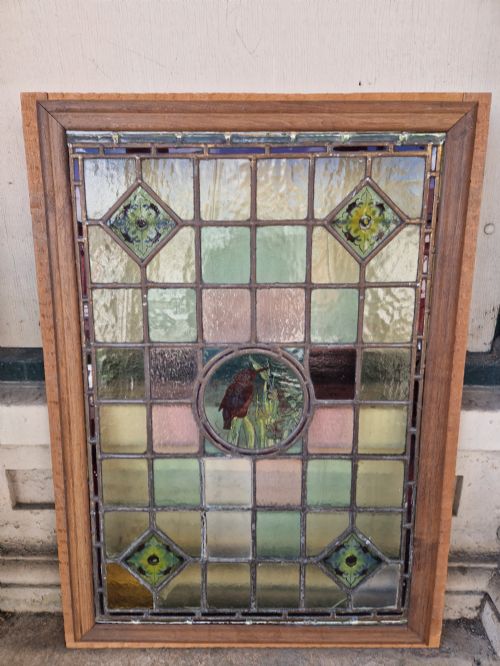


Coloured Leaded Glass Window
These coloured leaded glass window pieces bring natural light and rich pictorial detail into a room, making them a striking focal point for any interior.
Coloured Leaded Glass Window
A coloured leaded glass window brings together architectural salvage and decorative artistry, spanning periods from the Victorian era through the early twentieth century. When searching for a coloured leaded glass window, buyers encounter everything from simple domestic panels to pictorial scenes featuring castles, countryside views, and floral motifs.
The selection on this page ranges from arch-top church windows to Edwardian domestic panels and 1930s Dutch folk art designs. Most examples originate from the Victorian, Edwardian, and 1900 periods, utilising traditional lead cames to hold individual pieces of glass in place.
Architectural salvage panels often retain their original timber or pine wood frames, whilst others appear as standalone glass sections ready for interior hanging or secondary glazing. Buyers frequently select these items to introduce period character, privacy, and colour into modern or traditional spaces.
How they were made
Makers constructed these panels by cutting coloured and clear glass to fit intricate hand-drawn designs, then binding the individual pieces together with flexible lead cames soldered at the joints. Many examples incorporate hand-painted details onto the glass surface, depicting specific scenes such as birds, flowers, and figures before kiln-firing the pigment.
Structural support was often provided by timber or pine frames, particularly in larger formats such as church windows or multi-section Art Nouveau pieces. The use of specialised glass elements, including amber bullseyes, added tactile depth and varied light transmission across the surface of the panel.
Several windows feature surprisingly specific inhabitants, including a solitary Dutch boy, a visiting bird on a branch, and an adventurous cat and fox.
What varies in quality
The distinction between standard domestic panels and finer examples lies largely in the complexity of the artistic design and the execution of hand-painted pictorial elements. Pieces featuring detailed countryside scenes, heraldic shields, or specific figural work demand greater skill from the maker than geometric or plain leaded panes.
Material selection also dictates the character of the piece, with specialised glass types such as amber bullseyes and multicoloured borders elevating the visual richness. Furthermore, the integrity of the lead matrix and the retention of original wood frames contribute to the overall substance of the survival.
Sir Edward Burne Jones
The Coloured Leaded Glass Window Glossary
- Leaded glass
- Glass pieces joined together with narrow strips of lead known as cames. This technique allows artisans to create detailed patterns and pictorial windows.
- Stained glass
- Glass that has been coloured by the addition of metallic salts during its manufacture, or subsequently painted and fired in a kiln. It forms the vibrant panels seen in domestic and ecclesiastical settings.
- Arch top
- A window or panel design featuring a curved upper section. This shape was common in Victorian church architecture and larger domestic openings.
- Bullseye
- A small, circular centre piece of blown glass that retains a distinct lump or thickening in the middle. These appear in decorative window borders to catch and refract light.
- Architectural salvage
- Building elements and fixtures rescued from older structures slated for demolition or remodelling. These items are reused to preserve historic craftsmanship in new contexts.
Coloured Leaded Glass Window: Frequently Asked Questions
Where were these windows originally installed?
Many of these panels came from domestic homes, public buildings, and churches, serving as exterior windows, interior transoms, or feature doors.
Over time, many were salvaged during property alterations to be repurposed as decorative wall art or internal room dividers.
How do I hang a heavy glass panel?
Due to the weight of the lead and glass, panels require secure fixing points into solid timber framing or structural wall studs.
Using specialised steel hanging chain attached to the outer frame ensures the weight is distributed evenly without stressing the lead cames.
Can these windows be used outdoors?
Most antique panels were designed for interior settings or protected exterior positions, as historic lead cames can soften over decades of harsh weather.
Placing them behind modern secondary glazing protects the fragile painted surfaces and older leadwork from environmental damage.
How do I identify the period of a panel?
Stylistic clues such as floral motifs, painted figural styles, and the thickness of the lead cames point towards specific eras like the Victorian or Edwardian periods.
Design movements like Arts and Crafts or Art Nouveau also leave distinct visual signatures in the geometry and subject matter.