


Victorian Painted Glass Window
These pieces of architectural salvage bring depth and coloured light to interiors through leaded joinery and hand-painted detail.
Victorian Painted Glass Window
A victorian painted glass window brings together architectural salvage, leaded glass panels, and wall mirrors framed in timber or pine. Buyers seek out these objects to introduce period character and coloured light into domestic spaces.
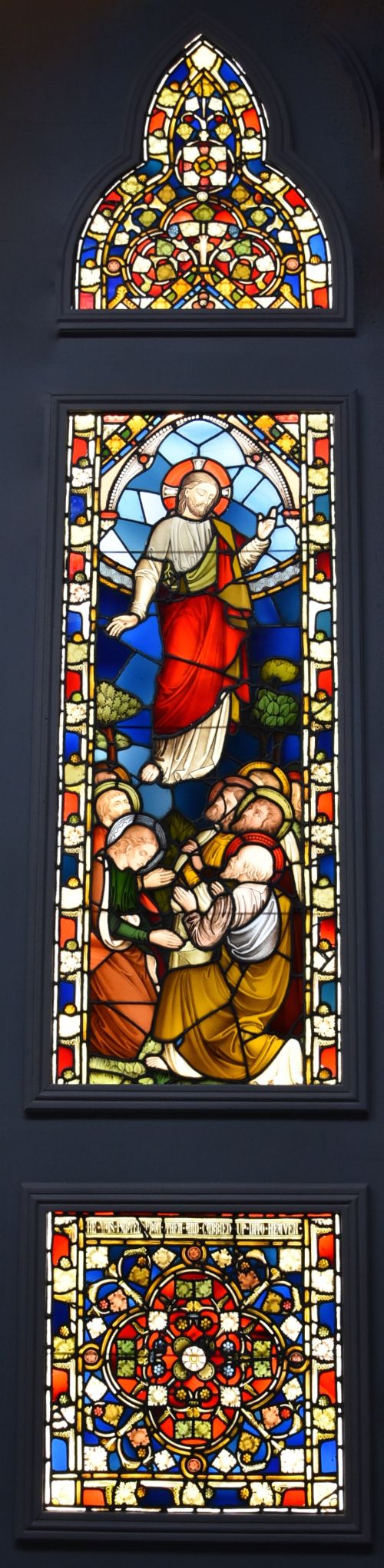
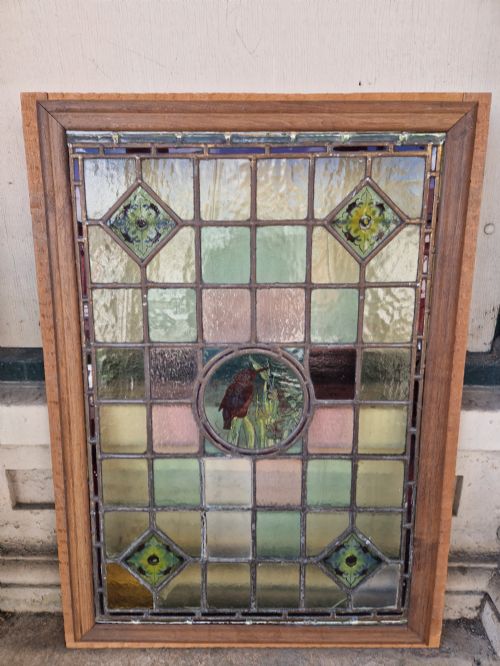
The most common formats on this page include vertical and arch-top panels, architectural window frames, and large multi-section triptychs. Subjects range from religious iconography and heraldry to pastoral landscapes, birds, ships, and floral swags.
Pieces span the nineteenth century into the Edwardian era, incorporating Gothic revival, Arts and Crafts, Art Nouveau, and Art Deco styles. Many retain their original lead cames and wooden surrounds, showing considerable variation in scale from intimate panels to large church windows.
Materials and construction methods
Glass panels are constructed by joining individual pieces of coloured, clear, and textured glass within a flexible network of lead cames. Artisans applied enamel paints and fired the glass to bond pigment permanently to the surface, often combining painting with etching and Bevelling.
Structural framing relies on timber, pine, and wood, frequently shaped into architectural arches or rectangular mounts designed for internal or external placement. Support bars and soldered lead joints provide structural rigidity to large panels and triptychs.
Materials recorded across the inventory include lead, timber, pine, enamel, and both clear and stained glass.
Distinctions in craftsmanship
Quality separates simple production glazing from ambitious pictorial work through the subtlety of the enamel painting and the complexity of the glass selection. Hand-painted scenes showing detailed figures, birds, or landscapes demand advanced draughtsmanship and multiple firings.
The integrity of the lead matrix and the clarity of the glass determine the structural success of a panel. Superior examples integrate clear bullseyes, bevelled edges, and richly varied pot-metal glass that diffuses light effectively.
The Victorian Painted Glass Window Glossary
- Came
- A grooved strip of lead used to hold together individual pieces of glass in a window. These pliable strips form the structural grid of the design.
- Bullseye
- A round disc of glass formed at the centre of a blown glass sphere, showing a distinctive concentric swirl. They are often set into leaded windows to catch light.
- Triptych
- A piece consisting of three hinged or joined panels side by side. In window glazing, this format typically presents a central narrative flanked by complementary scenes.
- Architectural salvage
- Building elements rescued from older structures for reuse in interior design. This category includes church windows, transoms, and decorative panels.
Victorian Painted Glass Window: Frequently Asked Questions
How do I hang a heavy leaded window?
Heavy windows require a secure timber frame and appropriate weight-bearing fixings anchored directly into wall studs or masonry. Professional installation ensures the flexible lead matrix does not sag under its own weight over time.
For wall mirrors or decorative panels, custom metal brackets provide stable support while keeping the lead cames free from stress.
Can these windows be used outside?
Most antique pieces were originally designed for exterior architectural placement within buildings. However, centuries of weathering mean many surviving examples benefit from protective external glazing or internal placement.
Consulting a professional glazier helps determine if the wooden surrounds and lead cames require reinforcement before exposure to outdoor elements.
How do I date a painted glass panel?
Dating relies on stylistic clues, subject matter, and manufacturing techniques evident in the glass and framing. Victorian pieces frequently feature Gothic revival motifs, heraldry, or rich religious scenes, while later Edwardian works often incorporate Arts and Crafts or floral designs.
The presence of specific glass textures, such as clear bullseyes or machine-rolled sheets alongside hand-blown panes, also helps narrow the period of origin.
What is the difference between stained and painted glass?
Stained glass refers to glass that has been coloured during its molten manufacturing stage by adding metallic oxides. Painted glass involves applying enamel pigments onto the surface of the glass and firing it in a kiln.
Many antique windows combine both techniques, using naturally coloured glass alongside detailed enamel brushwork for faces, foliage, and shading.