

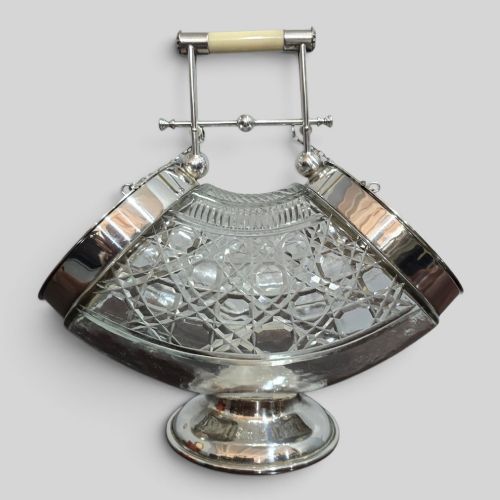
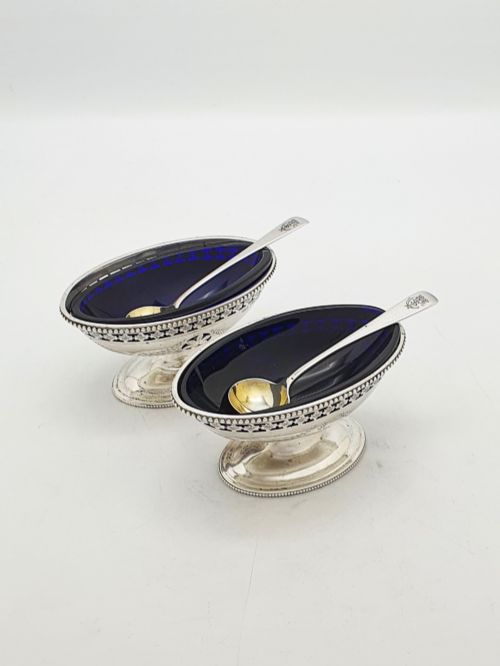
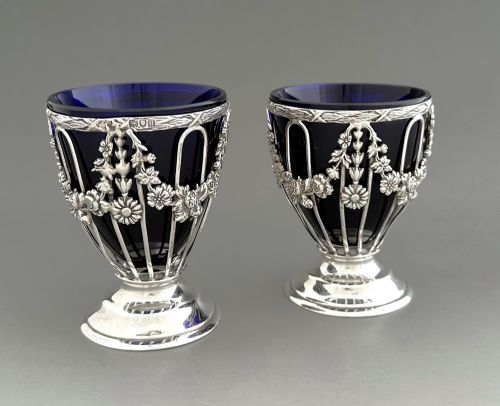


Antique Glass Silver Pedestal
These antique glass silver pedestal pieces combine brilliant cut crystal with gleaming metalwork, offering striking centrepieces and tableware for display.
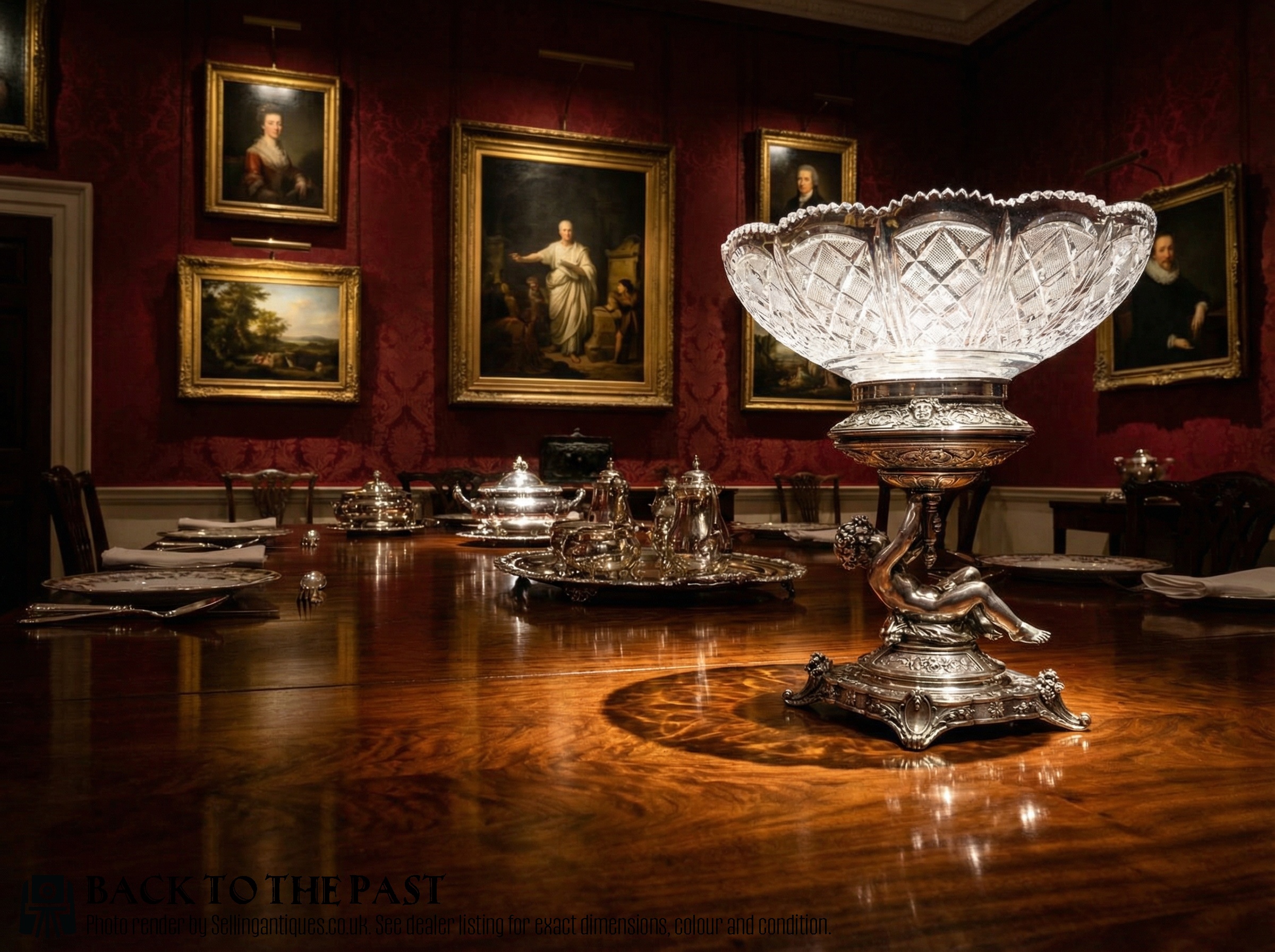
Antique Glass Silver Pedestal
When you search for antique glass silver pedestal, you encounter vessels that elevate clear or coloured glass upon supportive metal stands. These pieces range from grand centrepieces and bowls to smaller condiment tubs and dessert dishes.
The selection on this page leans heavily towards the Victorian and Edwardian eras, alongside Art Nouveau and 1930s designs. You will frequently find cut glass or cobalt liners paired with silver plate or sterling silver.
How they were made
Makers combined heavy moulded or cut crystal with electroplated or solid silver mounts, wirework, and cast frames. Cobalt glass inserts were often blown and fitted into pierced silver or silver-plated salt cellars and dessert dishes.
Techniques varied from deep hobnail cutting on crystal bowls to delicate silver wirework and Jugendstil metal fabrication employed by firms like WMF and Christofle.
Antique Glass Silver Pedestal Retail Price Guide 2026
Typical asking prices for glass silver pedestal among the pieces listed under this phrase on Sellingantiques today, from the lower quarter to the upper quarter. They describe what is for sale here now, not the wider market.
Nautical themes surface in the collection alongside delicate secessionist lines, showing Victorian makers had a soft spot for sailor princes.
What varies in quality
Quality rests in the crispness of the glass cutting and the weight of the metal mount. Superior items display deep, sharp facets on the crystal and substantial gauge silver or plate rather than thin pressed metals.
The integration between the glass vessel and its pedestal base marks the difference between standard production and finer workshops. Well-fitted liners and secure, balanced stands elevate the piece.
WMF·Christofle et Cie·Viners
The Antique Glass Silver Pedestal Glossary
- Pedestal
- A raised base or foot that elevates a bowl, vase, or dish above the table surface. This form allows the cut glass to catch the light from all angles.
- Cobalt Glass
- A deep blue glass frequently utilised for removable liners inside open salt cellars and condiment dishes. The vibrant colour provides a strong contrast against the surrounding silver.
- Hobnail Cut
- A raised, faceted pattern cut into the surface of crystal glassware resembling the head of a traditional hobnail boot. It creates a tactile, highly reflective texture.
- Silver Plate
- A base metal, often copper or white metal, coated with a thin layer of silver through electroplating or older fusion methods. It offered an accessible alternative to solid sterling silver during the nineteenth and twentieth centuries.
Antique Glass Silver Pedestal: Frequently Asked Questions
Are these glass liners original?
Many pieces retain their original blown or pressed glass inserts, particularly cobalt liners made specifically for salt cellars and dessert dishes. Exact fits and matching period wear indicate originality.
Replacement liners do occur due to the fragility of glass over a century of use. Examine the rim and base for consistent age characteristics.
How do I date an Edwardian centrepiece?
Edwardian pieces typically date from the opening years of the twentieth century, displaying refined proportions often influenced by late Victorian taste. Hallmarks on the silver components provide exact assay years.
Stylistic cues include graceful floral motifs and lighter wirework frames compared to heavier mid-Victorian designs.
Can I use these for serving food?
Most glass bowls, dishes, and biscuit barrels function well for dry goods or table service. Ensure any silver plate is clean and free from old polish residue before contact with edibles.
Acidic foods should not sit for prolonged periods in antique silver-plated vessels to protect the metallic coating.