


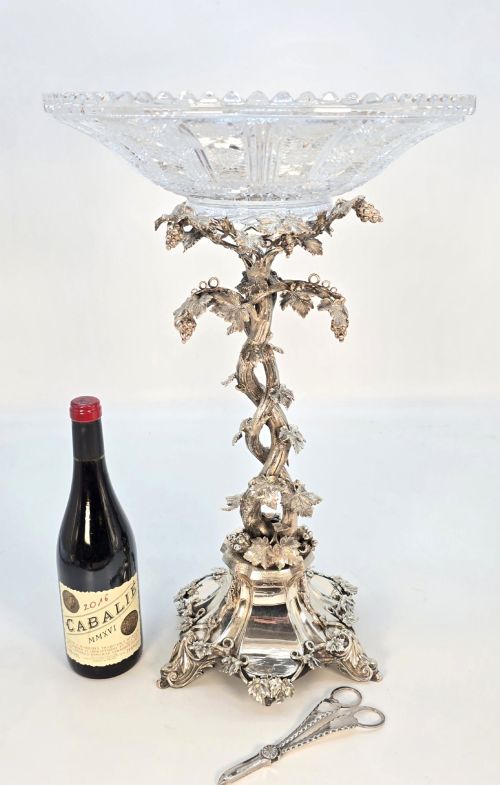


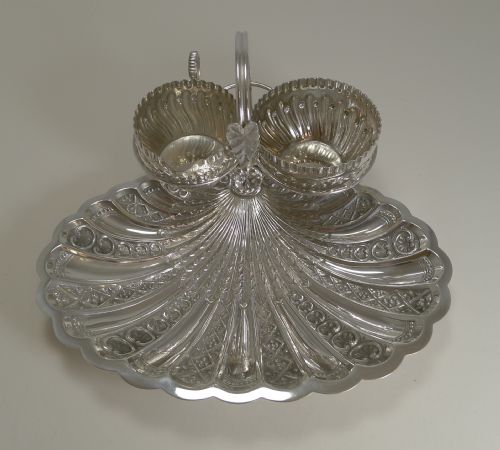


English Silver Plate Centrepiece
An English silver plate centrepiece anchors a dining table with substantial metalwork and cut glass, offering grand presence for entertaining.
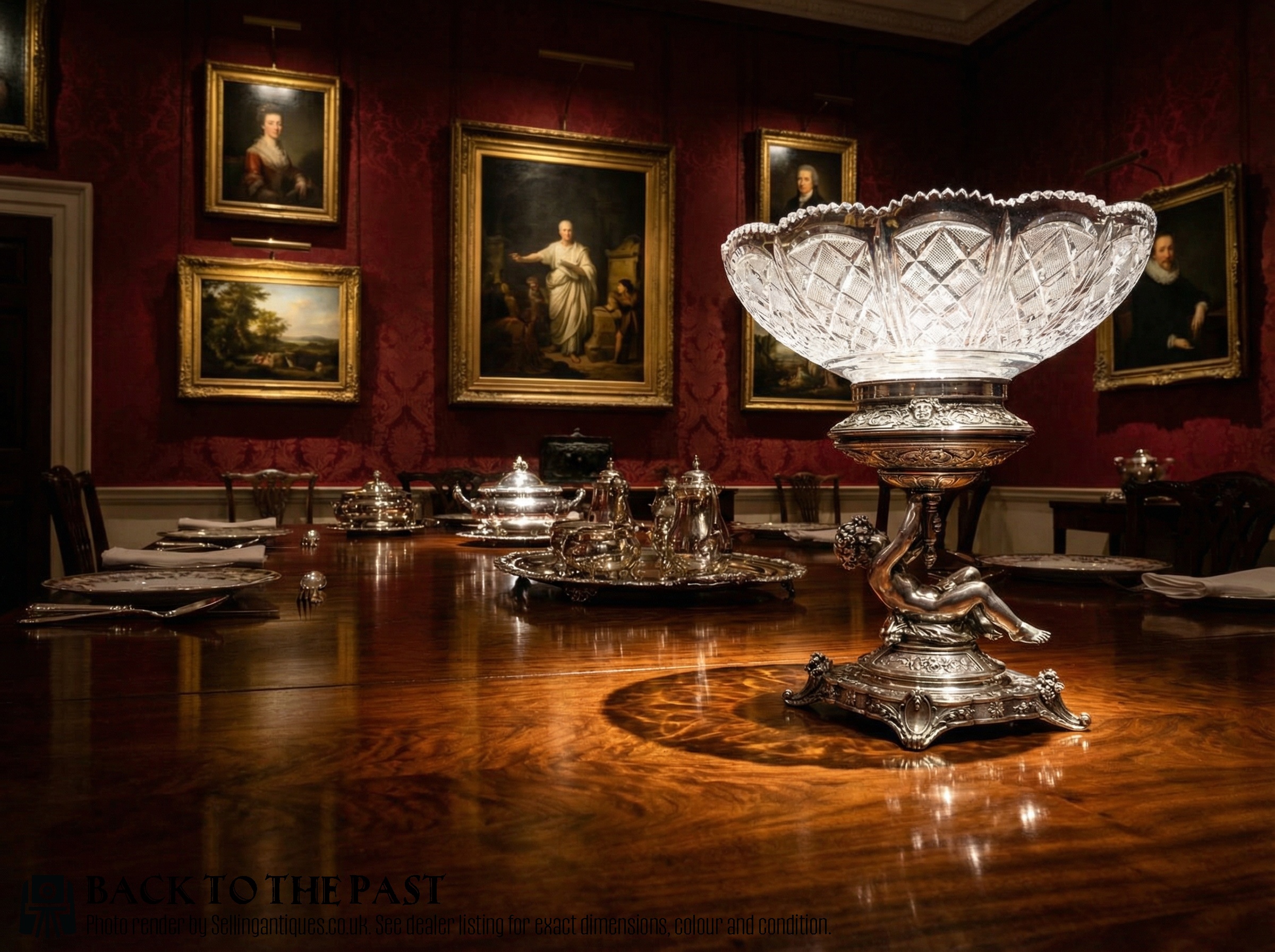
English Silver Plate Centrepiece
An English silver plate centrepiece serves as a decorative focal point for formal dining tables, frequently combining metallic stands with glass bowls or baskets. The pieces span the Victorian, Edwardian and Regency periods, alongside later twentieth century examples.
Forms range from large tiered display vessels to presentation bowls, wine coolers and branching candelabras. Buyers frequently encounter nineteenth century items featuring heavy cast mounts paired with cut crystal or glass inserts.
Serveware and novelty items such as asparagus dishes and spoon warmers also appear within this category. The selection demonstrates diverse aesthetic movements, including Neoclassical Revival and Victorian Aesthetic styles.
Assessing quality and craftsmanship
The standard of an English silver plate centrepiece rests in the crispness of its cast ornamentation and the depth of its chasing. Elaborate motifs, such as naturalistic grape vines or nautical themes, demonstrate superior artistic execution by skilled makers.
The condition of the original silver plating and the integrity of any associated cut glass or crystal significantly influence the character of the object. Substantial weight and balanced proportions indicate high grade manufacturing during periods like the Victorian and Regency eras.
English Silver Plate Centrepiece Retail Price Guide 2026
Typical asking prices for english silver plate centrepiece among the pieces listed under this phrase on Sellingantiques today, from the lower quarter to the upper quarter. They describe what is for sale here now, not the wider market.
Materials documented across the inventory include silver plate, cut crystal, copper, wood, stone and EPNS, often combined within single dining table centrepieces.
Barker Ellis·Mappin and Webb·Roberts and Belk·Elkington
The English Silver Plate Centrepiece Glossary
- Silver Plate
- A base metal coated with a thin layer of silver. This technique allowed makers to produce substantial decorative items at a lower cost than solid silver.
- Old Sheffield Plate
- An early method of fusing a thin sheet of silver onto a copper core before shaping. This process creates a distinctive appearance valued by collectors of Regency pieces.
- EPNS
- Electroplated nickel silver, a common base material introduced in the nineteenth century. It provides a durable foundation for silver plating.
- Campana
- A bell shaped vessel design popular during the Regency period. Wine coolers and urns frequently utilise this classical silhouette.
- Epergne
- An ornate multi tiered centrepiece featuring a central basket surrounded by smaller hanging dishes. They were traditionally used for serving fruit, sweets or flowers at formal meals.
English Silver Plate Centrepiece: Frequently Asked Questions
What is an English silver plate centrepiece used for?
These large vessels were traditionally placed in the middle of dining tables to hold fruit, flowers or sweetmeats during formal meals. They served as decorative showpieces designed to impress guests and reflect the wealth of the host.
Today, they function primarily as striking decorative objects for sideboards or dining tables. Many collectors also utilise the accompanying glass bowls and baskets for contemporary floral arrangements.
How do I clean silver plated items safely?
Silver plate requires gentle care to preserve the thin metallic layer over the base metal. Use a mild, non abrasive silver polish and a soft cloth, avoiding harsh scrubbing that can wear through the plating.
Glass and crystal inserts should be washed separately in warm soapy water. Ensure all metal components are thoroughly dried after cleaning to prevent tarnishing and water spots.
How can I tell a Regency piece from a Victorian one?
Regency items often display classical Neoclassical motifs, clean architectural lines and Old Sheffield Plate manufacturing techniques. Pieces from this era frequently include campana shaped wine coolers and restrained decorative elements.
Victorian designs tend to be heavier, highly ornate and deeply chased with naturalistic motifs like grape vines or floral sprays. The introduction of electroplating during the Victorian era also changed the underlying metallic structure of many items.
Are cut glass inserts usually original?
Many surviving centrepieces retain their original matched cut glass or crystal bowls, which were specifically manufactured to fit the metal framework. The glass often shares the same period characteristics and wear patterns as the metal base.
Due to the fragile nature of glass, replacements are sometimes found in older pieces. Examining the fit and the style of the cut patterns helps determine if the components belong together.