



Antique Glass Reservoir Lamp
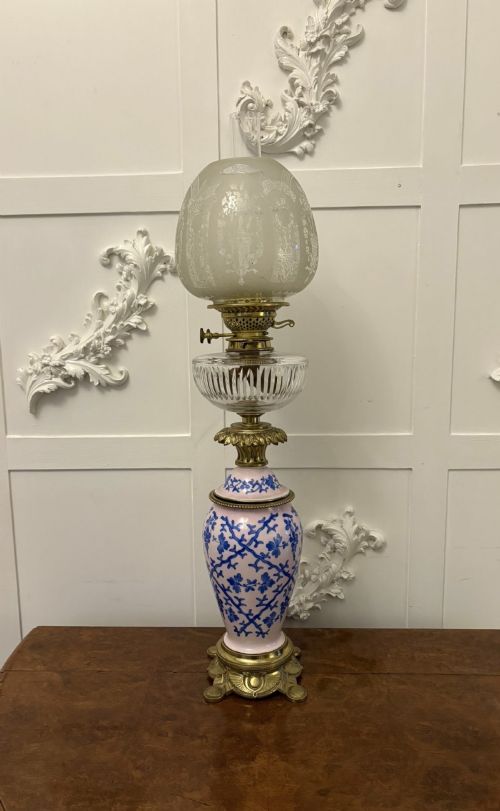
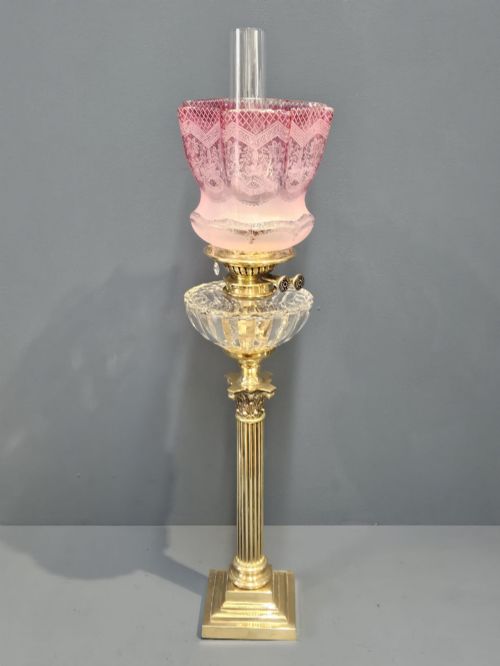
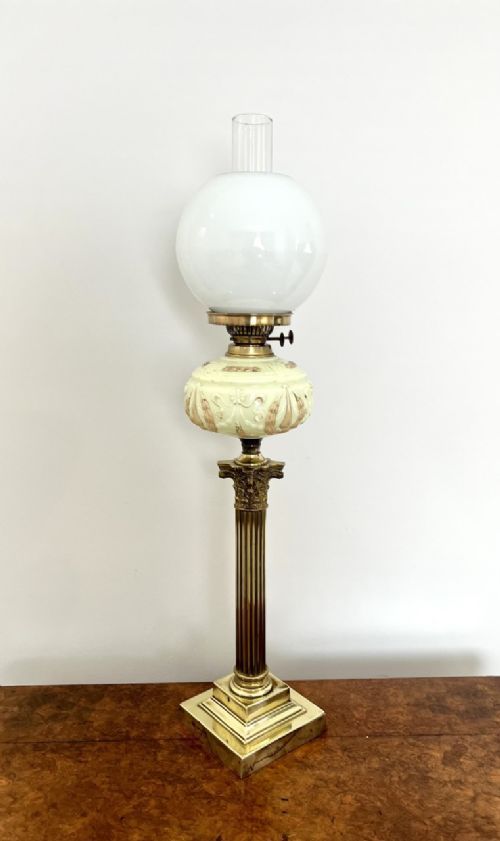
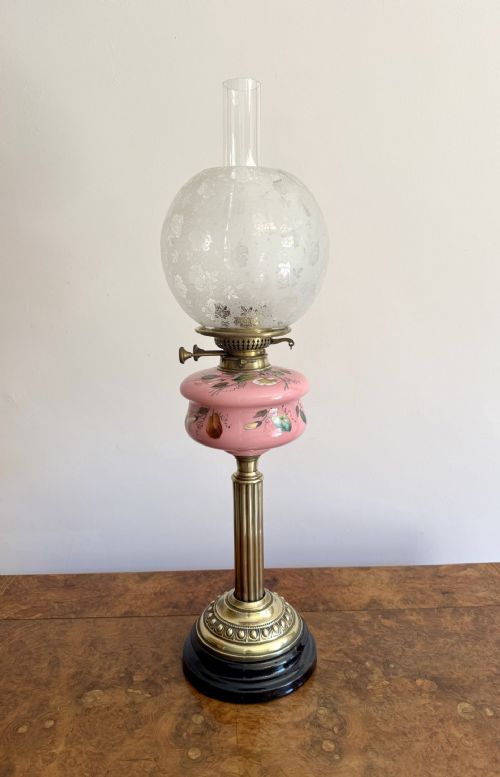
These antique glass reservoir lamps combine utilitarian brass and heavy ceramic stands with coloured or clear glass fonts to bring period warmth into a room.
Antique Glass Reservoir Lamp
When you search for an antique glass reservoir lamp, you encounter lighting fixtures designed during the nineteenth century to burn paraffin or oil before domestic electricity transformed interiors. The typical form pairs a sturdy metal or ceramic base with a glass font that holds the fuel, often topped with a contrasting shade.
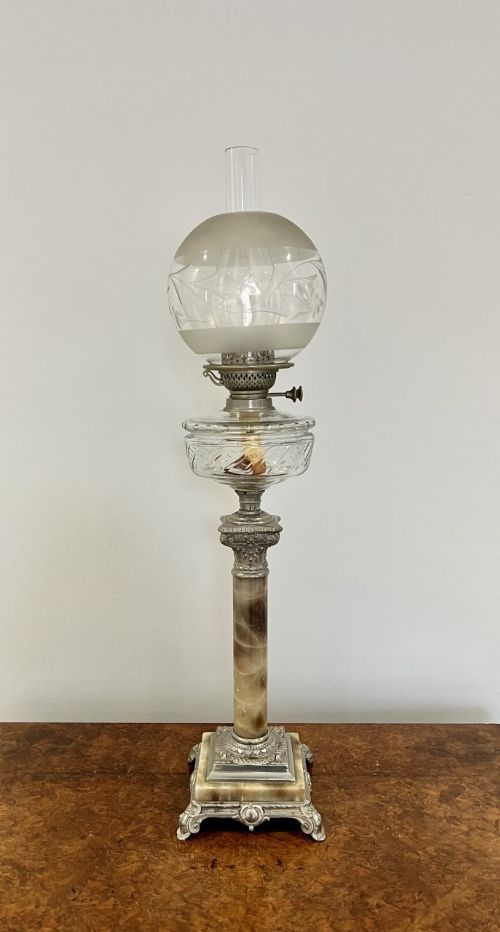
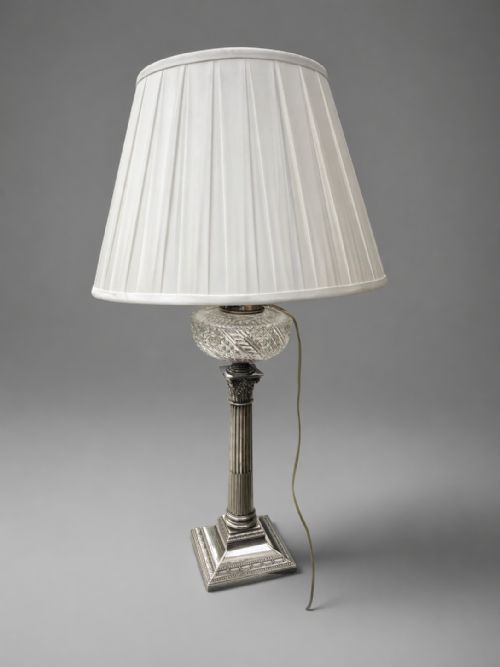
Most examples originate from the Victorian and Edwardian eras, spanning from the middle decades of the nineteenth century up to nineteen hundred. You will frequently find brass columns, ceramic bodies, and occasionally silver plated mounts supporting the glass reservoirs.
These pieces served as functional household lighting in parlours and drawing rooms, evolving through various revival styles including Neoclassical and Art Nouveau. Today, many survive either in their original oil-burning configuration or adapted for modern electrical use.
What varies in quality
The distinction between ordinary and superior pieces rests on the weight of the metal casting, the clarity and depth of the cut glass, and the sophistication of the overall design. Heavier brass columns and crisp Corinthian capitals indicate more meticulous manufacturing.
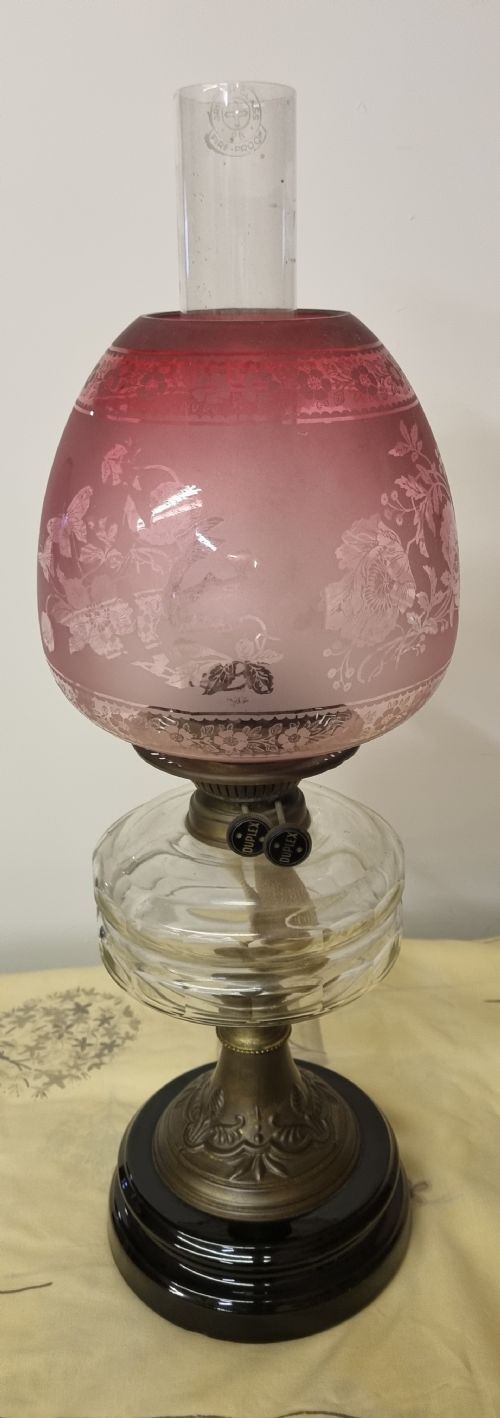
Finer examples incorporate coloured fonts in shades like pink, blue, or cranberry, sometimes paired with matching shades and signed burner mechanisms by established makers. Simpler utilitarian versions lack these refined decorative details and substantial proportions.
Antique Glass Reservoir Lamp Retail Price Guide 2026
Typical asking prices for glass reservoir lamp among the pieces listed under this phrase on Sellingantiques today, from the lower quarter to the upper quarter. They describe what is for sale here now, not the wider market.
Some Victorian burners were proudly stamped as special by their makers, ensuring your parlour outshone the neighbours' with superior paraffin combustion.
Hinks of Birmingham·Messenger·Harrods·Young's Special
The Antique Glass Reservoir Lamp Glossary
- Reservoir
- The container that holds the oil or paraffin fuel, usually fashioned from clear, moulded, cut, or coloured glass.
- Font
- An alternative term for the oil reservoir, positioned above the main column or base of the lamp.
- Corinthian column
- A classical architectural column style featuring ornate acanthus leaf capitals, frequently utilised for the stem of Victorian table lamps.
- Peg lamp
- A smaller lamp featuring a projecting peg at the base designed to drop directly into a candlestick or separate receptacle.
- Burner mechanism
- The metal assembly fitted to the top of the reservoir that controls the wick and flame.
Antique Glass Reservoir Lamp: Frequently Asked Questions
How do I date an oil lamp?
Dating relies on stylistic clues such as the classical proportions of Corinthian columns, the presence of Art Nouveau motifs, or specific burner patents stamped into the metalwork.
Materials also offer guidance, as heavy brass bases and distinct satin or cut glass fonts were favoured during specific decades of the Victorian and Edwardian periods.
Are these lamps still wired for oil?
Many surviving examples retain their original burner and wick mechanisms, though a significant number have been professionally converted to electricity for modern household use.
When buying, inspect the collar and burner assembly to determine whether the original oil-burning components remain intact or if wiring has been introduced through the reservoir.
What is a peg lamp?
A peg lamp is a compact lighting piece constructed with a projecting metal peg at the underside of the reservoir.
This design allowed the entire lamp top to slot securely into the socket of a matching candlestick or a dedicated ceramic base.
Can I use these lamps on a dining table?
Their substantial height and decorative presence make them striking centrepieces for sideboards or large tables, provided the proportions suit your furniture.
When placed in a room, the coloured glass fonts and brass columns catch natural light during the day and create warm illumination if converted to electricity.