










Antique Glass Powder Jar
An antique glass powder jar brings dressing table elegance into daily routines through heavy crystal bodies and silver or enamel lids.
Antique Glass Powder Jar
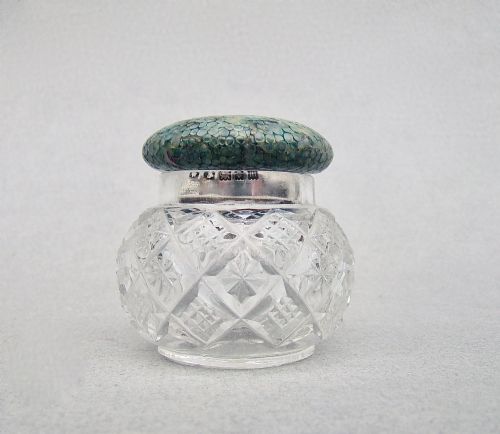
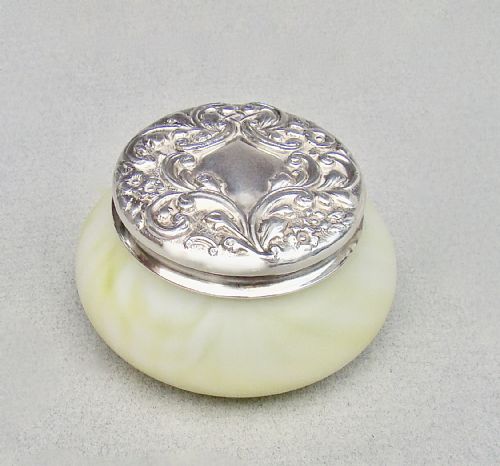
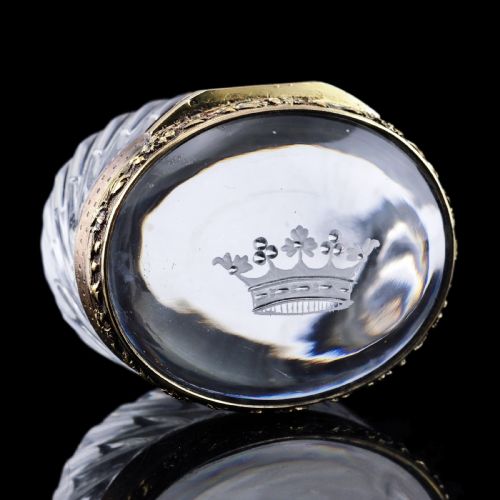
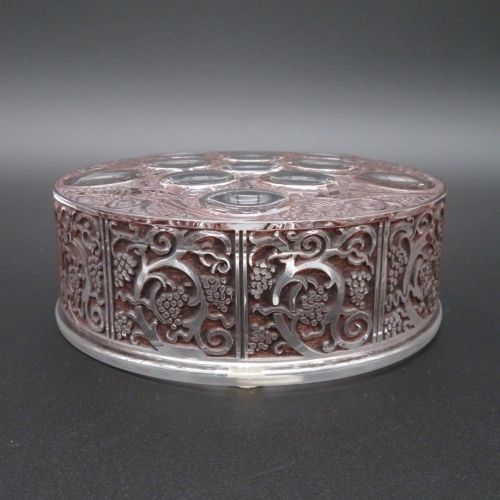
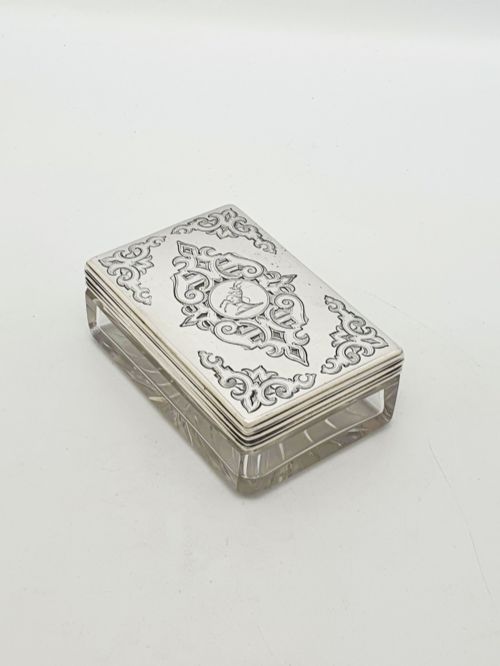
An antique glass powder jar is a dressing table container designed to hold loose cosmetic powder, typically featuring a heavy glass base paired with a fitted metal lid. When searching this phrase, buyers encounter varied vanity forms ranging from compact trinket boxes and lidded bowls to tall dressing table jars originating across the nineteenth and early twentieth centuries.
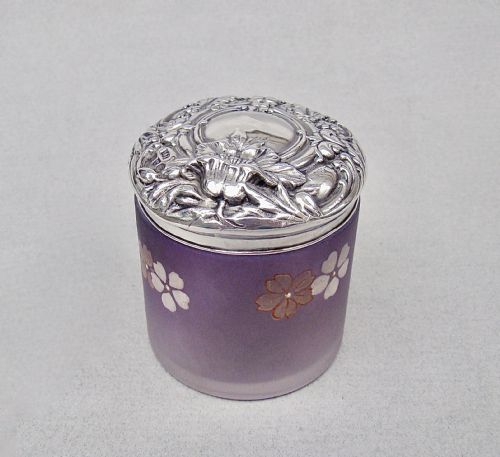
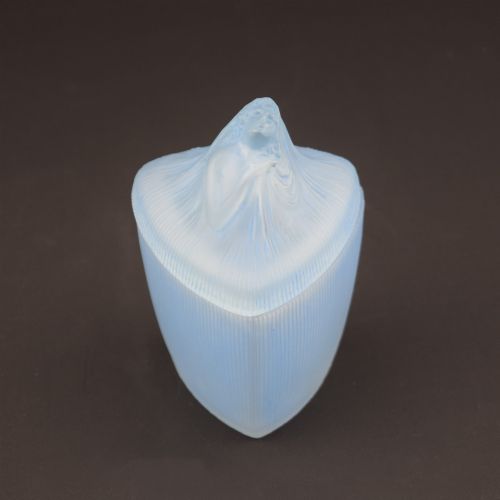
The most common examples on this page date from the Edwardian period and the Art Deco era, reflecting the shifts in dressing table design from ornate Victorian excess to geometric modernism. These pieces appear in diverse glass bodies including cut crystal, satin glass, frosted glass, and coloured vessels in shades of blue, cranberry, green, and amethyst.
Many of these containers combine glass with sterling silver mounts, enamel work, or tortoiseshell, merging utilitarian vanity items with decorative arts. Alongside standalone powder boxes, related forms such as rouge pots and trinket boxes share the same material vocabulary and manufacturing origins.
Materials and construction
The bodies of these containers rely on heavy glass manipulation, utilising mould-blown techniques, deep mechanical cutting for crystal, and specialised coloration methods such as flashing or casing to achieve rich hues. Specialised glass types like frosted, satin, and Kralik wares provide distinct tactile surfaces that contrast with smooth metal mounts.
Lids and collars incorporate sterling silver, silver gilt, and base metals stamped or cast in workshops, frequently bearing assay office hallmarks that record city of origin and exact year of manufacture. Surface decoration on the metal components frequently employs guilloché enamel, polychrome enamel painting, or inset panels of tortoiseshell.
Antique Glass Powder Jar Retail Price Guide 2026
Typical asking prices for glass powder jar among the pieces listed under this phrase on Sellingantiques today, from the lower quarter to the upper quarter. They describe what is for sale here now, not the wider market.
Several Victorian dressing table jars retain traces of scented cosmetic powder trapped in their corners for over a century.
Evaluating craftsmanship and condition
The distinction between standard vanity wares and superior examples rests upon the depth of the glass cutting and the precision of the silver smithing. Heavy-gauge sterling silver mounts that fit the glass rim snugly demonstrate greater original cost than thin stamped metal collars.
Artistic collaboration elevates certain pieces above standard manufacture, particularly when celebrated glass houses or skilled enamel work are involved. The crispness of guilloché patterns and the preservation of hand-applied enamel without chipping dictate the upper tier of quality.
A. J. Pepper & Co·Henry Clifford Davis·A. Bromet & Co·Rene Lalique·Hasset & Harper·Posen
The Antique Glass Powder Jar Glossary
- Guilloche enamel
- A decorative technique where mechanical engraving produces precise geometric patterns beneath translucent coloured enamel. This process was widely utilised on silver lids during the Edwardian and Art Deco periods.
- Sterling silver
- An alloy consisting of ninety-two point five percent silver by mass, with the remainder composed of other metals for durability. British pieces typically display leopard head or anchor assay marks alongside the lion passant.
- Cut crystal
- Glass containing lead oxide that increases refractive index and weight, allowing deep facets to be wheel-cut into the surface. This material catches light sharply on dressing tables.
- Satin glass
- Glass treated with hydrofluoric acid vapour or mechanical etching to produce a velvety, matte surface texture. It appears frequently on Edwardian trinket boxes.
- Kralik glass
- Art glass produced by the Loetz competitor Wilhelm Kralik Sohn in Bohemia, known for iridescent surfaces and organic forms. Pieces are occasionally mounted with British silver lids.
Antique Glass Powder Jar: Frequently Asked Questions
What was a powder jar used for?
These containers held scented face or body powder on dressing tables before the advent of modern cosmetic packaging. Ladies used powder puffs to apply loose cosmetics during daily grooming rituals.
Over time, dressing table sets evolved to include matching brushes, trays, and smaller trinket pots alongside the central powder bowl.
How do I date an Edwardian powder jar?
British silver mounts carry hallmarks that indicate the assay office, standard mark, and a specific date letter corresponding to the year of manufacture. These stamps provide precise verification of age independent of the glass body.
Stylistic cues like restrained neoclassical motifs or early geometric shapes also help narrow down the production decade.
Are Art Deco powder jars different from Victorian ones?
Art Deco examples favour clean geometric lines, stylised motifs, and vibrant guilloché enamel colours such as bright blue or pink. They reflect the modern industrial design aesthetics of the 1920s and 1930s.
Victorian pieces lean towards heavy cut crystal, floral hand-painted enamel, and ornate silver repoussé work reflecting nineteenth-century revival styles.
How should I clean silver mounts on glass?
Silver components require gentle polishing with a dedicated cloth while avoiding contact with the glass or enamel panels. Liquid dips should be avoided to prevent chemical damage to fragile enamel or glued joints.
Regular dusting with a soft dry cloth maintains the lustre of both the metal collars and the crystal bodies.