
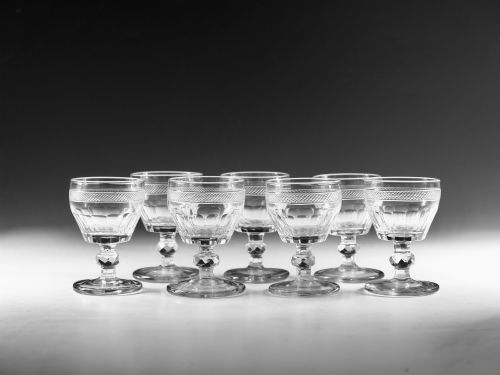


Antique Glass Port Glasses
These antique glass port glasses are small vessels designed for fortified wine, shaped by generations of makers across Georgian, Regency, and Victorian periods.
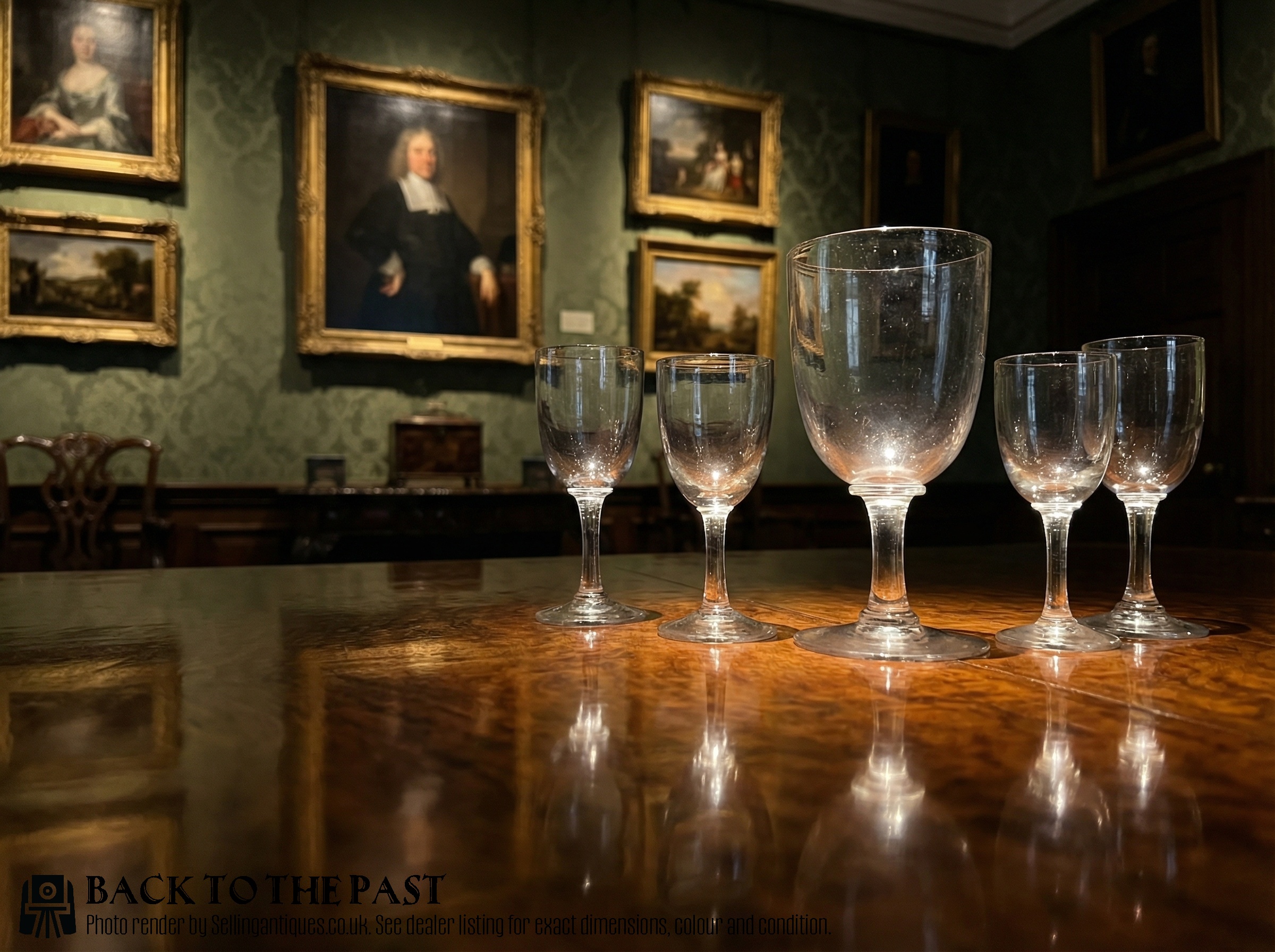
Antique Glass Port Glasses
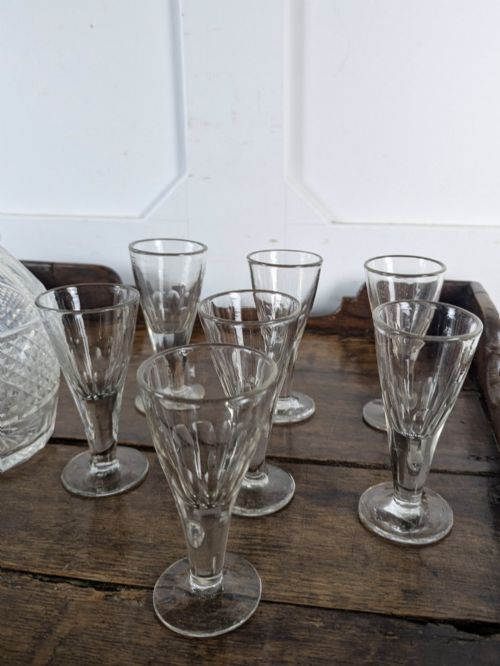
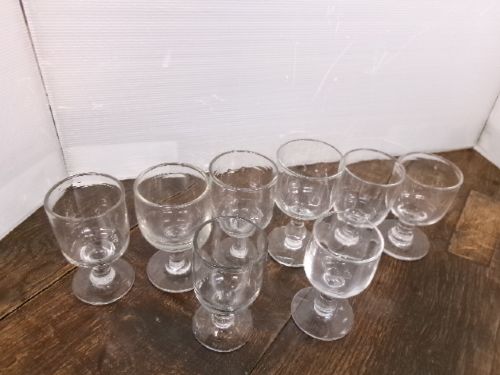
When you search for antique glass port glasses, you meet small-scale drinking vessels originating mainly from the Georgian, Regency, and Victorian eras. These pieces often overlap in function and form with sherry, gin, and dessert wine glasses from the same centuries.
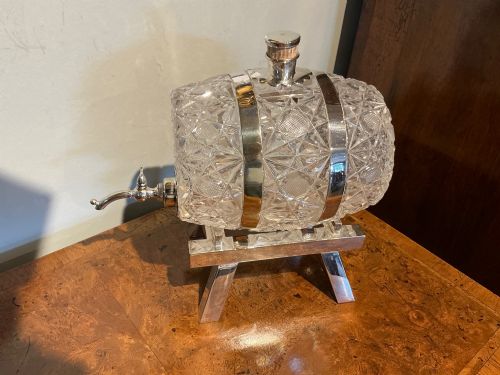
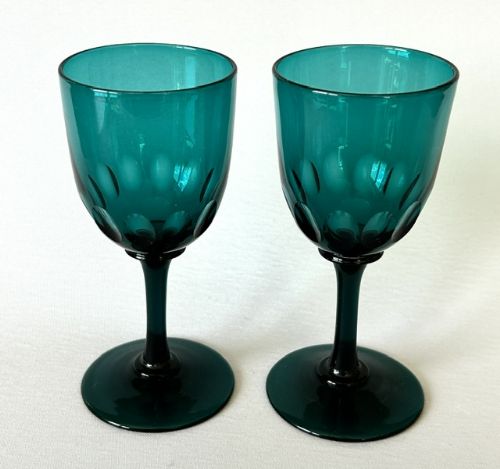
The selection on this page centres on hand-blown and lead crystal drinking vessels, alongside related barware such as decanters and rummers. You will find matched sets of six or seven alongside individual pairs shaped for the dining table.
Origins stretch from English workshops to Irish glasshouses, spanning the nineteenth century with occasional pieces reaching back towards the eighteenth century or forward into the Edwardian period.
How they were made
Makers shaped these drinking vessels using clear glass, lead crystal, and coloured glass, frequently applying hand-blown techniques before finishing the surfaces by hand. Artisans utilised cutting wheels to produce thumb-cuts, slice-cuts, and geometric facets that catch the light.
Decoration often involved wheel-engraving or etching to create patterns on the bowls of the glasses. Lead crystal brought weight and clarity to the pieces, while older examples display the slight irregularities typical of early hand-blown manufacture.
Periods represented here stretch from the late eighteenth century through the Georgian, Regency, and Victorian eras into Edwardian times.
What varies in quality
Quality rests upon the crispness of the cutting and the weight of the metal. Superior lead crystal displays sharp facet edges and high optical clarity without internal clouding.
Proportion and balance define the better pieces, where the stem, bowl, and foot exist in harmonious scale. Fine engraving and consistent thickness across matched sets further separate standard production from superior examples.
Baccarat
The Antique Glass Port Glasses Glossary
- Lead crystal
- Glass containing lead oxide, which increases weight, brilliance, and the time available for cutting the material before it cools.
- Thumb-cut
- A shallow, concave oval facet ground into the glass, allowing the drinker a secure grip.
- Slice-cut
- Broad, flat linear facets cut into the body of the glass or decanter in parallel bands.
- Rummer
- A large, heavy-stemmed drinking glass popular in the Georgian and Victorian periods, often used for wine, ale, or punch.
- Prussian decanter
- A decanter style featuring a wide base and concentric neck rings, common during the Regency and Georgian eras.
Antique Glass Port Glasses: Frequently Asked Questions
What were antique port glasses used for?
These vessels served port, sherry, and dessert wines after formal meals, sized specifically for strong fortified wines.
Their smaller capacity suited the higher alcohol content and richer flavours of nineteenth-century drinks.
How do I date antique port glasses?
Dating relies on combining the form of the bowl, the weight of the metal, and the cutting style.
Georgian and Regency pieces often show heavier lead crystal and pontil marks, while Victorian examples introduce coloured glass and machine-etched patterns.
Can I use these glasses today?
These glasses handle modern use well if washed by hand in warm water rather than placed in a machine.
Their delicate lead crystal and antique nature demand careful handling to prevent chipping.
Are matched sets common?
Complete sets of six or seven appear frequently in the archive and current listings, surviving together from grand dining rooms.
Individual pairs and assembled groups also emerge from different decades of the nineteenth century.