


Antique Glass Mantle Lustre
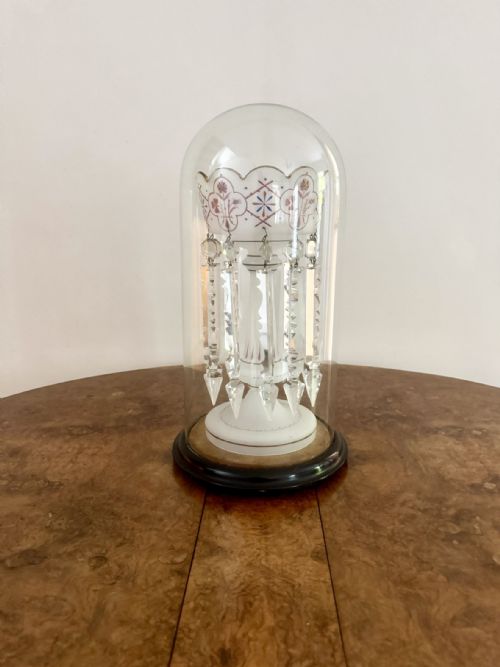
These antique glass mantle lustre pieces bring glittering crystal drops and rich coloured glass to a hearth or side table.
Antique Glass Mantle Lustre
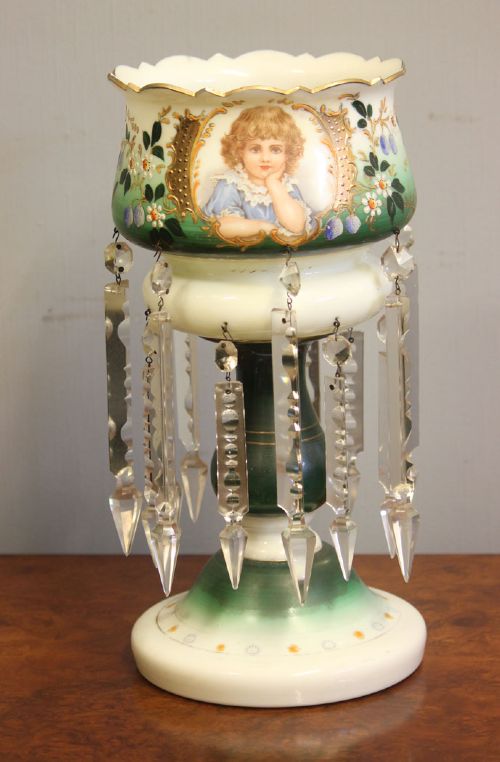
An antique glass mantle lustre is a decorative candle-holder hung with cut crystal prisms designed to catch and multiply the light of a room. The items found here span the nineteenth century and the Edwardian era, taking the form of single stems and matched pairs.
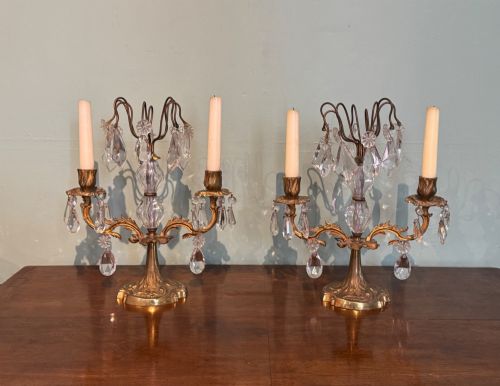
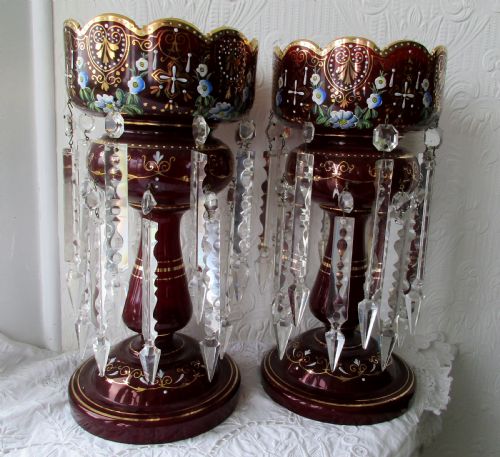
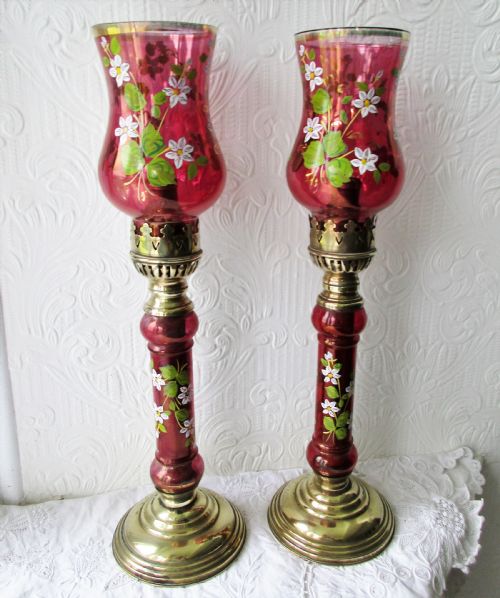
Most examples appearing in this selection belong to the Victorian period, often rendered in deep ruby or cranberry glass. Alongside these standard vessels, the records show French style crystal drop lustres, bronze and ormolu mounts, and rarer green glass or flash glass variations.
Buyers will encounter both single lustres and balanced pairs intended for the ends of a mantelpiece. Some pieces combine glass stems with brass, gilt bronze, or storm shades, while others function primarily as decorative vases when the candle socket is empty.
How they were made
The body of an antique glass mantle lustre is typically formed from blown or moulded glass, incorporating lead crystal, cut glass, or flash glass layers. Makers then applied enamel, gold leaf, or gilt brass details to enrich the surface before cutting facets into the glass bowl and stem.
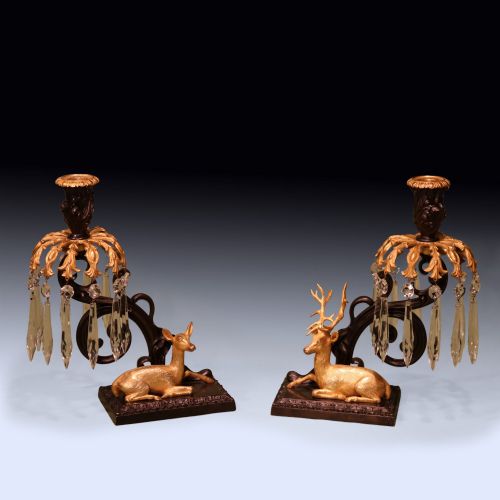
Hanging pendants, known as drops, are hand-cut and faceted to refract light and are suspended from the rim by wire loops or pins. Bronze and ormolu mounts appear on select pieces, cast and chased to support the central glass shafts.
Some nineteenth-century makers included bronze stags and does peering out from the base of the candles, turning a simple light source into a woodland scene.
What varies in quality
Quality in these items rests upon the depth of the glass colour and the precision of the hand-cut facets. Deep ruby and cranberry tones, coupled with heavy lead crystal bases, indicate a higher grade of manufacture than thin or plain moulded glass.
The completeness and original match of the crystal drops heavily influence the character of a lustre. Pieces featuring elaborate ormolu mounts, heavy gilding, or well-matched sets of prisms represent the finer end of the available range.
The Antique Glass Mantle Lustre Glossary
- Lustre
- A decorative candlestick or vase fitted with hanging glass pendants designed to catch the light. They sat upon mantelpieces in nineteenth-century parlours.
- Prism
- A cut glass pendant suspended from the rim of a lustre. These drops fragment the candlelight into tiny flashes of spectrum colour.
- Flash glass
- Glass formed of a thin layer of coloured glass applied over a clear body. Workers cut through the coloured layer to reveal the clear glass beneath.
- Ormolu
- Gilt bronze mounts used to decorate the bases and stems of finer lustres. The technique involves applying a gold amalgam to a cast bronze object.
Antique Glass Mantle Lustre: Frequently Asked Questions
What is an antique glass mantle lustre?
An antique glass mantle lustre is a decorative candlestick or vase adorned with hanging crystal pendants. They were placed on mantelpieces to reflect candlelight during the nineteenth and early twentieth centuries.
These pieces combine functional lighting with ornamental glasswork, often featuring rich coloured glass like ruby or cranberry. Today they serve as decorative focal points for a room.
How do you clean glass mantle lustres?
Cleaning requires removing the delicate crystal drops and washing them individually in warm, soapy water. The main glass body should be wiped gently with a soft cloth to protect any gold leaf or enamel details.
Care must be taken with the wire fixings that hold the drops in place. Reassembly should happen only after every component is completely dry.
Were mantle lustres always sold in pairs?
Mantle lustres were frequently produced and sold as balanced pairs to sit at either end of a fireplace. Single examples do exist in the record, often surviving as solo decorative items or table centerpieces.
Pairs generally command more attention from collectors seeking symmetry for a mantelpiece display. Single pieces nonetheless offer a way to appreciate the glassmaker's art on a smaller scale.
How do I date a glass mantle lustre?
Dating relies upon examining the manufacturing technique, glass colour, and metal mounts. Victorian pieces often use heavy ruby glass or brass components, while Regency examples may incorporate gilt bronze and simpler cut crystal drops.
Stylistic shifts, such as French Rococo Revival curves or Edwardian crystal cuts, help narrow down the period of origin. Comparing the form to dated pieces in the archive provides further guidance.