




Hand Painted Opaque Glass
Hand painted opaque glass brings vibrant colour and layered Victorian or Bohemian craft directly to the mantelpiece.
Hand Painted Opaque Glass
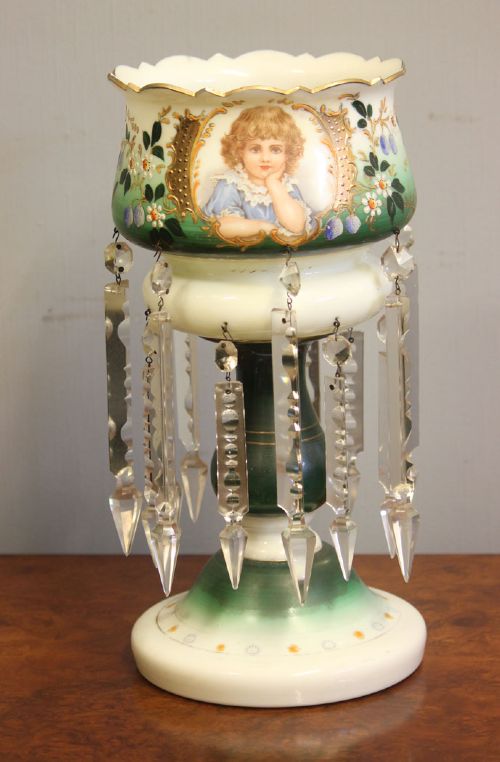
Hand painted opaque glass pieces span decorative vessels and functional objects produced across the nineteenth century and earlier. A buyer searching for hand painted opaque glass encounters items such as bulb vases, mantle lustres, tankards, oil lamps, and decanters. These objects typically display opaque white or pale blue glass grounds enhanced by applied enamel details and occasional gilding.
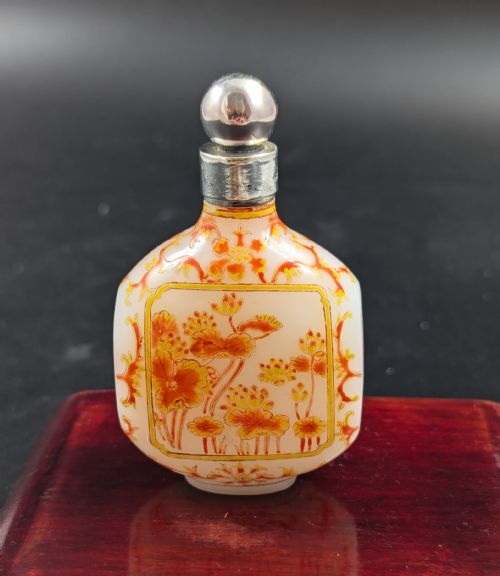
The most common examples on this page date from the Victorian era and the nineteenth century, alongside earlier Bohemian pieces. Makers utilised established European and Asian decorative vocabularies, ranging from Victorian aesthetic styles to Qing Dynasty inspired motifs. Each vessel demonstrates the characteristic weight and solidity of nineteenth century opaque glass manufacture.
The assortment on offer highlights domestic decorative items that served both ornamental and practical purposes in period interiors. Collectors frequently find table mantle lustres and floral bulb vases that retain their original hand painted enamel palettes. These survivors offer a direct connection to the decorative arts of the 1850s and 1880s.
Materials and production methods
Makers produced these vessels using heavy opaque and opaline glass substrates, which provided a dense, solid ground for subsequent decoration. Artisans applied vibrant enamels by hand, building up floral and pictorial panels across the surface of the white or pale blue glass. Gold leaf and gilding frequently supplemented the enamel work to accent rims, panels, and floral details.
The thermal treatment of glass and the chemistry of enamel pigments required precise workshop control to achieve lasting adhesion and brilliant colour. Craftsmen blew or moulded the base glass before applying delicate overglaze enamel painting by hand. Gilding was subsequently fired or fixed to the glass body to complete the rich decorative scheme.
Materials recorded across the inventory include opaline glass, crystal, enamel, and gold leaf applied to various vessel forms.
Assessing quality in the pieces
Quality in hand painted opaque glass rests upon the precision and complexity of the enamel work and the purity of the glass form. Superior pieces display finely detailed brushwork in the floral panels and secure, well-applied gilding that enhances the underlying form. Inferior examples present hurried enamel application with simpler, less defined motifs.
The overall balance of the vessel and the condition of the delicate glass surface dictate the desirability of the piece. Well-preserved items retain the crispness of their original hand painted details without rubbing to the gold leaf or enamel. The weight and proportion of the glass body also distinguish standard production items from more ambitious workshop pieces.
The Hand Painted Opaque Glass Glossary
- Opaque glass
- Glass that does not transmit light, providing a solid coloured background for painted decoration. This material was widely utilised across the nineteenth century for decorative vases and tableware.
- Opaline glass
- A delicate pale translucent or opaque glass with a milky appearance, often tinted in soft shades of blue or white. It serves as a favored canvas for fine enamel floral work.
- Mantle lustre
- A decorative glass candlestick or urn hung with crystal prisms, designed to catch the light on a fireplace mantel. These pieces frequently feature hand painted enamel decoration.
- Enamel
- Coloured vitreous paste applied to the glass surface by brush and fired to form a permanent design. It provides the brilliant floral motifs seen on nineteenth-century vessels.
- Gilding
- The application of gold leaf or gold paint to accentuate parts of a glass vessel. It frames painted panels and highlights moulded details.
Hand Painted Opaque Glass: Frequently Asked Questions
What is hand painted opaque glass?
Hand painted opaque glass encompasses decorative vessels made from solid white or tinted glass decorated with enamel brushwork. These objects include vases, lustres, and decanters produced during the nineteenth century.
Craftsmen used heavy glass bodies to support detailed floral panels and gilded highlights. The resulting pieces reflect the diverse decorative tastes of the Victorian period and Bohemian glasshouses.
How do I care for my glass?
These pieces require gentle handling to protect the delicate hand painted enamel and gilding on the surface. Dusting with a soft, dry cloth is generally sufficient for routine maintenance.
Avoid immersing decorated glass in water or using chemical cleaners, as moisture and harsh agents can damage the historical enamel work. Display items away from direct sunlight to preserve the vibrant colours.
When were these items made?
The pieces available span the eighteenth and nineteenth centuries, with a strong concentration of Victorian examples. Makers produced them during active periods of European glass manufacturing, particularly in Bohemia and Britain.
Stylistic cues and material characteristics help place individual items within specific decades like the 1850s or 1880s. Each era brought distinct preferences for colour palettes and decorative motifs.
How do I identify Bohemian pieces?
Bohemian glass often exhibits distinct enamel colours and forms, such as tankards and decanters dating around the late eighteenth and mid nineteenth centuries. These items frequently display deep historical influences in their painting styles.
Examination of the glass weight, enamel texture, and specific floral arrangements helps differentiate Bohemian work from later Victorian domestic items. The listings provide useful comparative examples for these regional characteristics.