




Antique Glass Mantle Ornaments
Antique glass mantle ornaments bring colourful Victorian and Art Deco presence to a fireplace, offering the sparkle and colour collectors prize.
Antique Glass Mantle Ornaments
When searching for antique glass mantle ornaments, you are looking at decorative items designed to sit upon a fireplace ledge, predominantly featuring glass and crystal forms from the Victorian era up through the Art Deco period. The selection on this page centres heavily on mantle lustres, along with glass figurines and ceramic figures fitted with glass details.
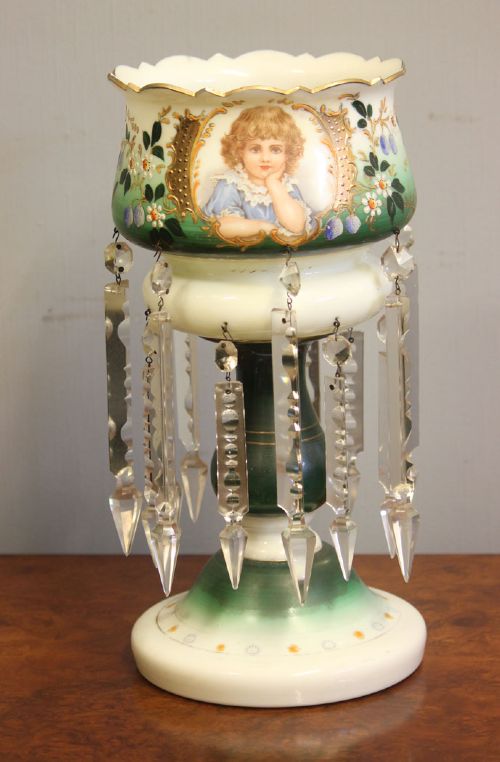
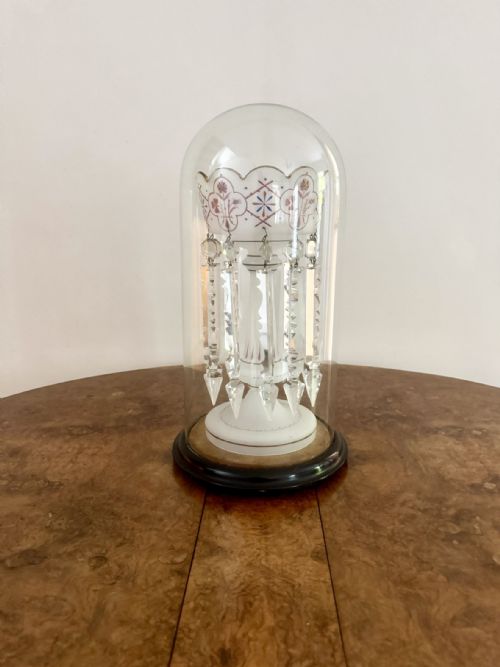
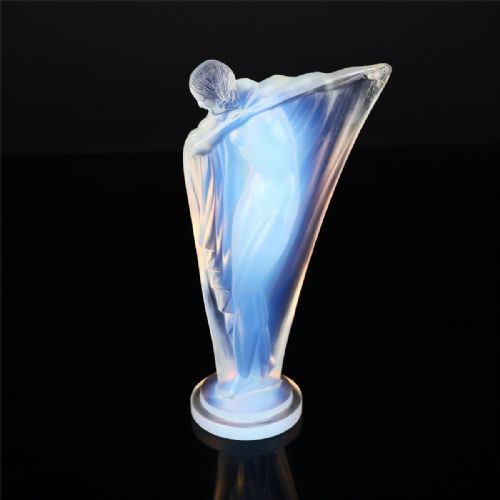
You are most likely to meet Victorian glass lustres, often found as pairs in ruby, green, or clear cut-glass configurations, alongside occasional French opalescent figures. These items served a purely decorative purpose in period interiors, catching the flickering light of coal fires and candles alike.
The assortment spans from the mid nineteenth century into the 1930s, capturing shifts in domestic taste from ornate crystal-hung lustres to stylised dancers. Each piece reflects the interior styling of its decade, whether through heavy cut-crystal prism drops or smooth opalescent moulding.
How they were made
Makers shaped these ornaments using traditional glassblowing and moulding techniques, often combining blown glass bodies with hand-cut crystal prisms suspended from metal or glass hooks. Enamel and gilt painting frequently decorated the glass surfaces, adding colourful borders or floral highlights that required careful kiln-firing to adhere.
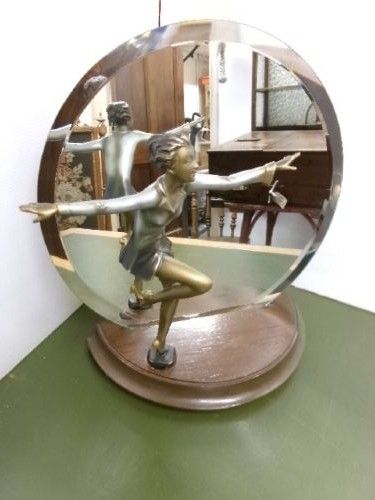
Some decorative figures integrated mixed materials, pairing glass bodies with spelter or wooden bases to provide stability for display on narrow mantle ledges. Cut glass elements relied on wheel-cutting and polishing to achieve crisp facets that maximised light refraction.
Listings on this site feature Victorian and Art Deco pieces utilising glass, cut crystal, enamel, gilt, and spelter.
What varies in quality
Quality in these ornaments rests upon the clarity and weight of the glass, the precision of any wheel-cut faceting, and the crispness of moulded details on figures. Superior examples retain their full complement of matching hanging lustres and show clean, sharp edges without excessive manufacturing bubbles.
The artistry of hand-applied enamel and gilding separates standard production from finer work, as does the stability and proportion of mixed-material mounts like spelter bases. Pieces that maintain their original matching glass drops and undamaged decorative painting command greater visual harmony.
Lucille Sevin·Etling
The Antique Glass Mantle Ornaments Glossary
- Mantel lustre
- A decorative table ornament featuring a central vase or stem fitted with a ring of hanging crystal prisms. These prisms catch and refract ambient light.
- Cut glass
- Glassware decorated by grinding facets or patterns into the surface using a rotating wheel. This technique creates sharp geometric edges that sparkle brilliantly.
- Opalescent glass
- Glass containing ingredients that cause it to display milky bluish highlights in transmitted light and warm amber tones in reflected light. It was widely utilised during the Art Deco period.
- Spelter
- An alloy of zinc and lead used as a cheaper substitute for bronze. It provided a sturdy metallic base for figurines and ornaments before being painted or bronzed.
- Prism
- A triangular cut-glass pendant suspended from the rim of a lustre. These hanging drops multiply the sparkle of the ornament.
Antique Glass Mantle Ornaments: Frequently Asked Questions
What are antique glass mantle ornaments?
They are decorative fireplace objects made predominantly of glass, crystal, and ceramic during the nineteenth and early twentieth centuries.
The category includes glittering cut-glass lustres hung with crystal prisms and stylised opalescent glass figurines from the Art Deco era.
How were mantle lustres used?
These ornaments stood upon fireplace mantlepieces to decorate Victorian and Edwardian parlours.
Their hanging crystal drops caught and multiplied the light from oil lamps, candles, and coal fires before the widespread adoption of electric lighting.
How do I date a glass mantle ornament?
Dating relies on stylistic markers such as heavy Victorian cut-crystal forms versus streamlined Art Deco moulding.
Material clues like spelter bases, ruby glass staining, and specific maker signatures help narrow the period of manufacture.
How do I care for antique glass ornaments?
Clean these delicate items gently with a soft dry cloth or minimal warm water to protect hand-painted enamel and gilding.
Handle hanging crystal prisms with extreme care during cleaning to prevent chipping or detaching the delicate suspension wires.