


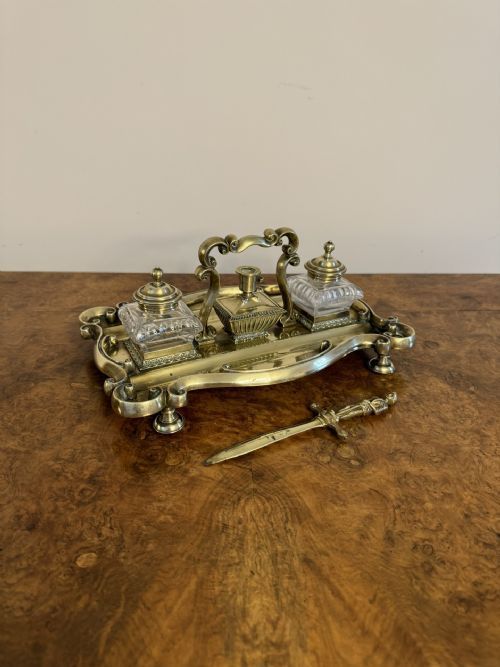
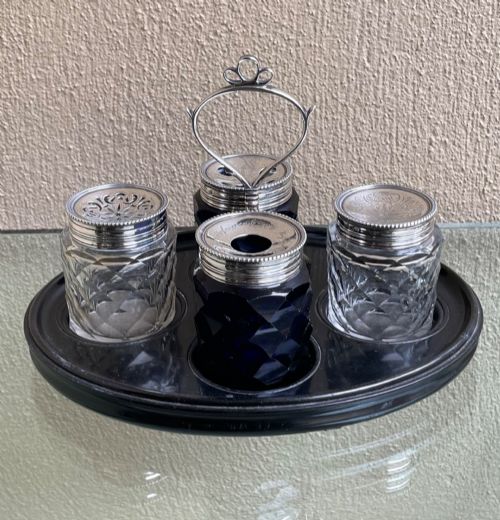
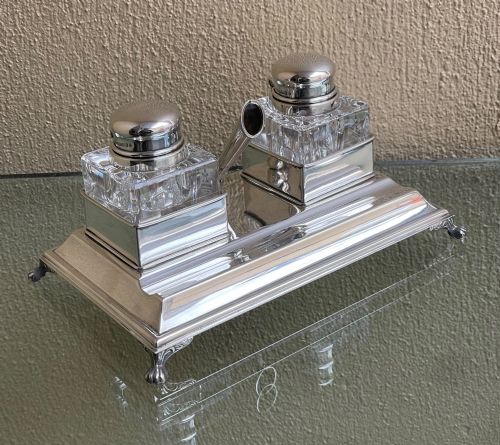
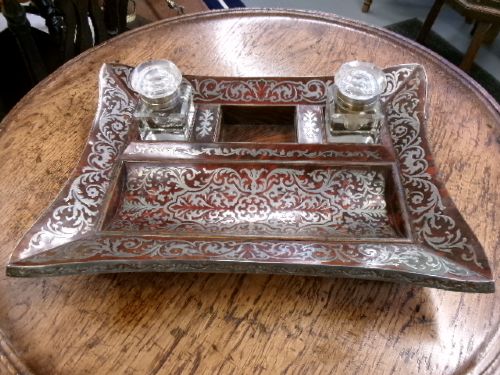

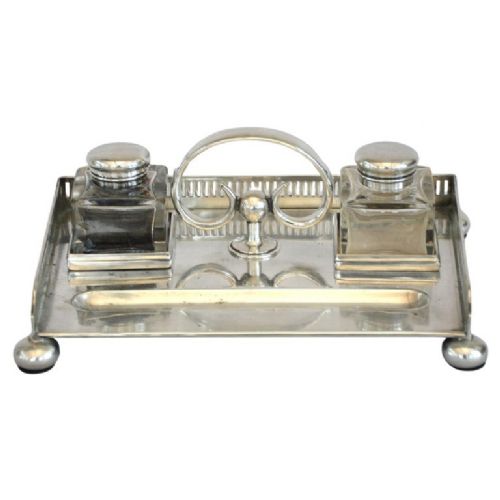


Antique Glass Inkwell Set
An antique glass inkwell set brings order and weight to a desk, pairing clear vessels with fitted stands of brass, silver, or exotic wood.
Antique Glass Inkwell Set
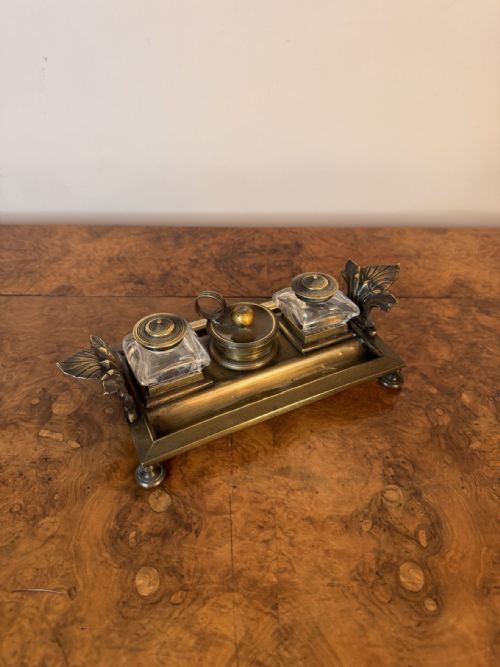
An antique glass inkwell set comprises glass ink reservoirs housed within desk stands, inkstands, or pen trays. These pieces serve as functional writing accessories designed to hold ink securely while providing a rest for pens.
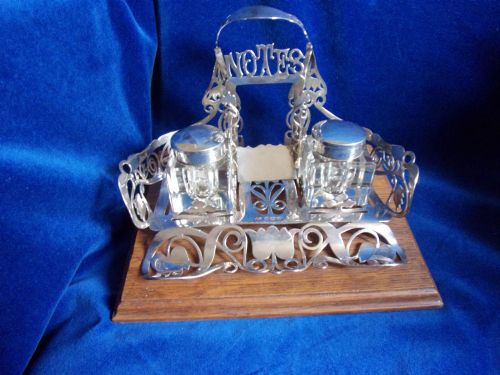
The versions most commonly met on this market date from the Victorian and Edwardian eras, spanning periods from the mid-nineteenth century to 1900. They appear frequently in forms such as brass-mounted wooden trays, silver-plated desk stands, and ornate multi-piece inkstands.
Materials span glass, cut glass, brass, silver plate, sterling silver, metal, oak, walnut, coromandel, and tortoiseshell. Styles range from Victorian Gothic Revival and French Napoleon III to Art Nouveau and Black Forest carving.
Materials and construction
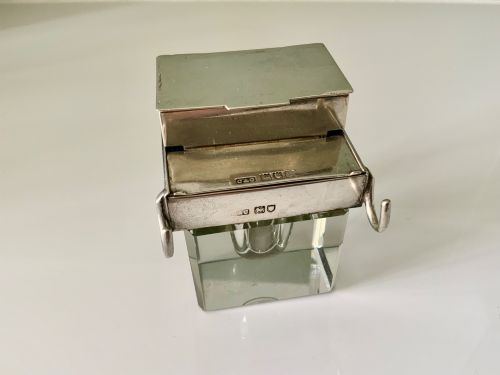
Glass inkwells are commonly formed through heavy cutting or moulding to create thick, stable bases that resist tipping during use. These glass elements pair with fitted collars, hinged lids, and mounts cast from brass or plated with silver.
Stands and bases utilise timber foundations of oak, walnut, coromandel, and rosewood, often inlaid with brass, mother of pearl, or tortoiseshell in Boulle work and Regency designs. Metalwork elements are assembled using screw fittings, while wooden components rely on traditional joinery and hand-carved detailing.
Antique Glass Inkwell Set Retail Price Guide 2026
Typical asking prices for glass inkwell set among the pieces listed under this phrase on Sellingantiques today, from the lower quarter to the upper quarter. They describe what is for sale here now, not the wider market.
Listings feature periods from the Georgian era through Victorian, Edwardian, and mid-twentieth century Elizabeth II examples.
Judging execution and materials
Quality rests upon the weight and clarity of the glass ink inserts, the precision of the metal mounts, and the choice of base materials. Solid silver, heavy cut glass, and exotic timbers such as coromandel denote higher ambition than plated base metals and common softwoods.
The refinement of decorative details, including hand-carved wooden figures, intricate Boulle inlay, and fully hallmarked silver mounts, separates standard utility pieces from exceptional desk accessories made by notable makers.
Wilkinson & Co·Walker And Hall·Elkington·Rupert Favell·James Cartland & Sons·W M F
The Antique Glass Inkwell Set Glossary
- Inkstand
- A portable stand or tray holding inkwells, pen holders, and sometimes a sander or taperstick. It forms the central writing accessory of the desk.
- Standish
- An alternative term for an inkstand, often used for seventeenth to nineteenth-century examples with covered compartments for writing equipment.
- Boulle work
- A form of marquetry using brass and tortoiseshell inlaid in ornate scrollwork patterns, developed in France and popular on Napoleon III desk sets.
- Ormolu
- Gilt bronze mounted onto decorative objects and desk stands, providing a rich golden finish characteristic of mid-nineteenth-century French pieces.
- Sheffield plate
- An early form of silver plating produced by fusing a sheet of silver to a copper base, seen on older desk stands before electroplating.
Antique Glass Inkwell Set: Frequently Asked Questions
What is the difference between an inkstand and an inkwell set?
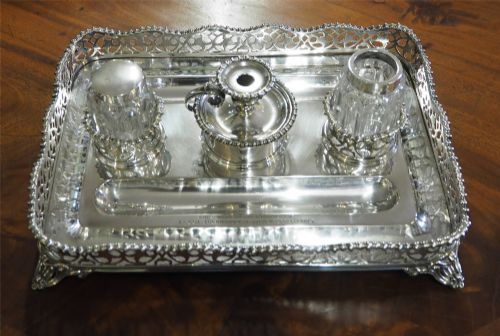
An inkstand typically refers to a complete desk unit comprising a tray, one or more inkwells, pen troughs, and accessory containers. An inkwell set may simply describe matched components or specific ink bottles paired with a base.
Larger stands often incorporated chambersticks, drawers, or sanders for drying wet ink, while simpler sets focused solely on the ink reservoir and pen rest.
How do I care for antique glass and brass inkstands?
Glass inserts should be washed carefully in warm water without harsh detergents to protect old surfaces and residues. Brass and wooden bases require dry dusting and occasional wax application for timber.
Avoid submerging wooden stands with glued or inlaid elements in water, as moisture damages adhesives and lifts delicate veneers.
Were these sets used for fountain pens?
These inkwell sets were designed for dip pens, quill pens, and steel nibs used throughout the eighteenth, nineteenth, and early twentieth centuries. Writers dipped the nib directly into the glass reservoir to load ink before writing.
Fountain pens with internal ink reservoirs largely superseded these desk accessories by the early twentieth century, shifting inkstands into decorative roles.
How can I date an antique glass inkwell set?
Dating relies on hallmarks on silver mounts, material choices, and stylistic cues such as Victorian Gothic, Art Nouveau curves, or Regency inlay. Screw threads, glass moulding techniques, and construction methods also indicate the manufacturing period.
Makers' marks stamped into metal components or silver frames offer precise attribution to firms active in the nineteenth and twentieth centuries.