



Antique Glass Front Credenza
An antique glass front credenza brings distinguished nineteenth-century display space into a principal room.

Antique Glass Front Credenza
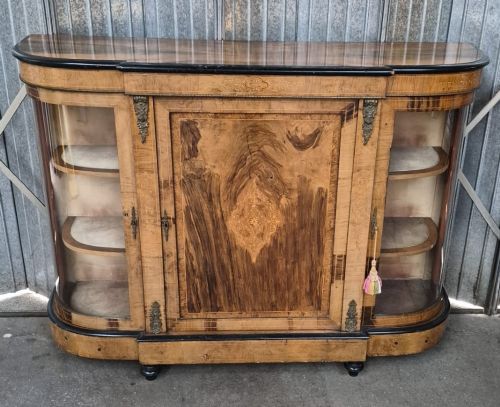
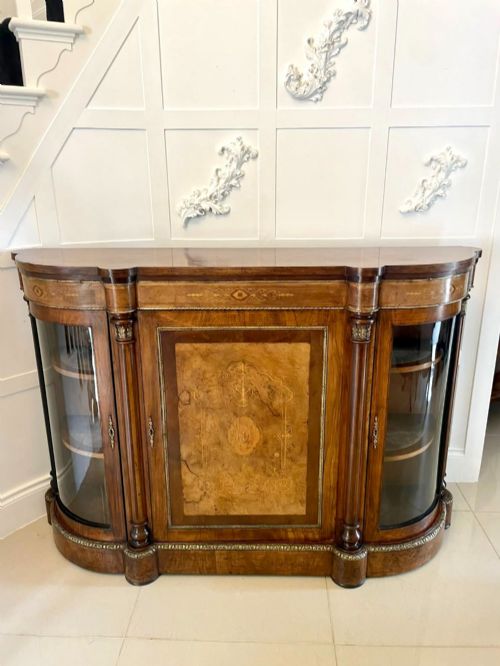
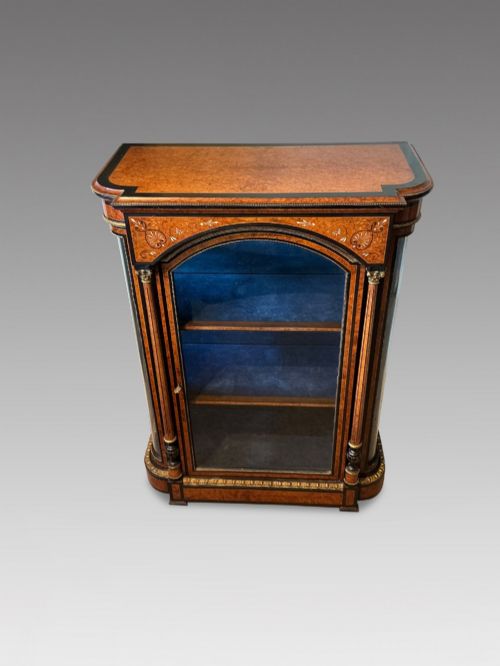
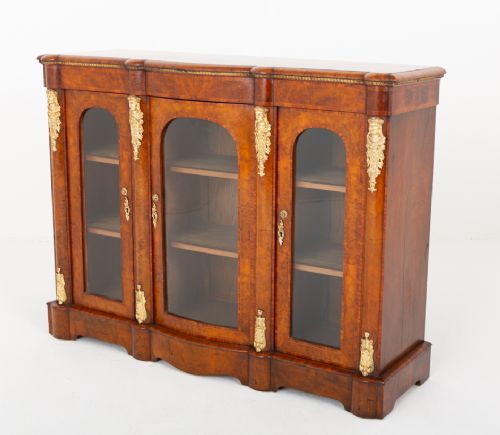
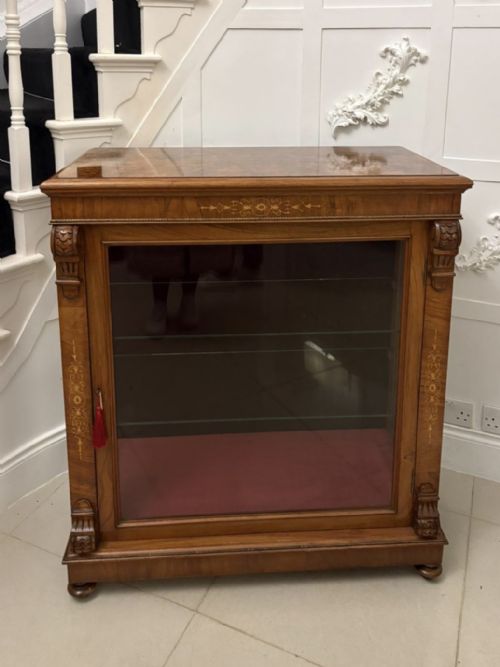
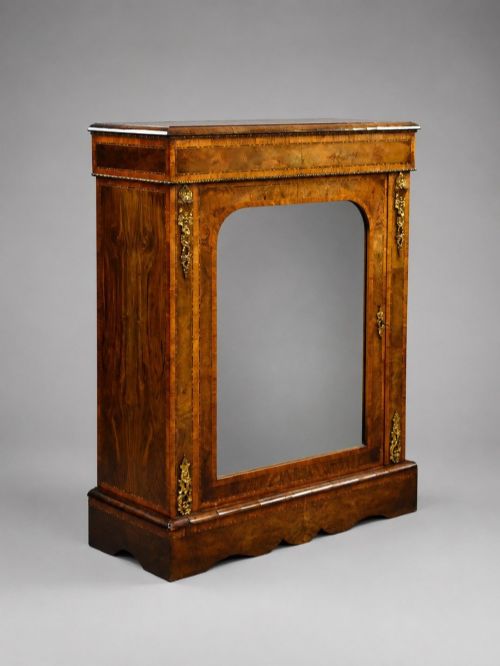
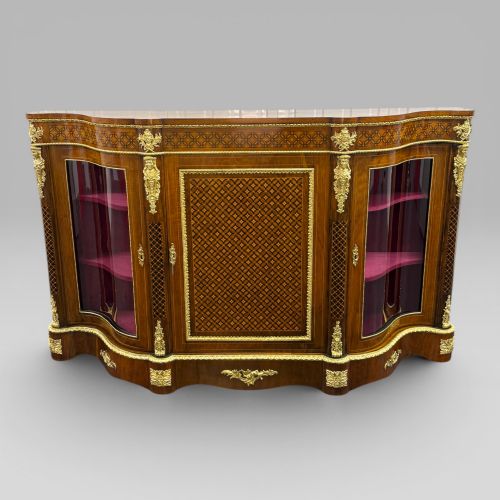
An antique glass front credenza is a low cabinet designed for storage and display, appearing most frequently from the Victorian era alongside Regency and mid-nineteenth-century examples. These pieces combine central glazed doors with flanking curved or straight cupboards, serving traditionally to exhibit porcelain and decorative objects in a drawing room.
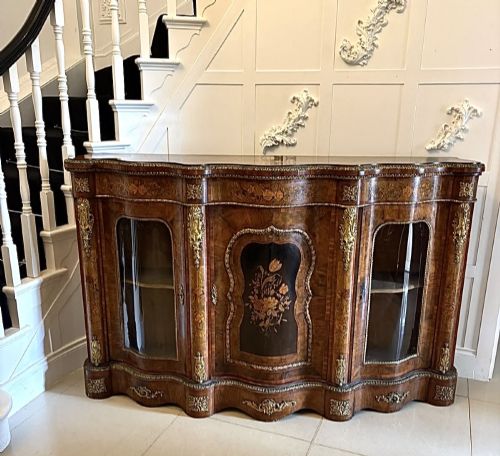
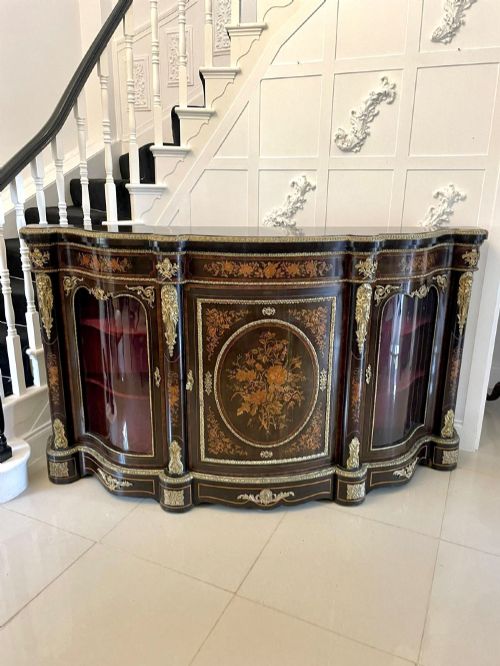
The selections available here span key nineteenth-century phases including the Aesthetic Movement, Sheraton Revival, and French Revival styles. Buyers encounter serpentine-fronted credenzas, bow-end formats, and narrower pier cabinets designed for specific wall spaces.
Originating predominantly from English workshops, these items utilise rich timber grains and glazed panels to create a commanding architectural presence in domestic interiors.
Materials and construction
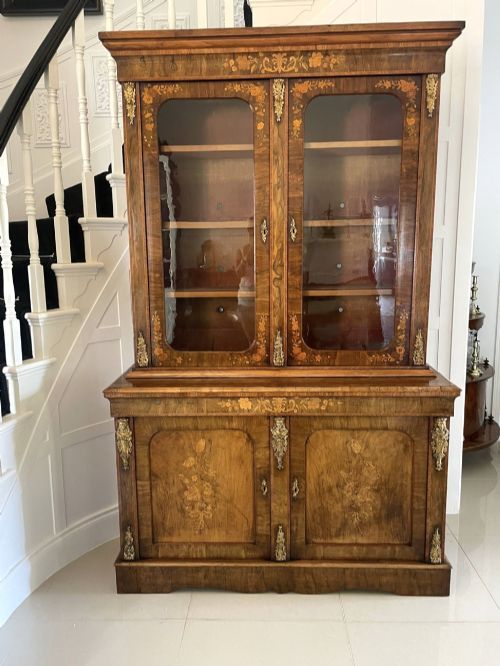
Cabinet makers utilised figured burr walnut, rosewood, and mahogany as primary timbers, frequently enhancing surfaces with intricate marquetry and boxwood inlay. Crossbanding and contrasting veneers define the structural outlines of the doors and top surfaces.
Gilded bronze or ormolu mounts punctuate the timber frames, framing glazed sections and highlighting corners alongside delicate brass stringing. Velvet-lined interiors and mirrored backs frequently complement the glass fronts to reflect ambient light through displayed items.
Antique Glass Front Credenza Retail Price Guide 2026
Typical asking prices for glass front credenza among the pieces listed under this phrase on Sellingantiques today, from the lower quarter to the upper quarter. They describe what is for sale here now, not the wider market.
Listings feature walnut, rosewood, and mahogany timbers paired with ormolu mounts across Victorian and Regency periods.
Evaluating craftsmanship
The hierarchy of quality rests upon the depth of figuring in the burr walnut veneer and the precision of the floral marquetry. Hand-cut inlay work and finely chased ormolu mounts distinguish high-workshop output from standard commercial production.
Structural harmony dictates long-term standing, where serpentine fronts and bow ends maintain tight joinery without warping. The integration of curved glass panes and the weight of cast brass fittings separate ambitious exhibition pieces from everyday domestic furniture.
Maison Gagneau·Edwards and Roberts
The Antique Glass Front Credenza Glossary
- Marquetry
- Decorative veneer work forming pictorial or floral patterns using various tinted woods. Craftsmen assemble these thin wood sections meticulously onto the core carcase.
- Ormolu
- Gilded bronze mounts applied to furniture edges and mounts. This French technique adds metallic contrast to dark timber surfaces.
- Serpentine
- A gently undulating front curve resembling a snake's movement. This shape requires skilled carpentry to achieve smooth, flowing lines.
- Pier cabinet
- A tall, narrow display cabinet designed to fit wall spaces between windows. These glazed cupboards protect small collections in principal reception rooms.
- Crossbanding
- A border of veneer laid perpendicularly to the surrounding grain. This framing technique creates a distinct visual edge on tabletops and doors.
Antique Glass Front Credenza: Frequently Asked Questions
Where did people put a credenza?
These low cabinets traditionally occupied principal drawing rooms or reception spaces, positioned flat against a main wall where they could command attention.
Their shallow depth allowed them to sit comfortably in rooms without obstructing foot traffic while offering surface space for lamps or ornaments.
How do I clean the glass?
Use a soft, lint-free cloth with a mild vinegar solution applied to the cloth rather than sprayed directly onto the glass. This prevents moisture from reaching vulnerable antique timber frames and historic veneer edges.
Exercise caution around ormolu mounts and delicate marquetry to avoid introducing cleaning liquids to aged adhesives.
Are these cabinets secure for storage?
The internal shelving behind glazed doors suits the exhibition of ceramics, glassware, and books rather than heavy utilitarian storage. Original working locks often secure the doors, though they function primarily as dust-protection enclosures.
Velvet-lined shelves cushion delicate items against accidental knocks during daily domestic life.
How do I identify Victorian styles?
Victorian examples frequently display rich burr walnut veneers combined with elaborate marquetry panels and cast ormolu mounts. Makers embraced eclectic revivals, drawing inspiration from French rococo and classical Sheraton motifs.
Heavier proportions and darker timbers distinguish mid-century output from lighter Regency predecessors.