


Antique Glass Cloche Base
An antique glass cloche base provides the solid foundation required to protect and display delicate Victorian and Edwardian curiosities.
Antique Glass Cloche Base
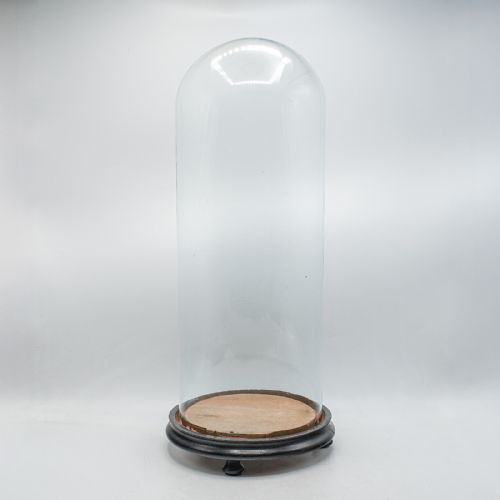
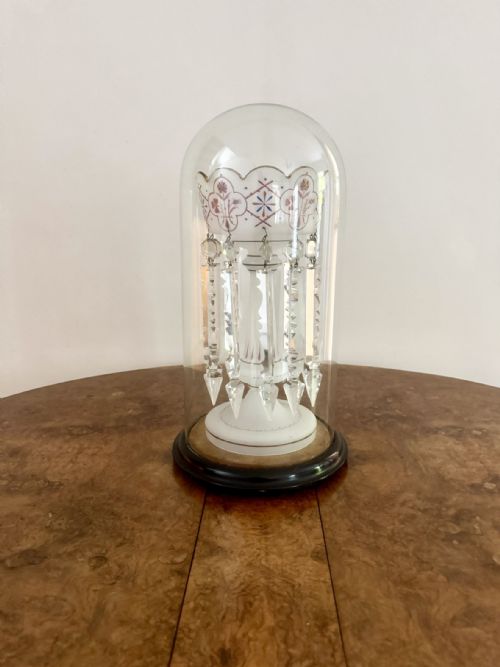
An antique glass cloche base forms the structural support for display domes and glass showcases found across the Victorian and Edwardian periods. These wooden or ebonised platforms secure delicate taxidermy, skeleton clocks, and beadwork bouquets beneath clear glass covers.
English examples dominate the available selection, often manufactured from oak, beech, pine, or ebonised wood. Many incorporate felt, velvet, fabric, or brass feet to elevate the presentation surface.
How they were made
Makers constructed these bases primarily from seasoned timbers such as oak, beech, and pine, frequently finishing the wood with ebonisation to achieve a dense, black surface. Turned mouldings and rebated channels were cut into the wood to hold the heavy blown glass domes securely in place.
Interior surfaces were frequently lined with velvet, felt, or fabric to cushion the base of clocks, taxidermy mounts, and botanical specimens. Brass elements such as small bun feet or decorative mounts appear on finer Victorian and Edwardian examples.
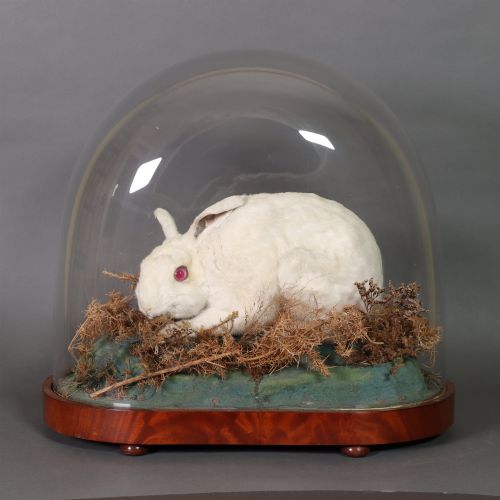
An albino rabbit stares out from beneath its Victorian glass dome, frozen in time since eighteen seventy-five.
What varies in quality
The quality of an antique glass cloche base rests on the selection of timber and the precision of the turning work. Finer examples display cleanly rebated grooves that match the heavy glass dome without wobble.
The choice of lining material also dictates the grade of the piece, with dense wool velvet and well-fitted baize marking out superior Victorian and Edwardian display cases.
James Gardner of London·A Pollard
The Antique Glass Cloche Base Glossary
- Ebonised wood
- Timber treated to imitate ebony. This dark finish was widely utilised on Victorian display bases to contrast with light-coloured specimens.
- Display dome
- A blown glass cover designed to protect interior objects from dust. It sits directly into the rebated channel of the matching base.
- Skeleton clock
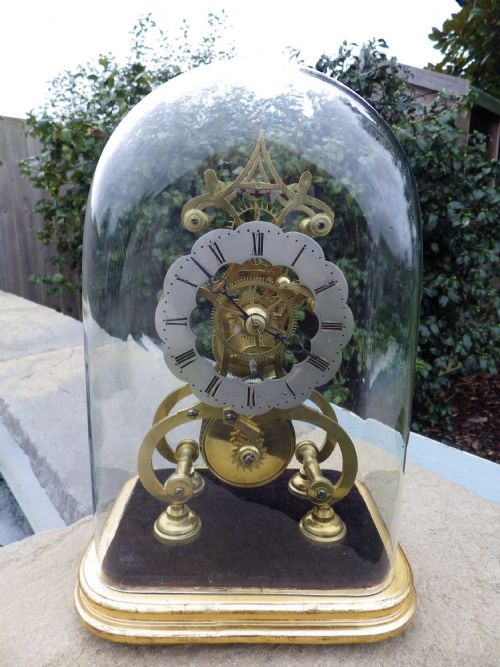
- A timepiece with an exposed gear train. These mechanical objects frequently require a tall glass dome and matching base for protection.
Antique Glass Cloche Base: Frequently Asked Questions
What fits on a cloche base?
These bases accommodate a wide variety of Victorian and Edwardian items including taxidermy birds, skeleton clocks, and beadwork bouquets.
The recessed channel holds the glass cover tightly over the displayed object.
How do I date a base?
Dating relies on the timber used, the turning style, and the lining materials such as velvet or felt.
Victorian examples often feature ebonised wood while Edwardian pieces lean toward lighter oak or beech.
Are bases sold with domes?
Most listings pair the wooden or ebonised base with its original blown glass cover.
The combined unit serves to protect delicate interior items from dust and handling.
What woods were used?
Cabinet makers utilised regional hardwoods and softwoods including oak, beech, pine, and ebonised timber.
These materials were turned on a lathe to create stable platforms for heavy glass.