
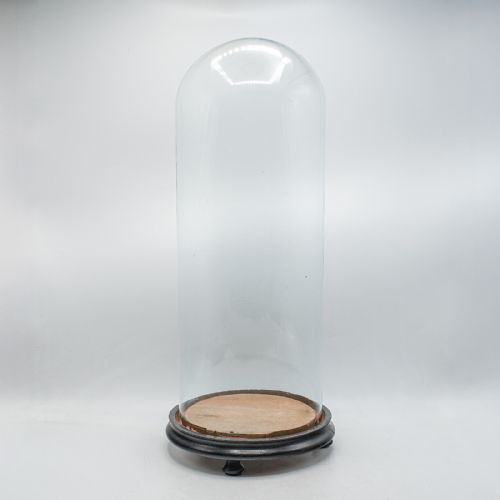


Tall Glass Dome
A tall glass dome protects cherished specimens and ornaments behind clear blown glass, bringing height and quiet elegance to any table.
Tall Glass Dome
When you search for a tall glass dome, you encounter Victorian and Edwardian display pieces designed to cover taxidermy, clocks, and delicate ornaments. These glass covers rest upon sturdy bases, creating a secure miniature environment for prized possessions.
The versions you are most likely to meet on this page hail from the Victorian and Edwardian eras, spanning the late nineteenth and early twentieth centuries. They appear alongside related display cases and cloches, offering clear protection for interior items.
Many examples house taxidermy specimens, collector pieces, or faux flowers, showing the varied domestic and scientific uses of the period. Their height allows for upright displays of birds, small animals, or tall floral arrangements.
How they were made
The blown glass covers take shape through traditional glassblowing techniques, creating smooth and curving transparent shells. These domes sit upon wooden bases, frequently fashioned from ebonised wood or walnut.
Some bases incorporate fabric or velvet linings to cushion the displayed objects and enhance the presentation of the interior specimens. Timber elements sometimes feature marquetry detailing to elevate the finish of the wooden stand.
Some nineteenth-century domes protect entire miniature gardens built from wax flowers and brightly dyed moss.
What varies in quality
The clarity and thickness of the blown glass differ across examples, with superior pieces showing fewer bubbles and greater optical purity. Heavier glass carries a more substantial presence on the table.
The finish of the wooden base distinguishes standard items from finer productions. Ebonised wood and walnut bases with neat turnings or subtle marquetry display superior craftsmanship compared to plain timber mounts.
The Tall Glass Dome Glossary
- Dome
- A rounded glass cover used to protect and display delicate objects. It forms a transparent barrier against dust and handling.
- Ebonised wood
- Timber treated to resemble ebony, providing a deep black finish. This material is common for the bases of Victorian display domes.
- Taxidermy showcase
- A specialised enclosure designed to house preserved animal specimens. These cases protect fragile taxidermy from environmental damage.
- Marquetry
- Inlaid wood pieces arranged to form decorative patterns on a surface. It adds visual texture to the timber bases of select display cases.
- Cloche
- A bell-shaped glass cover traditionally used in gardens or for food protection. In interior displays, it serves a similar function to a glass dome.
Tall Glass Dome: Frequently Asked Questions
What fits under a tall glass dome?
These domes typically house taxidermy specimens, Victorian clocks, ornaments, and delicate floral arrangements. Their generous height accommodates upright objects that standard cases cannot cover.
Collectors also use them to display unusual natural history specimens, seashells, and intricate models safely away from dust and accidental damage.
How do I clean a glass dome?
Lift the glass carefully from its base using both hands and place it on a stable, flat surface before cleaning. Use a mild glass cleaner and a soft cloth to wipe the interior and exterior surfaces.
Avoid using harsh abrasive materials that might scratch the old glass. Wipe the wooden base gently with a dry or slightly damp cloth, depending on its finish.
Are Victorian and Edwardian domes different?
Victorian examples often feature heavier, deep-toned ebonised wooden bases and heavier blown glass. They frequently house elaborate taxidermy or clock mechanisms from the mid to late nineteenth century.
Edwardian versions tend to display slightly lighter construction while maintaining similar forms. Both periods prioritize the clear presentation of interior specimens.
Can I display items without the base?
The glass dome and its matching base function as an integrated unit designed to seal out dust. Placing the dome directly on a table without its fitted base leaves the edges vulnerable and disrupts the proportions.
Keeping the piece with its original ebonised or walnut base preserves its historical context and ensures a stable resting surface for the glass.