
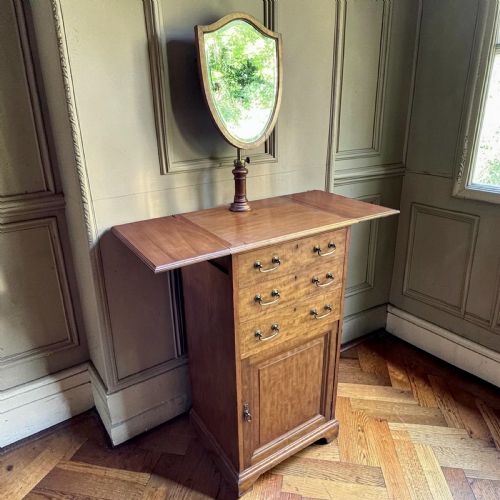


Antique Glass Cabinet Table
An antique glass cabinet table brings glass-topped display surfaces and enclosed timber frames into domestic spaces for showcasing small treasures.
Antique Glass Cabinet Table
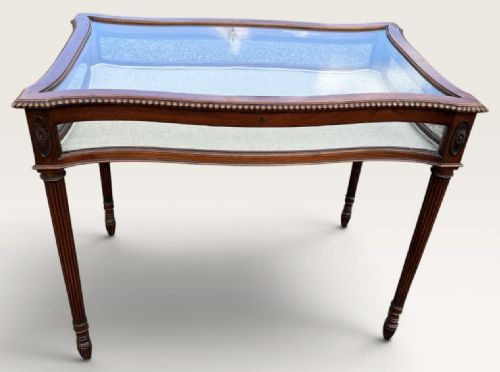
An antique glass cabinet table combines a glazed display surface with a functional table format, frequently referred to as a bijouterie table or vitrine. These pieces span Victorian, Edwardian, and early twentieth-century periods, utilising mahogany, satinwood, and walnut timbers.
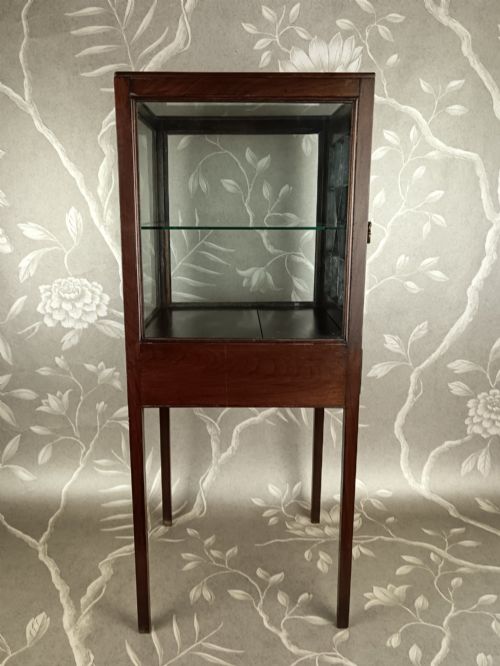
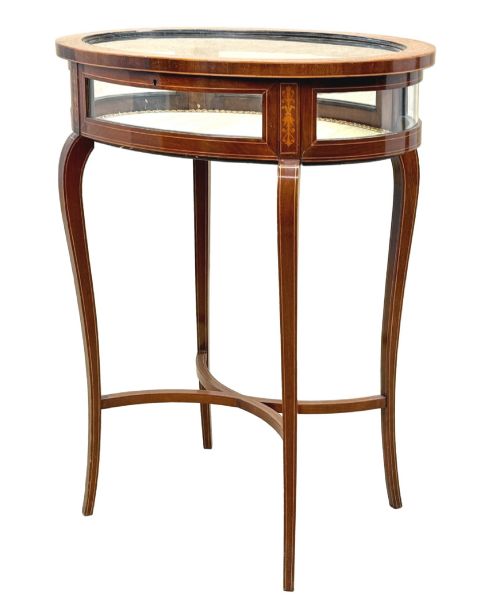
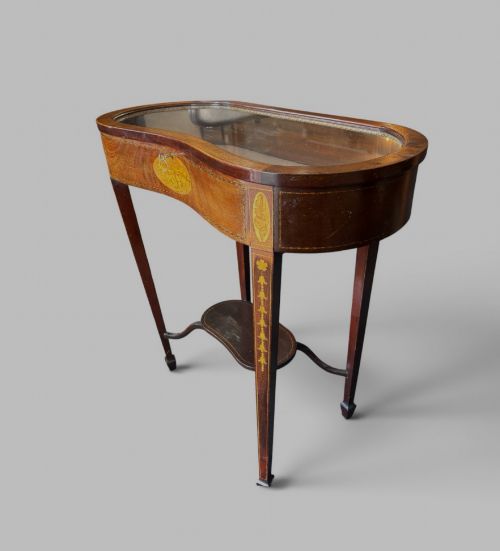
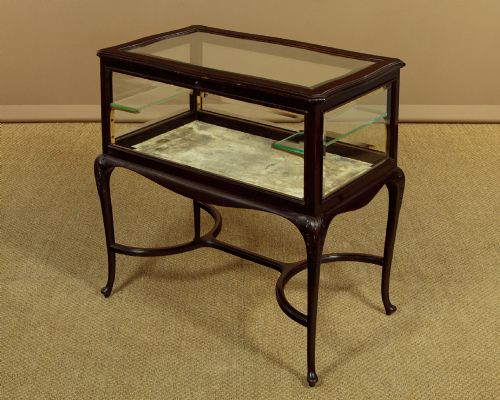
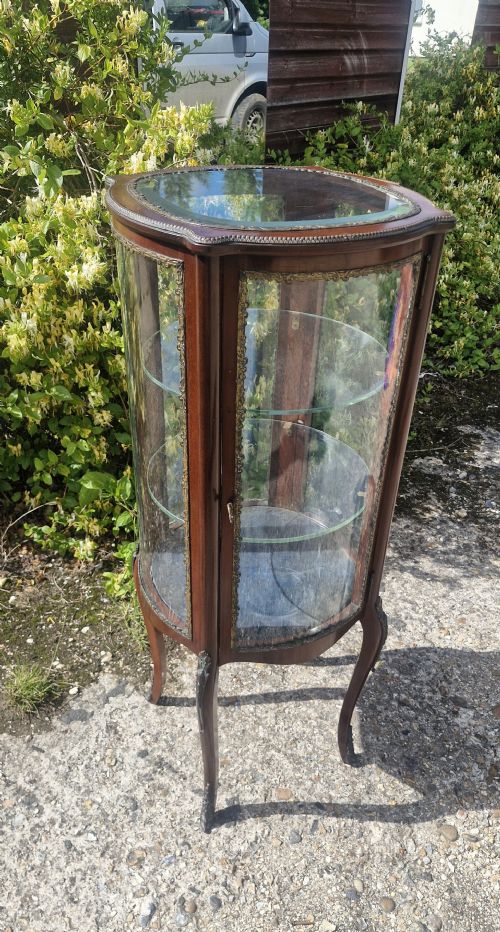
The most common forms on this page include serpentine, kidney-shaped, and oval bijouterie tables alongside tabletop display cases. Makers from the Edwardian era and the nineteenth century produced these glazed compartments to hold jewellery, trinkets, and specimens.
How they were made
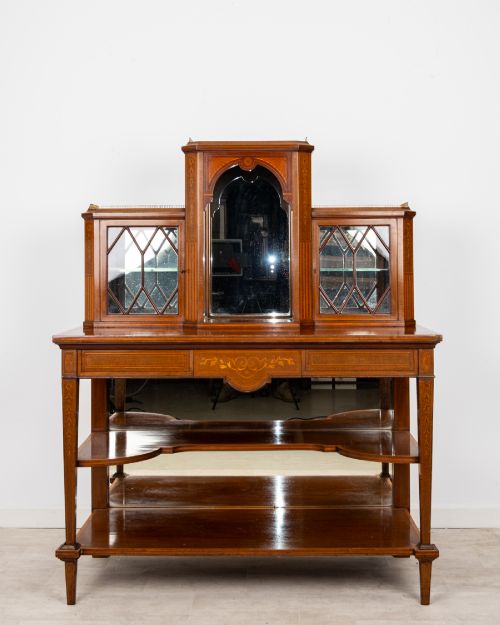
Cabinet makers built the structural frames using solid and veneered hardwoods such as mahogany and satinwood, often incorporating delicate stringing and marquetry inlays. Glazed tops and sides permitted light to enter the interior display well from multiple angles.
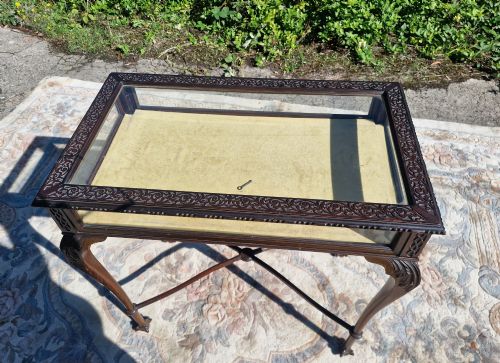
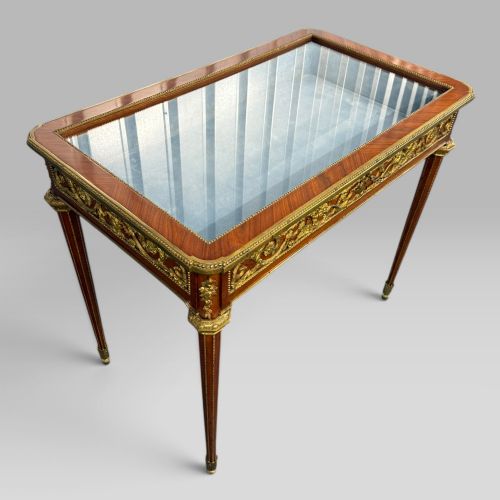
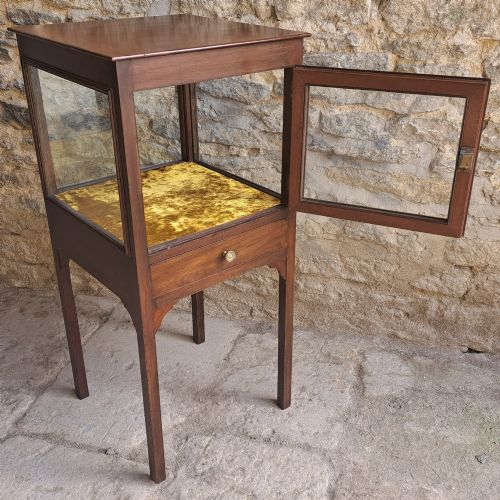
Metal mounts in brass, ormolu, and gilt bronze provide structural decoration around the glass panels and hinged lids. Interior wells frequently feature linings of velvet or fabric to cushion the objects placed inside.
Listings feature mahogany, satinwood, walnut, and kingwood timbers combined with brass, ormolu, and velvet linings.
What varies in quality
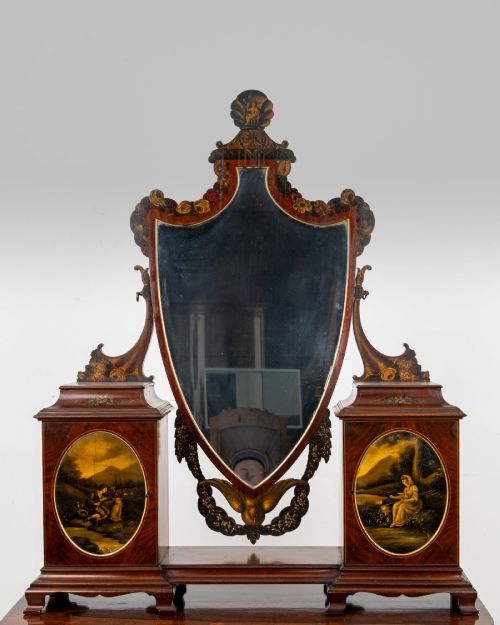
The sophistication of the timber work and timber selection separates standard examples from finer productions, particularly in the choice of figured veneers and intricate marquetry. Subtle details like serpentine shaping and hand-carved mahogany motifs indicate higher craftsmanship.
The integration of cast ormolu and gilt-bronze mounts distinguishes superior pieces, along with the precision of the glazed framing. Well-engineered hinges and properly fitted glass lids reflect the original maker's standard of construction.
The Antique Glass Cabinet Table Glossary
- Bijouterie table
- A specialised display table featuring a glazed compartment beneath the top surface for showing small ornaments and jewellery. These pieces gained popularity during the Victorian and Edwardian periods.
- Vitrine
- An enclosed glass cabinet designed for displaying porcelain, curiosities, or decorative objects. The term encompasses both standing cabinets and table-height display cases.
- Ormolu
- Gilded bronze mounts applied to furniture and decorative objects during the eighteenth and nineteenth centuries. This decorative technique adds metallic detail to mahogany and kingwood frames.
- Serpentine
- A curved shape featuring a convex centre flanked by concave curves, often seen on the edges of table tops. This flowing contour requires skilled woodworking.
- Satinwood
- A lustrous, hard timber with a yellowish colour, utilised for veneers and inlay work on fine furniture. It contrasts richly with darker woods like mahogany.
Antique Glass Cabinet Table: Frequently Asked Questions
What is a bijouterie table used for?
These tables served primarily to exhibit small personal possessions, medals, and decorative items under glass. The enclosed display well kept delicate objects safe from dust while allowing guests to inspect them easily.
In modern settings, they function effectively as coffee tables or side tables with built-in display space. Collectors utilise the glass compartments to showcase pocket watches, coins, and small antiques.
How do I date an Edwardian display table?
Edwardian pieces typically date between 1901 and 1910, featuring lighter timbers such as satinwood and inlaid mahogany. The styles of this period often draw inspiration from earlier eighteenth-century designs.
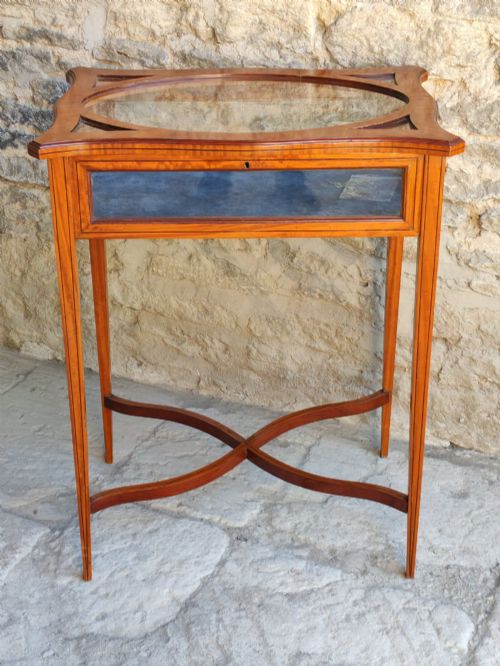
Examining the construction methods, interior fabric linings, and brass hardware helps confirm the manufacturing era. Cabinet makers of this time frequently combined glazed tops with slender tapered legs.
What woods were used for these cabinets?
Mahogany remains the predominant timber found across these listings, appearing in both solid and veneered formats. Cabinet makers also employed satinwood, walnut, and kingwood for contrasting details and inlaid marquetry.
Secondary woods like oak or pine often appear on internal framing components that remain hidden from view. The choice of timber generally reflects the prevailing fashion of the piece's period.
Are the glass panels original?
Many surviving tables retain their original bevelled or flat glass panes, which may exhibit minor surface wear consistent with age. Inspecting the glass helps determine whether the top has suffered replacement over the decades.
Original glazing often shows slight thickness variations and tiny bubbles trapped within the material. These subtle imperfections confirm the historical authenticity of the display compartment.