


Mahogany Curio Cabinet Table
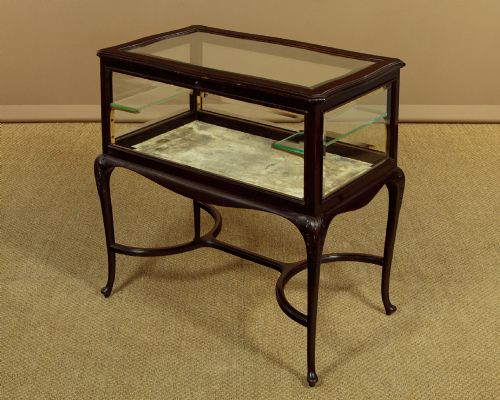
A mahogany curio cabinet table puts small collections behind glass at eye level, combining a display case with a compact surface.
Mahogany Curio Cabinet Table
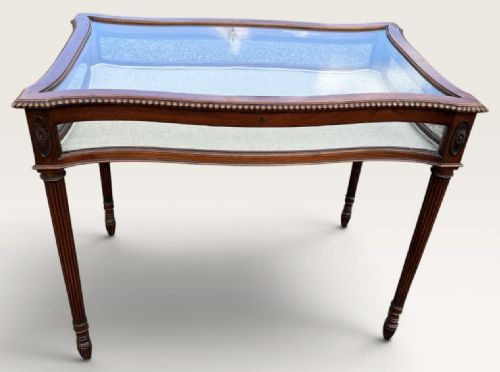
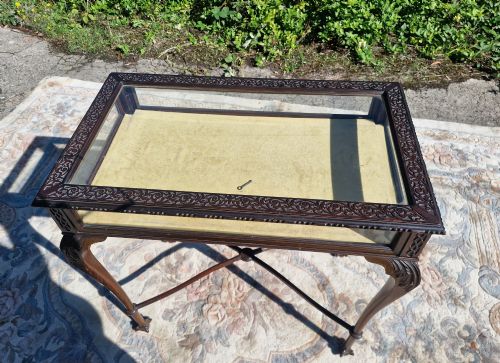
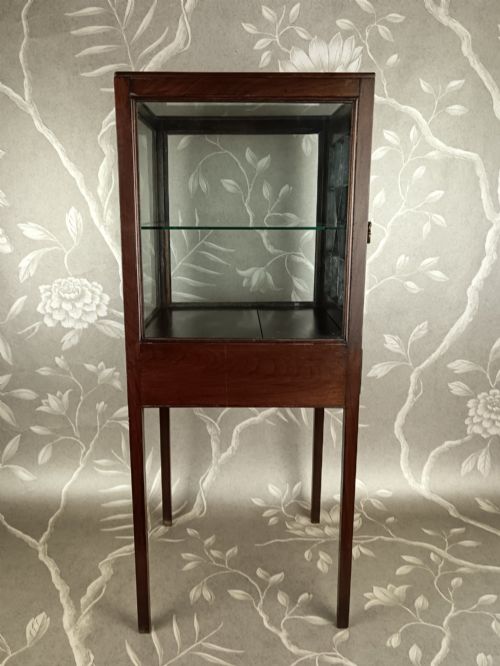
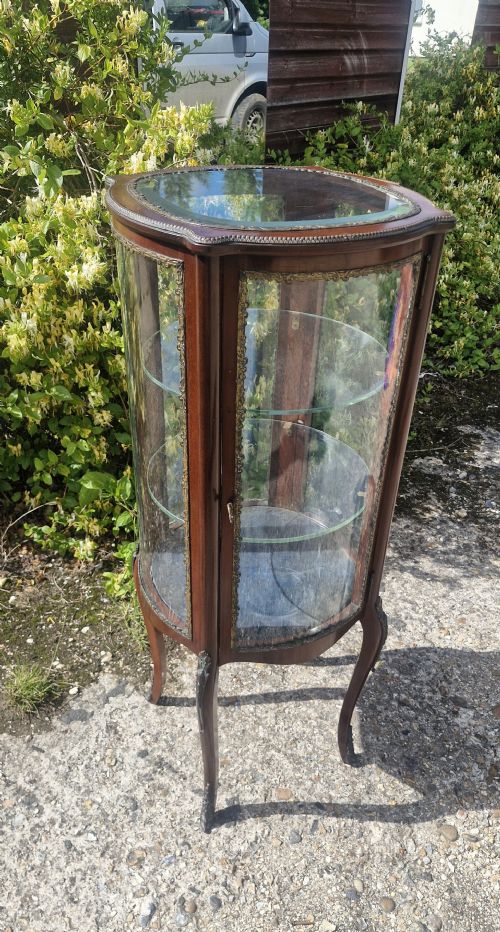
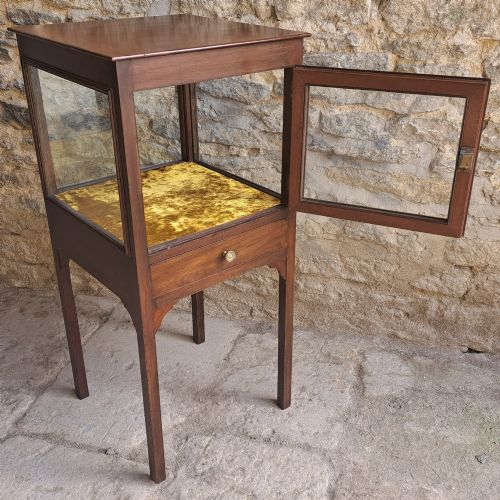
A mahogany curio cabinet table functions primarily as a vitrine or bijouterie table designed to exhibit jewellery, medals and small ornaments inside a glazed compartment. These items span periods from the eighteenth century through the Edwardian era and the 1920s, drawing on Georgian, Victorian and continental design traditions.
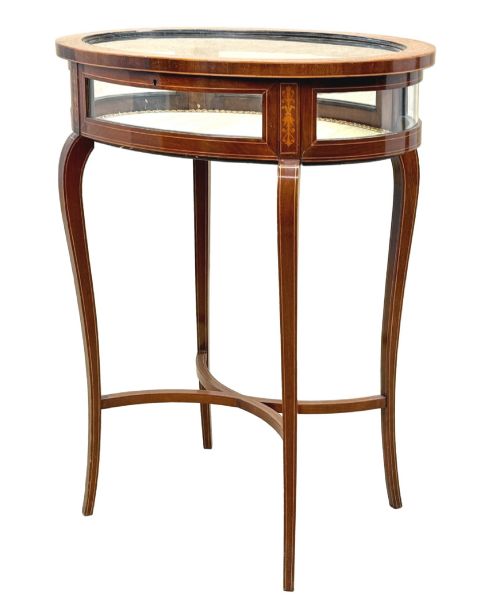
The form appears most frequently as an Edwardian or late nineteenth-century table with glazed sides and a hinged or lift-off top. Makers built these pieces to stand in drawing rooms and boudoirs, keeping precious objects secure while allowing guests to inspect them from above.
How they were made
Makers constructed the primary framework in solid mahogany, frequently applying satinwood or marquetry inlay to enhance the top and leg surfaces. Brass, ormolu and gilt metal mounts reinforce the glazed panels and frame the opening edges.
Glazing forms the central technical requirement, utilising clear fitted glass panels held securely within rebated timber frames. Interiors commonly feature original fabric or velvet linings designed to cushion delicate collectors' pieces.
Materials recorded across the selection include mahogany, glass, brass, velvet, satinwood, ormolu and gilt metal.
What varies in quality
The refinement of the timber and the precision of the joinery set finer examples apart from standard production pieces. Finely figured mahogany grain, intricate marquetry work and crisp brass or ormolu mounts indicate superior workshop output.
The weight and clarity of the glass, alongside the smooth action of the hinged lid and its lock, demonstrate the original standard of manufacture. Original velvet or fabric linings preserved in good condition add further distinction.
Edwards and Roberts
The Mahogany Curio Cabinet Table Glossary
- Bijouterie table
- A display table with a glazed top and sides specifically built for showing small valuable objects and jewellery. These pieces emerged in various forms during the nineteenth and early twentieth centuries.
- Vitrine
- An enclosed glass cabinet designed for displaying porcelain, curiosities and objects of art. The term applies to both upright display cases and table-height compartments.
- Marquetry
- Decorative woodwork formed by fitted veneer patterns cut from different coloured timbers. Craftsmen used this technique to ornament table tops and friezes.
- Ormolu
- Gilt bronze mounts applied to furniture edges, legs and corners for decorative effect. This finish appears frequently on nineteenth-century continental and French-influenced pieces.
Mahogany Curio Cabinet Table: Frequently Asked Questions
What fits inside a curio table?
These tables suit small collector's items such as pocket watches, rings, medals, coins and miniature portraits. The shallow glazed depth keeps items arranged flat and visible.
Larger ornaments or books belong on open shelves or standard display cabinets rather than inside these specialised compartments.
How do I date an Edwardian piece?
Edwardian examples typically date between 1901 and 1910, often showing Sheraton Revival influence through satinwood inlay and tapered legs. Construction methods from this period include machine-planed timber mixed with hand-finished details.
Comparison with earlier Georgian or Victorian models reveals lighter proportions and characteristic Edwardian brass hardware within the glazed frame.
Are the fabric linings usually original?
Many surviving tables retain their original velvet or silk linings, though wear and fading occur over time. Replacement fabric appears frequently when dealers restore a piece for modern display.
Examining the edges beneath the glass helps determine whether the textile dates to the original manufacture or represents a later refurbishment.
Where should I place one at home?
Positioning a curio table away from direct sunlight protects both the mahogany timber and any fabric lining from fading. A central drawing room or hallway location allows light to pass through the glass top.
Ensure adequate floor space around the piece so the hinged lid can open fully without obstruction from surrounding furniture.