
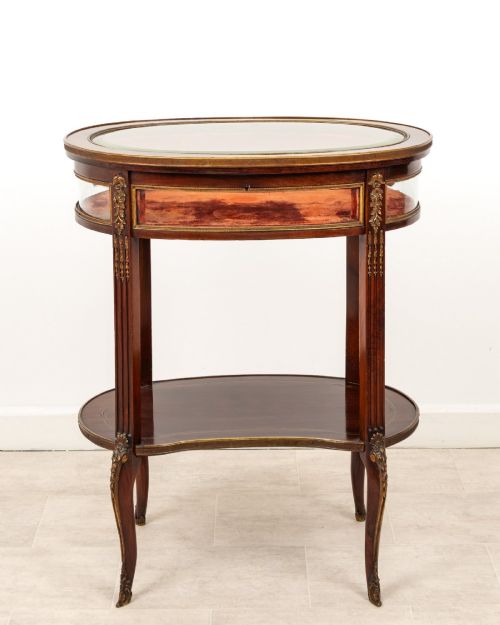


Glass Top Curio Table
These pieces known as a glass top curio table combine the secure storage of a cabinet with the intimate display of a showcase.
Glass Top Curio Table
A glass top curio table is a specialised display surface designed to exhibit small treasures, medals and curiosities beneath a clear protective panel. Buyers seeking these items encounter numerous examples from the Victorian and Edwardian eras alongside continental revival pieces.
Most entries belong to the category of bijouterie tables or display cabinets, constructed with hinged or fitted glass lids. English and French variations dominate, ranging from modest rectangular tables to heart-shaped and kidney-shaped forms.
The typical piece sits upon slender legs, raising a glazed compartment to eye level whether standing or seated. These furnishings served drawing rooms and boudoirs as personal museums for the display of collected keepsakes.
What varies in quality
Quality rests upon the selection of timber veneers and the crispness of the brass or ormolu mounts applied to the frame. Superior examples display refined inlay work and substantial cast bronze elements rather than stamped metal.
The proportion of the legs relative to the glass case dictates the elegance of the silhouette. Finer pieces maintain structural rigidity without heavy bracing, allowing the glazed compartment to remain the visual centre.
French Rococo Revival and Louis XVI styles appear frequently among nineteenth-century examples.
Quincy Showcase Works
The Glass Top Curio Table Glossary
- Bijouterie table
- A small display table with a glass top and sides intended for small valuable items. These pieces originated in France and became popular in English drawing rooms during the nineteenth century.
- Ormolu
- Gilded bronze mounts applied to furniture surfaces for decorative effect. This technique was widely utilised by French cabinetmakers on nineteenth-century display cases.
- Inlay
- A technique where pieces of contrasting wood or metal are inserted into the primary surface to form a pattern. Edwardian and Victorian makers utilised this method to decorate table tops and legs.
- Kingwood
- A dense exotic timber with distinctive dark figure lines used for high-grade veneering. Cabinetmakers favoured this material for decorative French revival pieces.
- Curio
- A small object of art, curiosity or collectible interest. These items fill the glazed compartments of display tables.
Glass Top Curio Table: Frequently Asked Questions
What fits inside a curio table?
These display surfaces suit small collectibles such as pocket watches, medals, porcelain figures and mounted insects. The shallow depth keeps items arranged neatly within view.
Heavier objects or large volumes exceed the weight tolerance of the glass panels and interior fabric linings. Curators restrict contents to delicate artefacts that benefit from close inspection.
How do I clean the glass?
Glass panels require mild cleaning solutions applied with a soft cloth to protect surrounding wood and metal mounts. Moisture must remain away from the internal velvet or fabric lining.
Harsh chemical sprays can damage nineteenth-century French polish and corrode ormolu mounts. Gentle wiping preserves the original patination of the timber.
Where should I place it?
Drawing rooms, hallways and studies provide suitable environments away from direct sunlight that fades interior fabrics. Placing the table where natural light strikes the glass enhances the visibility of the contents.
Proximity to heat sources causes timber to warp and veneers to lift from the core. Stable room temperatures protect the structural integrity of the frame.
Are the glass lids removable?
Most lids attach via hinges designed to hold the glass in an open position for arranging objects. Forcing lids beyond their natural stop damages the brass hardware.
Fixed glass panels occur in certain cabinet variants where access relies on side doors rather than top openings. Checking the hinge mechanism reveals how the maker intended the compartment to function.
How do I date a piece?
Dating relies on timber choices, leg styles and the presence of revival motifs such as Louis XV or Edwardian Chippendale. Nineteenth-century examples often incorporate heavy ormolu mounts and rosewood.
Later pieces from the early twentieth century display lighter mahogany frames and simpler inlaid lines. Maker marks and construction joints provide further confirmation of the period.