




Antique Glass Bowl Stand
An antique glass bowl stand serves tables with cut crystal, cranberry glass, and silver plate from the Victorian and Edwardian periods.
Antique Glass Bowl Stand
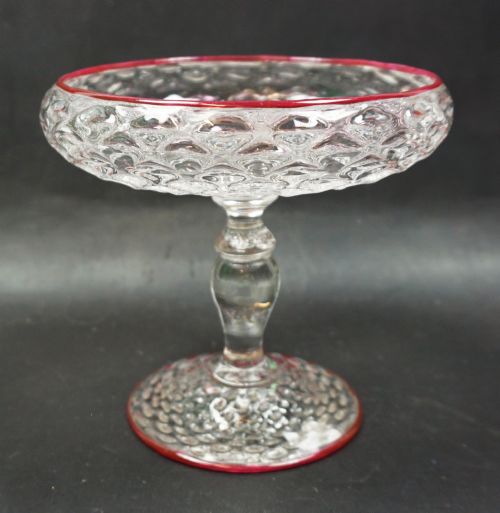
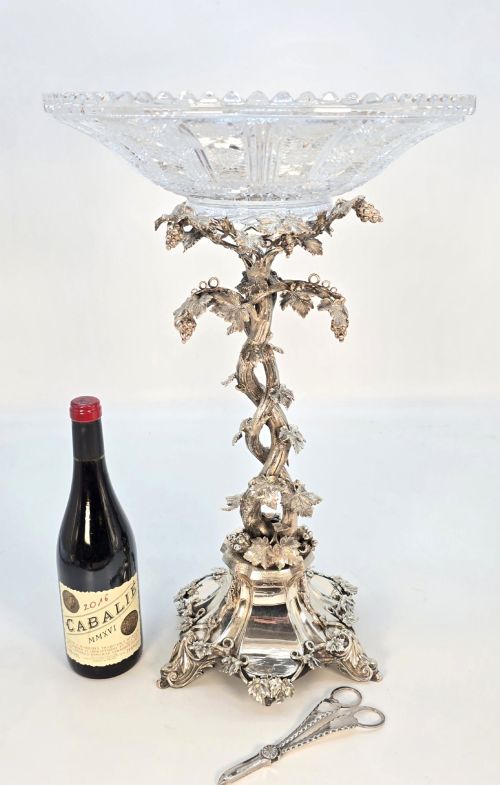
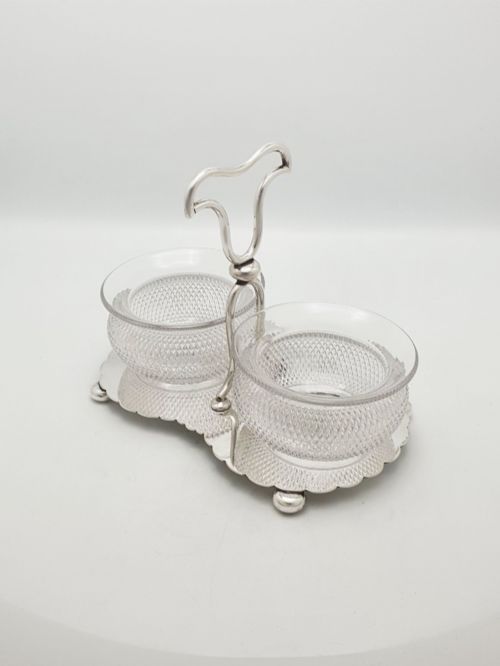
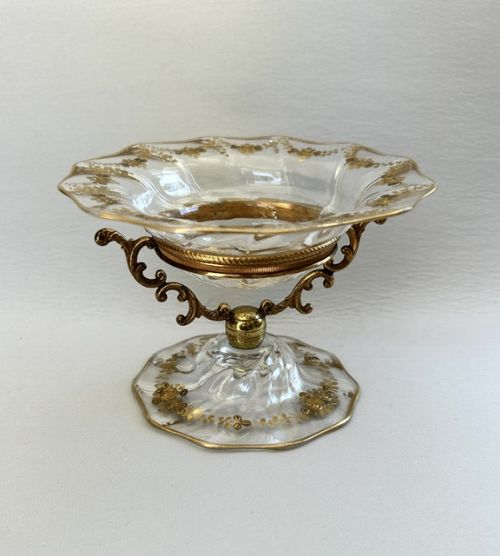
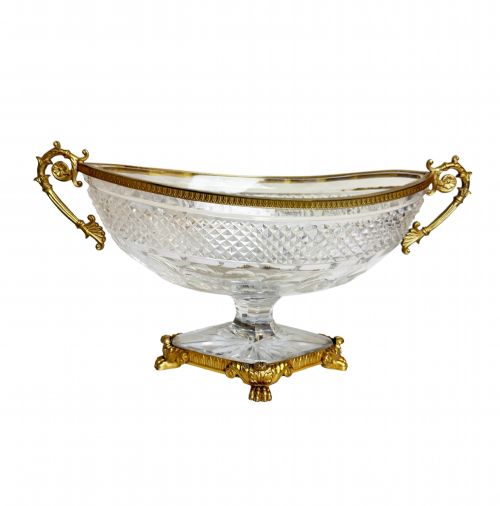
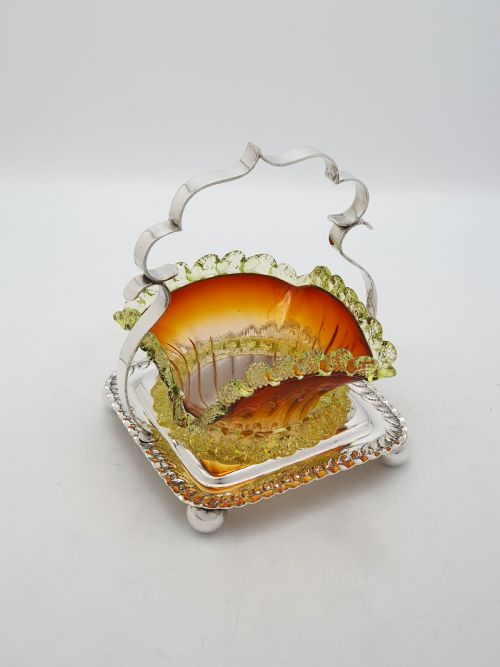
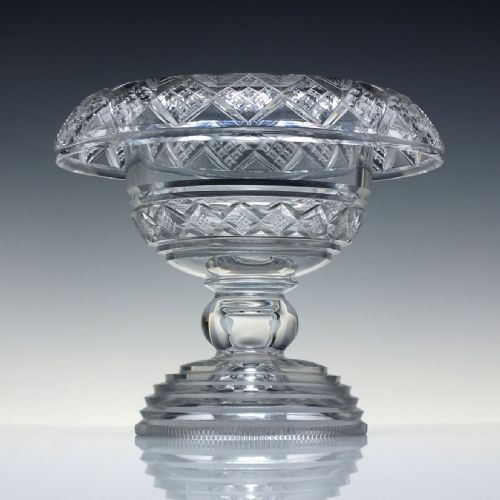
When you examine an antique glass bowl stand, you encounter dining table centrepieces, preserve dishes, tazzas, and épergnes designed to hold removable glass vessels. These items bridge utilitarian dining ware and elaborate display pieces, emerging in forms ranging from Georgian Irish standing bowls to Edwardian silver plated frames holding amber, cranberry, or vaseline glass.
The pieces on this page span the nineteenth and early twentieth centuries, encompassing Victorian, Edwardian, Art Nouveau, and Georgian styles. English and French workshops produced these stands for domestic service and decorative display, utilising metals like silver plate, ormolu, and sterling silver to support heavy crystal and pressed glass bowls.
Materials and construction methods
Manufacturers combined metalwork and glass production, pairing silver plate, ormolu, or Old Sheffield plate frames with lead crystal, cut glass, or coloured vessels. Metal stands were cast, chased, or electroplated, while glass bowls were moulded, free-blown, or heavy-cut with geometric and floral motifs.
Makers integrated glass and metal through fitted rims, pedestals, and scrolling arms designed to secure detachable bowls safely. Techniques such as acid etching, honeycomb moulding, and casing layers of coloured glass over clear crystal appeared across English and continental workshops.
Listings feature silver plate, cut crystal, cranberry glass, and ormolu across Victorian, Edwardian, and Art Nouveau periods.
Distinctions in manufacture and material
Quality rests in the weight and clarity of the glass coupled with the crispness of the metal mounting. Heavy lead crystal with deep hand-cut facets and substantial silver plating or fire-gilt ormolu represent the finer end of production, while lighter pressed glass and thinner plating sit lower down.
Maker attribution and decorative ambition set exceptional examples apart from standard dining ware. Signed pieces from established firms featuring figural ormolu mounts, complex épergne tiers, or specialised glass hues like vaseline and cranberry demonstrate superior craftsmanship.
Walker and Hall·WMF·James Dixon·Christofle et Cie
The Antique Glass Bowl Stand Glossary
- Tazza
- A shallow bowl or dish mounted on a stem and foot, used for serving fruit or sweets on the dining table.
- Épergne
- A large table centrepiece featuring a central bowl and multiple branching arms holding smaller baskets or dishes.
- Ormolu
- Gilded bronze, widely utilised in French nineteenth-century decorative metalwork for stands and mounts.
- Vaseline glass
- A type of glass coloured with uranium dioxide, producing a distinctive yellow-green hue that fluoresces under ultraviolet light.
- Old Sheffield plate
- A composite material formed by fusing a thin sheet of silver to a thicker copper base, common in pieces from the late eighteenth and early nineteenth centuries.
Antique Glass Bowl Stand: Frequently Asked Questions
What is a glass bowl stand used for?
These stands functioned on dining tables to present fruit, preserves, condiments, or floral arrangements during formal meals. The raised metal frames held glass vessels securely above the table surface for easy service.
Over time, many served primarily as decorative centrepieces in drawing rooms and dining rooms rather than functional tableware.
How do I identify Victorian and Edwardian stands?
Victorian examples often feature heavy cut crystal, elaborate silver plate, and figural ormolu mounts influenced by French Rococo revival styles. Edwardian pieces tend to display lighter frames supporting amber, cranberry, or vaseline glass in simpler aesthetic or Art Nouveau designs.
Examining the weight of the metal, the depth of glass cutting, and any maker stamps helps pinpoint the manufacturing era.
Are the glass bowls removable from the stands?
Most glass bowls and dishes lift directly out of their metal frames, resting in fitted rings or supported by branching arms. This removable design allowed for easy cleaning of the glass and separate polishing of the silver plate or bronze mounts.
When handling these pieces, check whether the glass sits loose in the mount or relies on specific securing pins.
What is cranberry glass?
Cranberry glass is a pinkish-red transparent glass produced by adding gold chloride to the molten glass batch. It gained popularity during the Victorian period for decorative preserve dishes, jam pots, and table centrepieces.
Pieces often featured frilled rims or were paired with silver plated stands to highlight the bright colour.