


Antique Giltwood Shelves
Antique giltwood shelves bring warmth and historic craftsmanship to a room, offering functional display space wrapped in brilliant gold leaf.
Antique Giltwood Shelves
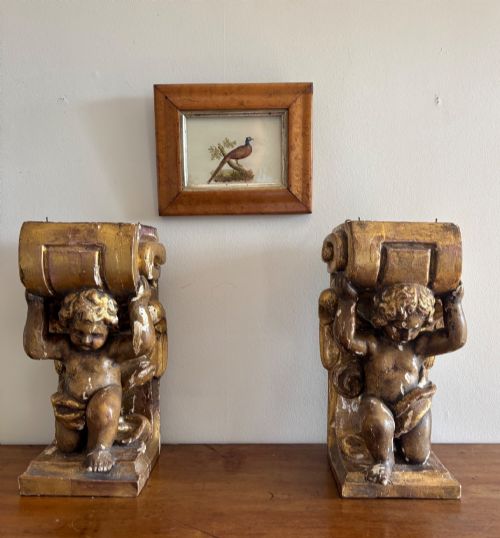
When you search for antique giltwood shelves, you are looking at ornamental wall brackets, corner units, and mirrored display ledges designed to showcase small objects. These pieces span the eighteenth, nineteenth, and early twentieth centuries, reflecting diverse periods from Victorian revivalism to neoclassical taste.
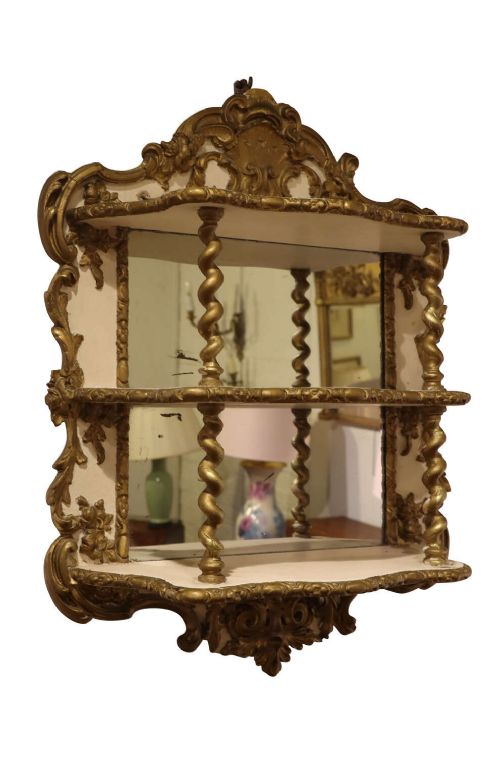
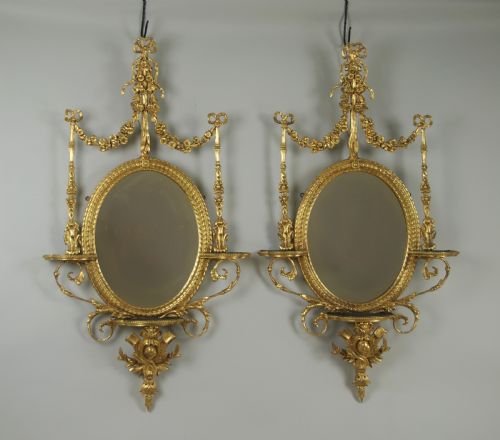
The version most commonly met on this page is the nineteenth-century Victorian wall bracket or corner shelf, often displaying carved wooden scrollwork and fitted with mirror glass plates. Italian and English origins dominate the selection, appearing either as single statement fixtures or matched pairs ready for hanging.
How they were made
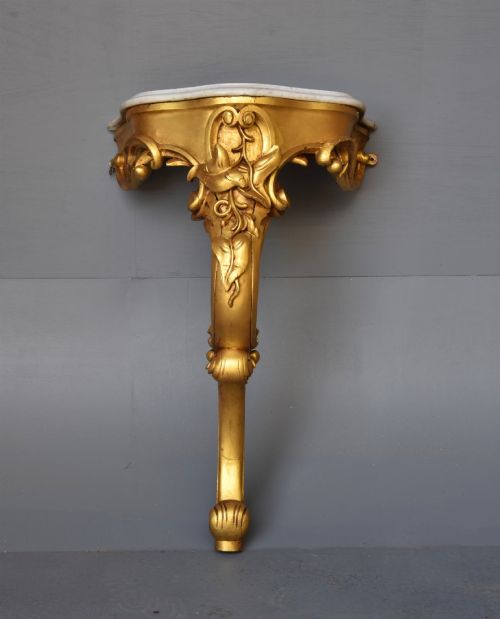
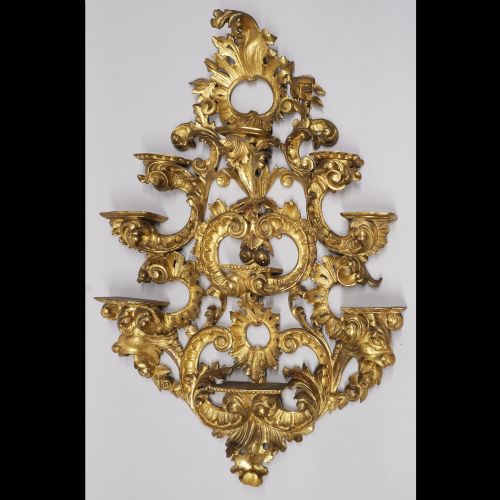
Makers constructed these shelves from carved wood or moulded gesso applied over a wooden base, building up intricate decorative relief before applying gold leaf. Artisans then burnished portions of the metal leaf to create a contrasting matte and reflective surface across the scrolls, leaves, and architectural motifs.
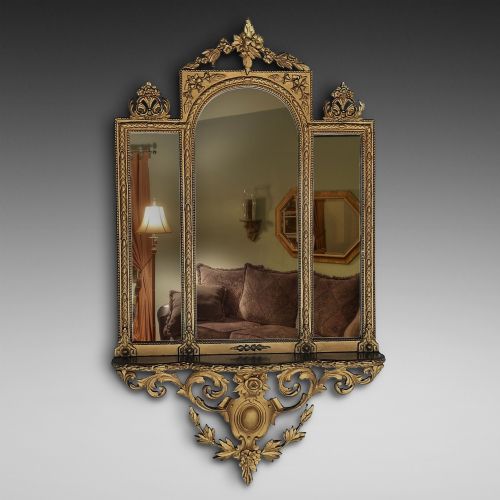
Mirrored components, where present, utilised silvered glass set directly into the gilded wooden frames to catch and multiply ambient light within the room. Painted details sometimes complemented the gilding, particularly on eighteenth-century pieces combining white painted surfaces with gold accents.
Listings feature items from the eighteenth, nineteenth, and early twentieth centuries, spanning Victorian, Rococo Revival, and Neoclassical styles.
What varies in quality
The depth and crispness of the wood carving separate standard production from superior examples, with hand-chiseled detailing showing far greater dimension than moulded composition ornament. Master carvers undercut foliage and scrolls to create shadow and movement, whereas lesser items rely on heavy gesso layers that blur fine contours.
The integrity of the original gold leaf surface dictates the desirability of the piece, as genuine gold holds its warm metallic lustre while cheaper metallic paints or heavy over-gilding flatten the visual texture. Well-preserved surfaces retain the subtle ghosting of the red bole preparation layer showing through thin spots in the gold.
Strahan of Dublin·Pauly et Cie
The Antique Giltwood Shelves Glossary
- Giltwood
- Wood that has been coated with thin sheets of gold leaf. This finish creates the characteristic bright, reflective surface seen on antique frames and brackets.
- Gesso
- A plaster-like mixture applied to wood surfaces as a base for gilding and carving. Artisans moulded this material to create intricate relief decorations.
- Wall Bracket
- A projecting architectural shelf supported from a vertical surface. These items hold small decorative objects, clocks, or porcelain figures.
- Pier Glass
- A tall mirror designed to hang on the wall space between windows. Many incorporate integrated small console shelves or display brackets underneath.
- Bole
- A prepared clay layer applied beneath gold leaf to provide a receptive cushion. This reddish earth shows through when the gold wears thin over time.
Antique Giltwood Shelves: Frequently Asked Questions
How do I hang antique giltwood shelves?
These pieces require secure wall fixings suited to their weight and the specific construction of the backplate. Many rely on original metal hanging loops that demand robust screws fixed directly into wall studs or proper masonry plugs.
Positioning the shelf at eye level or slightly above allows the carved details and any integrated mirror glass to function effectively within the room scheme.
How should I clean antique giltwood?
Maintenance requires only gentle dusting with a soft, dry brush to remove particles from deep within the carved recesses. Moisture and chemical cleaners damage gold leaf and historical gesso surfaces permanently.
Professional restoration remains necessary if flaking occurs, as amateur repairs using modern metallic paints alter the historic character of the piece.
Where do I place corner shelves?
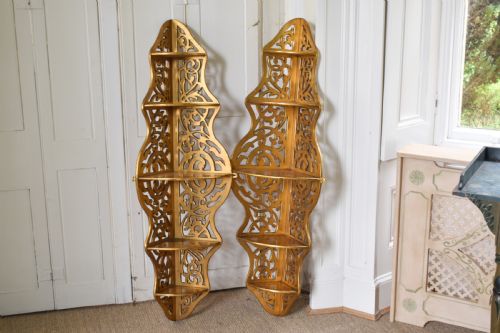
Corner units work well to animate empty junctions between walls while utilising vertical space efficiently. Placing them in sitting rooms or hallways draws the eye upward and provides a focal point for small collections.
Matching pairs look balanced when mounted at equal heights on adjacent walls flanking a doorway or fireplace.
How do I identify Victorian pieces?
Victorian examples often feature heavy ornamentation drawing inspiration from rococo revival or neoclassical styles popular during the nineteenth century. The integration of mirrored glass panels and display brackets beneath the main shelf is characteristic of this era.
Examining the underlying timber and fastening methods helps confirm the nineteenth-century date alongside stylistic indicators.