




Antique Mirrored Tier Shelf
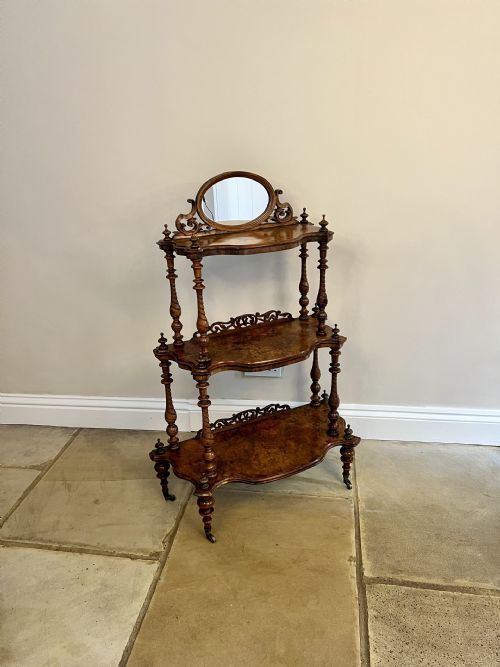
An antique mirrored tier shelf brings practical display space and bright reflection into a room, largely found here in Victorian burr walnut, rosewood, and mahogany.
Antique Mirrored Tier Shelf
When you search for an antique mirrored tier shelf, you encounter multi-tiered display furniture designed to hold small decorative objects while throwing light back into the room via integrated mirror glass. The pieces on this page are predominantly Victorian etageres, whatnots, and chiffoniers originating across the nineteenth century, spanning dates from eighteen sixty to eighteen eighty.
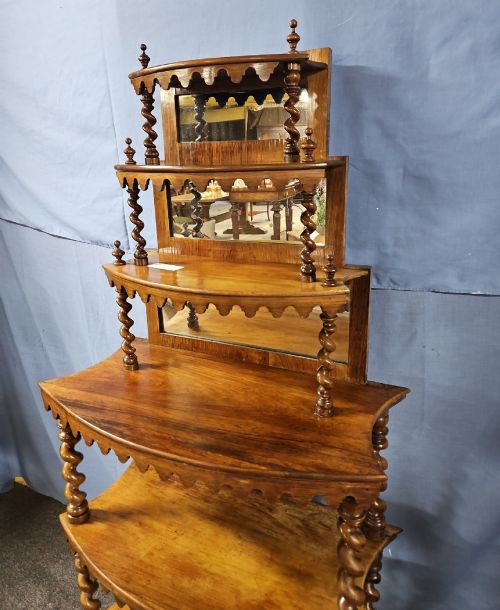
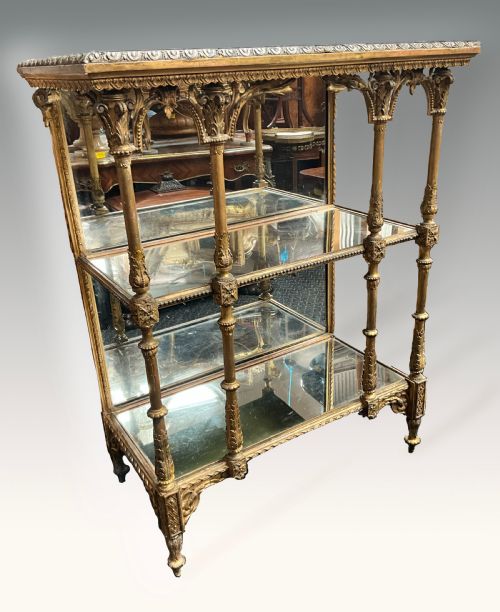
You meet various forms ranging from open barley twist shelving units and three-tier marquetry display pieces to enclosed side cabinets and overmantel mirrors with shelves. Victorian makers combined timber tiers with functional drawers or mirrored backs, drawing on styles such as the Aesthetic Movement, Venetian Rococo, and Regency.
How they were made
Cabinetmakers constructed these frames using rich timbers such as burr walnut, rosewood, and mahogany, frequently applying marquetry inlay, giltwood, and gesso or parcel gilt details. Structural uprights varied from hollow barley twist columns to turned supports, carrying multiple wooden tiers designed to hold ornaments and books.
The glass component relied on period mirror plates set into the back panels of whatnots, etageres, and overmantel mirrors. Ebonised finishes and painted Venetian surfaces also appear, matching the diverse aesthetic demands of nineteenth-century workshops.
The furniture forms range from multi-tiered whatnots and etageres to chiffoniers, console tables, and overmantel mirrors.
What varies in quality
The distinction between standard examples and the finest pieces rests on the choice of timber and the precision of the cabinetwork. Burr walnut with rich figuring, complex marquetry inlay, and intricate carved gesso or giltwood elevate a whatnot far above plain utilitarian shelving.
Proportion and structural complexity also divide the range, as seen in multi-tiered stands with integrated drawers, barley twist supports, and heavy mirrored backs. The integration of decorative elements like painted Venetian panels or substantial rosewood frames determines the visual weight of the piece.
Pauly et Cie
The Antique Mirrored Tier Shelf Glossary
- Whatnot
- A piece of freestanding furniture consisting of several open shelves above one another, used for displaying ornaments or books. These units evolved during the nineteenth century into key drawing-room fixtures.
- Etagere
- A piece of furniture consisting of a set of open shelves for displaying small objects or ornaments. The term often overlaps with whatnot in Victorian cataloguing.
- Chiffonier
- A low sideboard or cabinet, frequently equipped with shelves or a mirrored back in nineteenth-century designs. They combine enclosed storage below with display space above.
- Marquetry
- Decorative woodwork in which delicate pieces of veneer are fitted into a background to form geometric or floral patterns. It adds distinct visual texture to walnut tiers.
- Gesso
- A plaster-like mixture applied to wood surfaces as a base for gilding or painting. It allows for crisp, moulded ornamentation on nineteenth-century frames.
- Barley twist
- A type of turning shaped like a spiral rope, frequently used for the vertical supports on display shelves. This technique adds depth and movement to the silhouette.
Antique Mirrored Tier Shelf: Frequently Asked Questions
What is an antique mirrored tier shelf used for?
These pieces served historically to display small ornaments, porcelain, and books in Victorian drawing rooms while using integrated mirror glass to brighten dim corners.
Today, they function well in living spaces or hallways for holding collections or plants, combining vertical storage with decorative reflection.
How do I identify a Victorian whatnot?
Look for stacked open shelves supported by turned or barley twist columns, frequently paired with a mirrored back panel or a small lower drawer. The timber is typically burr walnut, rosewood, or mahogany.
Construction details like hand-cut joints and period mirror silvering help confirm nineteenth-century origin.
Where should I place a tiered display shelf?
These units suit living rooms, studies, or bedrooms where floor space is limited but vertical display area is desired. Placing them opposite a window allows the mirrored glass to reflect natural light into the room.
Keep them away from direct heat sources to protect nineteenth-century wood veneers.
What is the difference between an etagere and a whatnot?
Both terms describe multi-tiered shelving units, though etagere often implies a lighter, more decorative French-influenced display piece. Whatnots in this selection frequently include enclosed lower cabinets, drawers, or mirrored backs.
Both forms belong to the wider family of Victorian display furniture.