
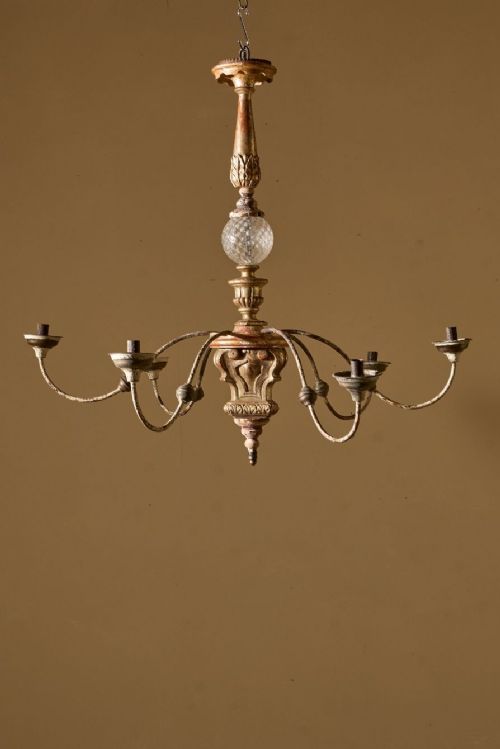
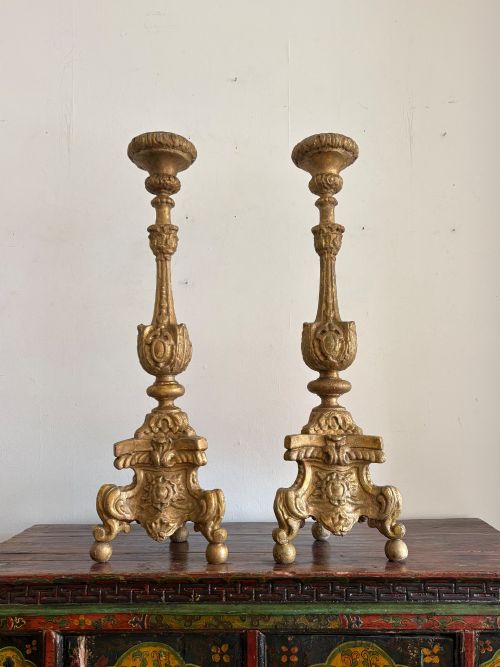
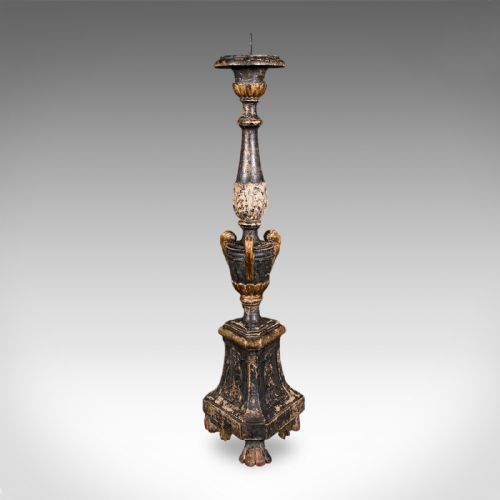


Antique Giltwood Pricket
These antique giltwood pricket sticks are altar candle holders and lamps that bring rich Italian and English baroque presence into a room.
Antique Giltwood Pricket
When you search for an antique giltwood pricket, you are looking at carved wooden stands originally designed for church altars or grand domestic spaces. The pieces on this page span from the seventeenth century through to the early twentieth century, taking the form of candlesticks, pricket sticks, wall sconces, and lamps.
Italian baroque and Venetian styles dominate the selection, alongside English pieces from the Georgian and Victorian periods. You will encounter monumental pairs of altar candlesticks, standard lamps, and candle holders adapted over time to hold electrical fittings.
The core form relies on a central spike, known as a pricket, which was traditionally used to impale large wax candles. Many examples have been converted into table lamps while retaining their historic carved silhouettes and substantial proportions.
Construction and Materials
Carved wood forms the structural base of these objects, frequently layered with gesso to create a smooth surface for ornamentation. Artisans shaped timber into intricate baroque scrolls, acanthus leaves, and fluted columns before applying the decorative skin.
Gold leaf and silvered mecca finishes provide the characteristic metallic sheen, bonded to the prepared gesso and wood substrate. Secondary materials such as iron, brass, and polychrome pigments appear on specific fittings, candle holders, and regional variations.
Many an altar candlestick spent centuries holding heavy church wax before retiring to illuminate a quiet corner as a standard lamp.
Assessing Quality and Execution
The crispness and depth of the wood carving dictate the visual impact of the piece. Finer examples display deeply undercut foliage and balanced proportions, whereas simpler items rely on heavier, less detailed shaping.
The condition and application of the original gold leaf layer also separate standard items from superior ones. Traces of historical polychrome and well-preserved gilding indicate higher craftsmanship and careful preservation over the centuries.
The Antique Giltwood Pricket Glossary
- Pricket
- A sharp metal spike on a candlestick designed to hold a candle in place. This form predates socket-type holders and is typical of altar pieces.
- Giltwood
- Timber that has been coated with gold leaf or gold paint. It provides a luminous surface finish characteristic of baroque furnishings.
- Gesso
- A plaster mixture applied to wood surfaces to prepare them for gilding or painting. It allows for sharp, intricate relief work.
- Mecca
- A transparent golden varnish applied over silver leaf to imitate the appearance of gold. It creates a distinct warm metallic tone on Italian pieces.
- Baroque
- An ornate artistic style prevalent from the seventeenth to the eighteenth century. It is marked by dramatic curves, rich ornamentation, and grand scale.
Antique Giltwood Pricket: Frequently Asked Questions
What is a pricket stick?
A pricket stick is a candle holder featuring an upright metal spike instead of a socket. Candles were pushed directly onto this spike to secure them during burning.
Most surviving examples originated in ecclesiastical settings on church altars before finding their way into domestic interiors as decorative objects and lamps.
Were these always lamps?
Most of these pieces started life as liturgical candlesticks or altar candle holders. They were designed specifically to hold large wax candles for religious services.
Many have been carefully adapted into table lamps in later periods to suit modern homes while preserving their historic carved wooden structures.
How do I spot Italian baroque style?
Italian baroque pieces feature bold, dynamic carving with exaggerated curves, acanthus leaves, and cherubic motifs. They often display impressive proportions and rich surface gilding.
English equivalents tend to be slightly more restrained in their application of ornament, though they share the same architectural ambition.
Can I use these with modern candles?
Original pricket sticks require candles with a hollow base or drilled recess to sit securely upon the metal spike. Using standard taper candles on a pricket is unsafe.
Many buyers choose to display them purely as decorative sculptures or use them in their lamp-converted formats.
How do I care for giltwood?
Giltwood requires gentle maintenance using a soft, dry cloth to remove dust. Moisture and harsh cleaning agents will damage the delicate gold leaf and gesso layers.
Keep these pieces away from direct sunlight and strong heat sources to prevent the wood from splitting and the finish from degrading.