
Antique Gilt Desk Light
An antique gilt desk light brings warmth to a workspace through centuries of patinated metal and refined illumination.
Antique Gilt Desk Light
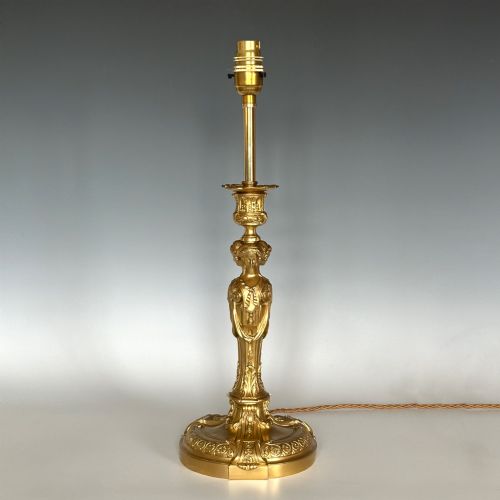
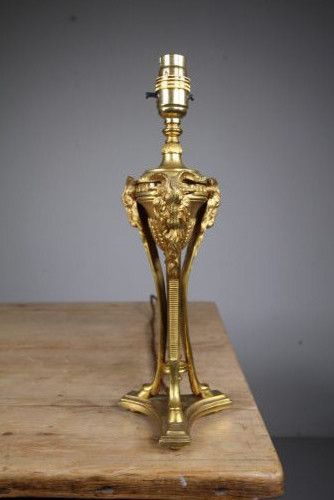
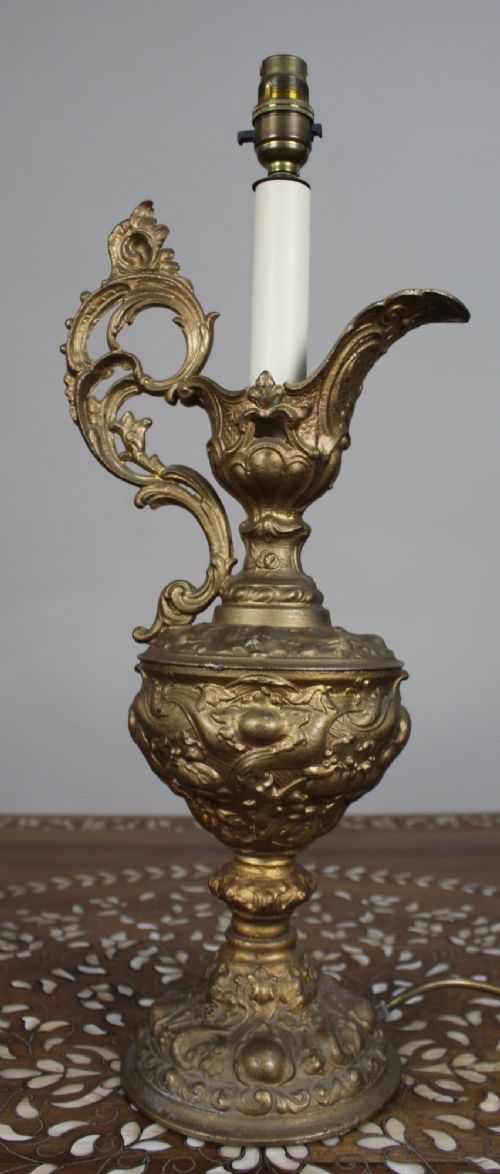
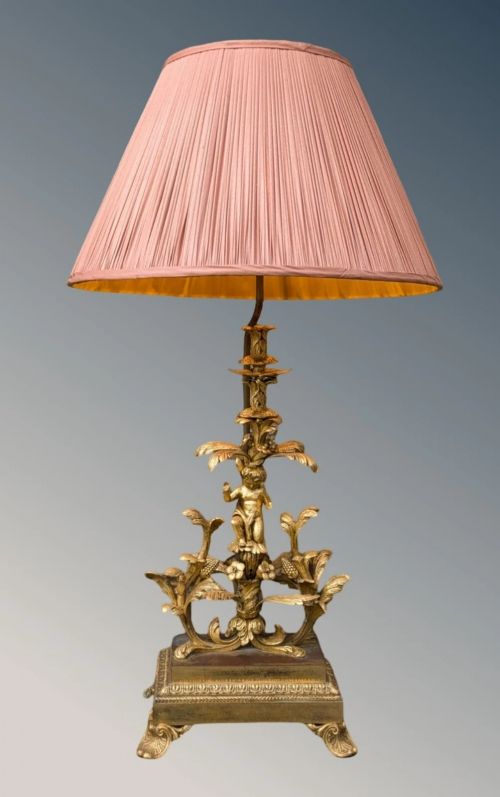
When searching for an antique gilt desk light, you encounter pieces primarily constructed from table lamps, candlesticks, and lamp bases originating from the nineteenth and early twentieth centuries. These items frequently manifest in styles such as French Rococo Revival, Neoclassical, and Victorian, reflecting diverse continental influences.
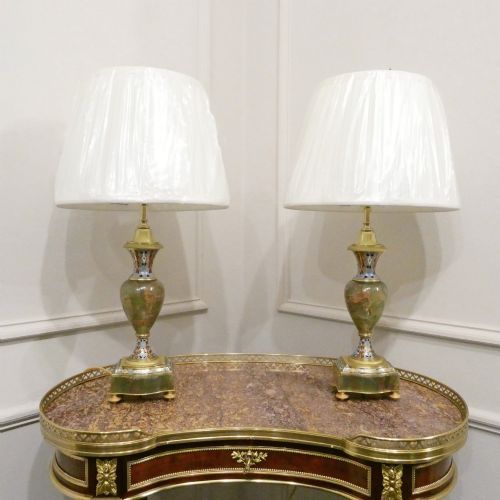
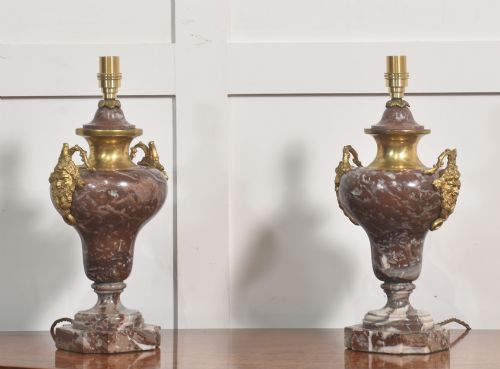
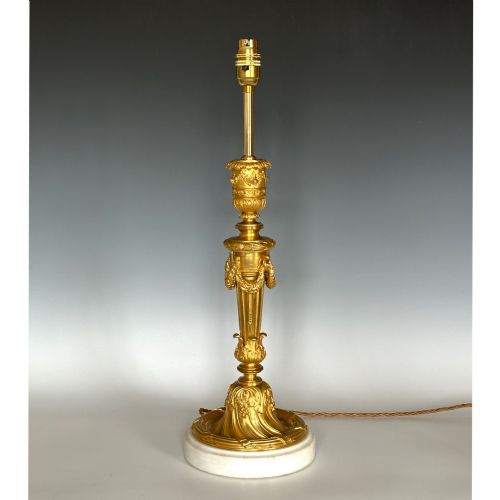
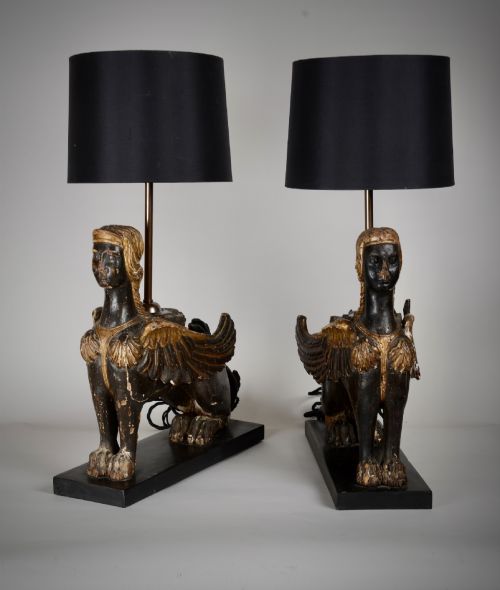
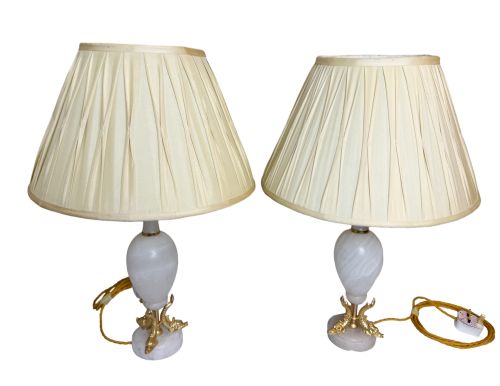
The selections on this page bridge domestic utility and decorative arts, spanning from converted nineteenth-century French ormolu-mounted rouge marble lamps to carved giltwood altar candlesticks. Many specimens incorporate porcelain, onyx, and cloisonné components alongside gilded metal frames.
Makers and designers of these utilitarian objects drew upon historical motifs, producing items ranging from simple timber candlestick conversions to elaborate architectural column lamps with lions paw feet. Such versatility ensures that each piece functions effectively as task lighting whilst retaining distinct period character.
Materials and construction methods
Makers utilised cast bronze, brass, and ormolu as structural foundations, applying gold leaf or mercury gilding to achieve lustrous metallic surfaces. These metallic elements frequently pair with natural stones such as rouge marble, onyx, and timber to provide stable bases for daily desk use.
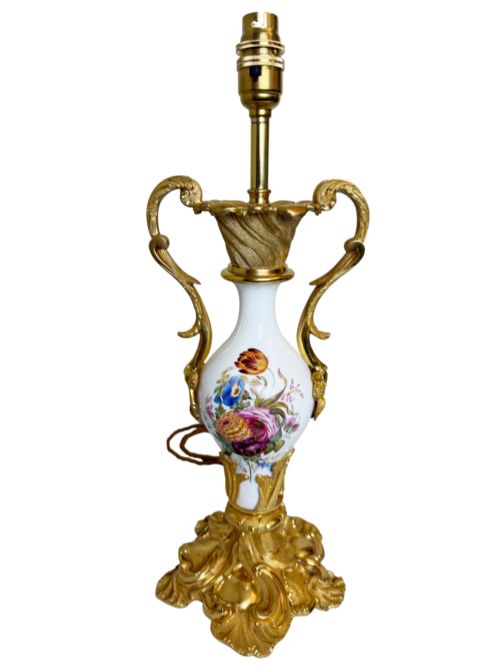
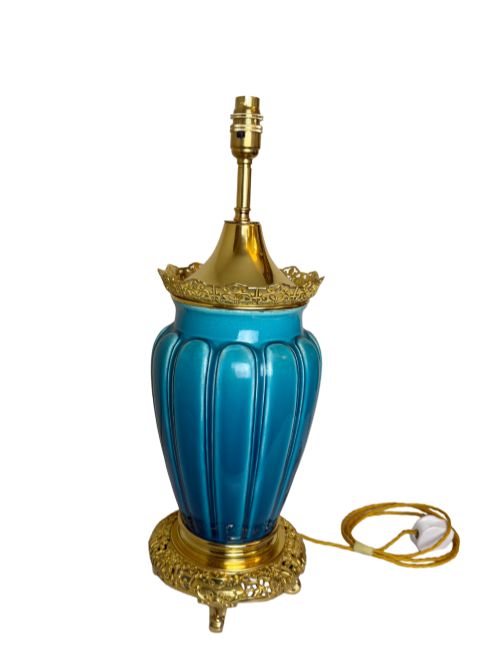
Decorative details rely upon meticulous hand-chasing, carving, and enamel work, particularly visible in champlevé and cloisonné elements integrated into the lamp bodies. Conversion of earlier items, such as eighteenth-century candlesticks and porcelain vases, demonstrates a traditional practice of adapting objects for modern electrical requirements.
Object forms span table lamps, candlesticks, and inkwells, demonstrating varied nineteenth and twentieth-century European and Asian manufacturing techniques.
Distinctions in craftsmanship
Quality rests upon the crispness of the chasing on the gilt bronze or ormolu mounts, where superior examples exhibit sharp relief and intricate detailing rather than soft, indistinct cast lines. The selection of supplementary materials, from high-grade rouge marble to finely glazed porcelain, dictates the overall refinement of the piece.
Proportion and structural integrity separate standard utility lighting from exceptional decorative works, particularly in balanced casting and secure mounting of stone and metal components. The survival of the original fire-gilt or gold leaf surface, showing natural wear rather than modern re-plating, maintains the historical integrity prized by collectors.
Mappin and Webb·Messenger·Mc Gary
The Antique Gilt Desk Light Glossary
- Ormolu
- A gilded bronze technique utilising finely ground gold mercury amalgam applied to a bronze base. This process creates a durable, warm metallic finish characteristic of fine nineteenth-century French lighting.
- Champleve
- An enamelling technique where troughs or cells are hollowed out in the metal surface and filled with vitreous enamel. These coloured areas complement the surrounding gilt framework.
- Cassolette
- A decorative vessel shaped like a vase, often fitted with a reversible lid that functions as a burner or candleholder. In lighting adaptations, these forms provide substantial bases for desk lamps.
- Cloisonne
- A method of decorating metalwork objects with coloured material held in place by thin flat metal strips welded edgewise. This technique appears on decorative vases converted into lamps.
- Empire
- A Neoclassical design style spanning the late eighteenth and early nineteenth centuries characterised by military motifs, classical columns, and heavy gilt mounts.
Antique Gilt Desk Light: Frequently Asked Questions
How do I safely rewire an antique desk light?
Rewiring requires threading modern compliant flex through the existing internal channels without altering historical metalwork or damaging original fixtures. Professional installation ensures that insulation meets contemporary standards while preserving the exterior structure.
Retaining original switches and holders where possible maintains the historical integrity of the piece during any necessary electrical updates.
Were these always electric lamps?
Most pieces originated as oil lamps, gas fixtures, or candlesticks before later conversion to electricity during the twentieth century. This adaptive history is standard for antique lighting and accounts for modifications to interior channels.
Original components such as burners or weighted bases often reveal the initial utilitarian purpose of the object prior to electrification.
How do I clean gilded bronze surfaces?
Dusting with a soft, dry brush removes surface particles without harming delicate gold leaf or patinated ormolu layers. Water and chemical solvents risk stripping historic finishes and should be avoided entirely.
Preserving the natural accumulation of age enhances the visual depth of the metalwork over time.
How can I distinguish French styles from English ones?
French pieces frequently employ ormolu-mounted rouge marble, champlevé enamel, and ornate Rococo or Empire motifs with cast floral details. English equivalents tend towards restrained timber construction, simpler brass castings, and architectural forms.
Examining the weight, joinery, and mounting techniques provides further clues to the regional origin of the lamp.