


French Revival Table Lamp
These pieces combine period metalwork and ceramics to bring continental lighting into a room.
French Revival Table Lamp
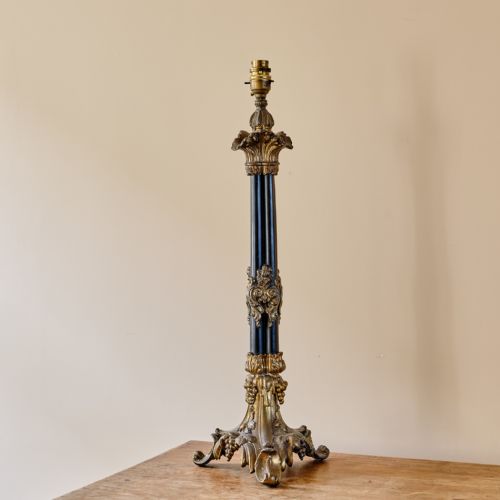
A french revival table lamp draws on nineteenth and early twentieth century continental decorative styles, frequently taking the form of converted candlesticks, oil lamps, or figural statuettes. The selection on this page ranges from simple brass and bronze bases to monumental ormolu and porcelain compositions dating across the Victorian and Edwardian eras.
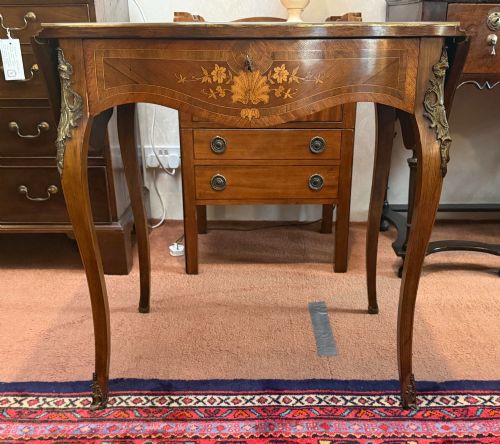
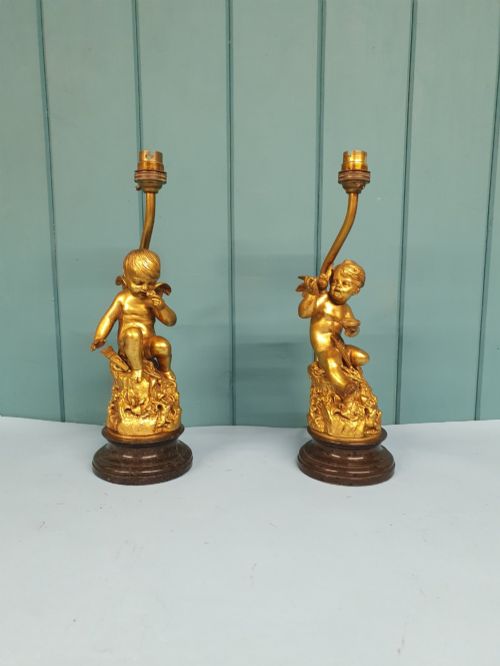
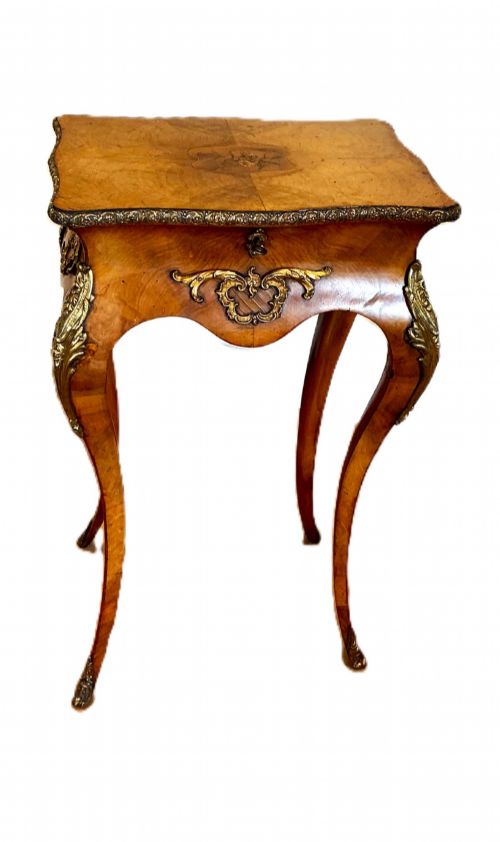
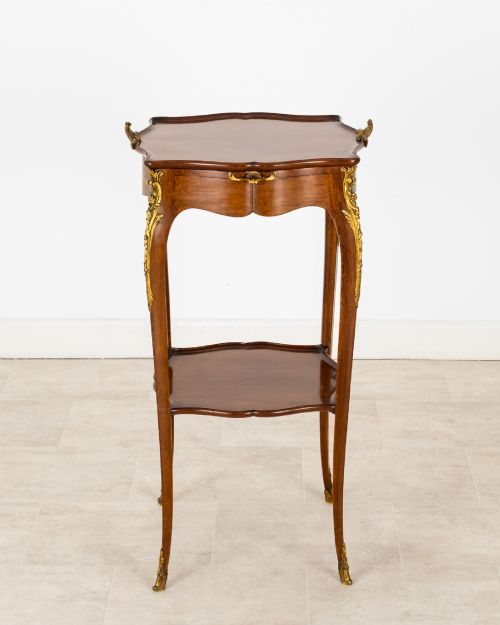
Makers and manufacturers adapted earlier rococo, louis xv, and louis xvi motifs into domestic lighting, sometimes pairing figural cherubs or mermaids with rock crystal and gilt metal. Alongside dedicated lamp bases, the inventory includes occasional tables and side tables that share the same stylistic vocabulary and materials.
Materials and construction
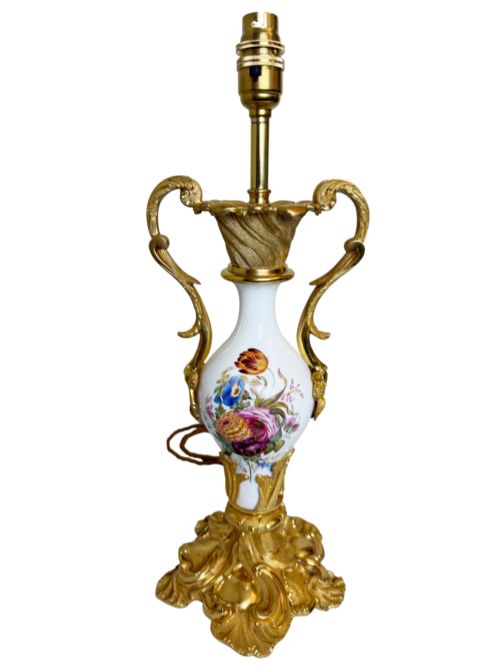
Foundries cast brass, bronze, and ormolu into ornate mounts, torchères, and bases, often employing mercury gilding or modern electrogilding to achieve a bright metallic finish. Artisans combined these metal elements with hand-painted porcelain reservoirs, marble plinths, and carved walnut or mahogany frames.
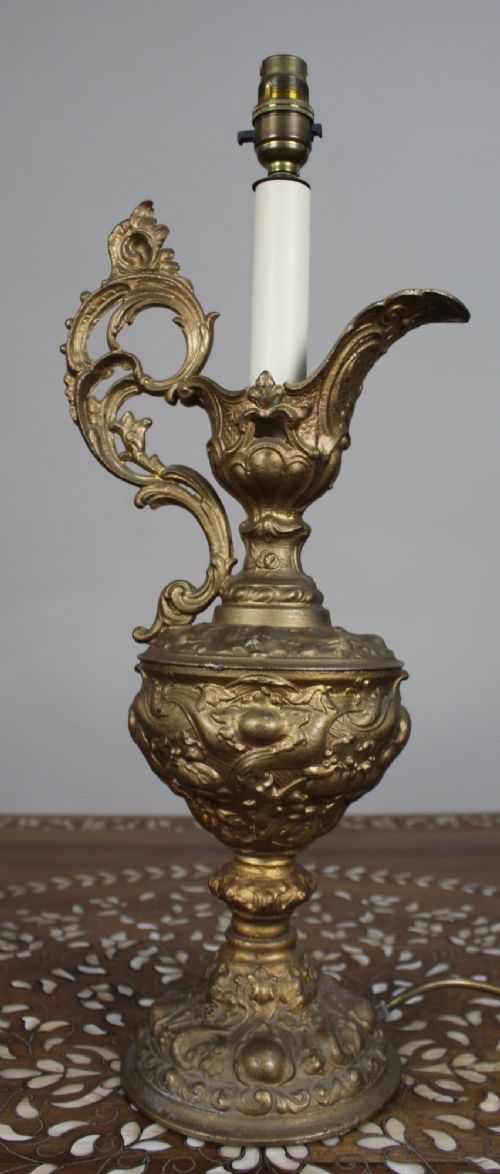
Many items began life as ecclesiastical or domestic lighting, such as church candlesticks and oil lamps, before undergoing later conversion to electricity. Cabinetmakers utilised marquetry inlay, gilt bronze mounts, and satinwood or kingswood veneers on related furniture pieces of the period.
Common materials recorded include walnut, porcelain, marble, and ormolu, reflecting French rococo and louis revival tastes.
Factors of quality
The crispness of the metal casting dictates the definition in figural details like cherubs, floral garlands, and acanthus scrollwork. Finer examples display hand-chased surface work on the bronze or ormolu, whereas simpler commercial productions rely purely on the cast finish.
Material integration also separates standard pieces from superior ones, such as the use of genuine marble bases, hand-painted porcelain panels, and substantial rock crystal columns rather than moulded glass substitutes.
François Linke·Haentgos Freres Paris·Gillows
The French Revival Table Lamp Glossary
- Ormolu
- Gilded bronze, where a finely ground gold-mercury amalgam is applied to cast bronze and heated. This technique creates a durable, warm metallic lustre characteristic of luxury continental objects.
- Torchère
- A stand or tall candlestick designed to hold a light. In lighting fixtures, it often describes a figural base holding a torch or light source.
- Marquetry
- The art of applying small pieces of veneer to a structure to form decorative patterns. Craftsmen utilised timbers such as walnut, mahogany, and rosewood for these geometric and floral designs.
- Toleware
- Enamelled and painted tinplate items popular for decorative vessels and shades. It provides vibrant colour accents on period pieces.
French Revival Table Lamp: Frequently Asked Questions
How do I date a french revival table lamp?
Dating relies on examining the casting quality, the type of wiring, and the materials used in the base. Nineteenth-century examples often feature heavier hand-chased bronze and older conversion methods.
Later pieces from the early twentieth century may incorporate moulded elements or standard commercial fittings alongside revival styling.
Were these lamps converted from older items?
Many period pieces started as oil lamps, church candlesticks, or bronze statuettes before receiving electrical wiring. This practice of adaptation is common in antique lighting.
Converters often retained the original porcelain reservoirs and ormolu mounts while updating the internal wiring for modern domestic use.
What is the difference between ormolu and gilt metal?
Ormolu specifically denotes gilded bronze or brass created through traditional mercury or high-grade fire gilding techniques. It yields a deep, warm metallic finish that ages with a distinct patina.
Gilt metal usually refers to a less expensive base metal, such as brass or spelter, with a modern electroplated gold-coloured finish.
How do I clean an antique bronze lamp?
Dusting with a soft, dry cloth is the safest method for maintaining nineteenth-century bronze and ormolu surfaces. Avoid commercial metal polishes, as they can strip the remaining original gilding.
Preserving the accumulated patina protects the historical integrity and appearance of the metalwork.