



Antique Gilt Clock Candelabra
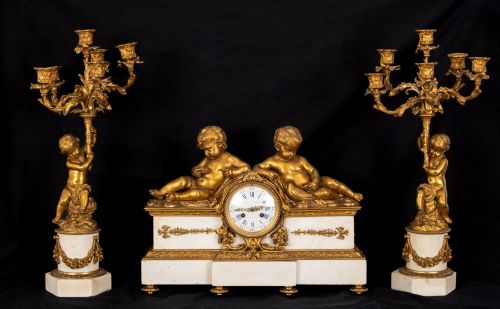
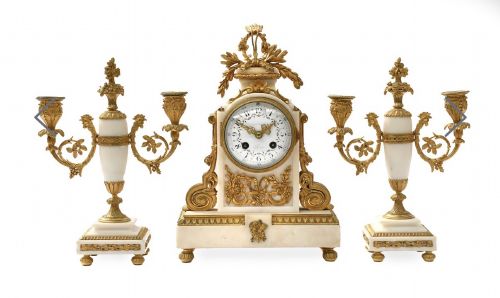
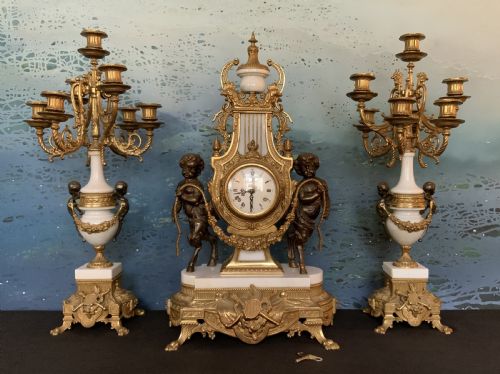
An antique gilt clock candelabra brings together a central timepiece and matching candleholders in gilded metal and marble.
Antique Gilt Clock Candelabra
An antique gilt clock candelabra setup typically comprises a central mantel clock accompanied by a pair of matching candelabras, forming a unified garniture set for display. These assemblies are predominantly French in origin, dating largely from the nineteenth century across periods such as the Victorian era and the Second Empire.
The forms vary from simple mantel clocks with side pieces to large three-piece sets incorporating candelabras with numerous light branches. Buyers will frequently encounter designs reflecting revival styles, including Louis XVI and Rococo, often incorporating figural elements like cherubs or cupids.
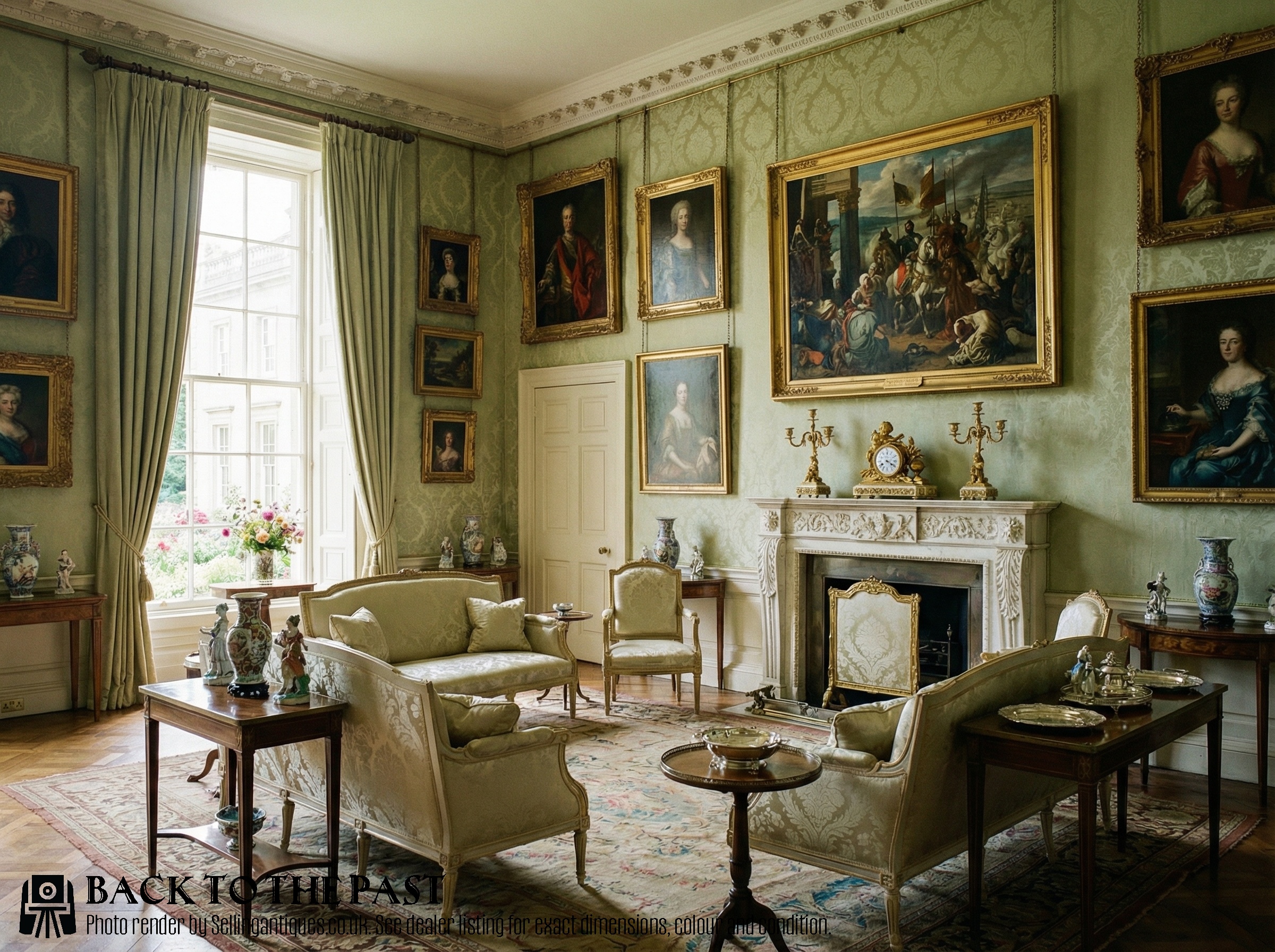
Materials combine to create a decorative effect, bringing together metallic finishes and stone bodies to form balanced decorative schemes for interior spaces. These sets functioned historically as mantle ornaments, designed to command attention on fireplace surrounds and console tables.
What varies in quality
The refinement of the cast bronze mounts and hand-chasing separates standard production from exceptional examples, as sharper details in foliate scrolls and figures indicate skilled craftsmanship. The complexity of the garniture set, such as candelabras with ten light branches rather than standard configurations, marks higher-tier items.
The choice and integration of materials also distinguish the range, with solid marbles, finely painted porcelain, and signed movements by known makers demonstrating superior manufacture. Cohesion of design across all components of the garniture set reflects the original ambition of the piece.
Cherubs and cupids frequently perch on the marble tops, keeping watch over the ticking hours with stony indifference.
Henry Dasson·H Luppens Paris·Raingo Fres Paris·AD Mougin Paris·Deniere Paris·Japy Freres
The Antique Gilt Clock Candelabra Glossary
- Garniture
- A set of matching decorative objects for a mantelpiece, usually comprising a clock and a pair of vases or candelabras. These sets were designed to coordinate visually as a unified decorative scheme.
- Ormolu
- Gilt bronze created by applying a finely ground high-carat gold-mercury amalgam to a bronze object. The mercury is then driven off by heat, leaving a durable golden coating.
- Candelabra
- A branched candlestick holder designed to hold multiple candles simultaneously. In clock sets, they are made to match the style and metalwork of the central timepiece.
- Mantel Clock
- A clock designed to sit on the shelf above a fireplace. They are often heavily ornamented to serve as the visual centrepiece of a room.
- Sevres style
- A decorative aesthetic emulating the soft-paste porcelain and distinctive floral or pictorial painting associated with the French national factory. It frequently appears on dials and inset panels of nineteenth-century clock sets.
Antique Gilt Clock Candelabra: Frequently Asked Questions
What is a clock garniture?
A clock garniture is a matched set of decorative objects designed to be displayed together on a mantelpiece. It consists of a central clock flanked by matching side pieces such as candelabras or urns.
These sets were created to provide a balanced and harmonious decorative arrangement for formal rooms during the nineteenth century.
How do I identify Louis XVI style?
Louis XVI style pieces feature classical symmetry, straight lines, and neoclassical motifs like urns, ribbons, and acanthus leaves. This aesthetic moves away from the asymmetrical curves of earlier Rococo designs.
In these clock sets, the style is visible in the architectural marble cases and disciplined, restrained bronze mounts.
What metals are used in these clocks?
The metallic components are typically cast in bronze or brass, which are then gilded to produce an ormolu or gilt bronze finish. Some pieces also incorporate patinated bronze for contrasting dark sculptural elements.
These metals were chosen for their ability to take fine cast details and hold thick layers of chemical or fire gilding.
Where were these clock sets made?
The vast majority of these elaborate clock and candelabra sets were manufactured in France, particularly in Paris workshops. Parisian clockmakers and bronze founders dominated the production of high-end garnitures.
Some pieces bear signatures of prominent makers inscribed on the metal cases or the mechanical movements inside.