






Antique Gilded Perfume Bottle
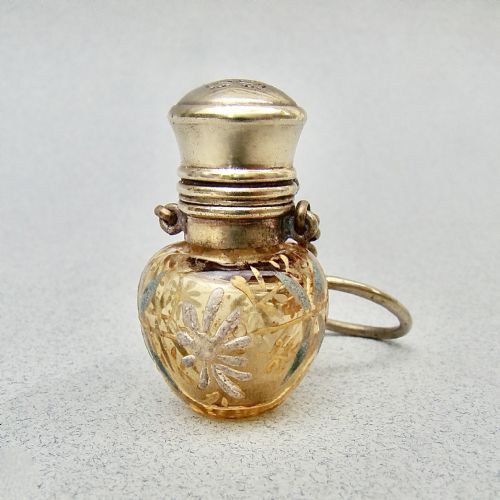
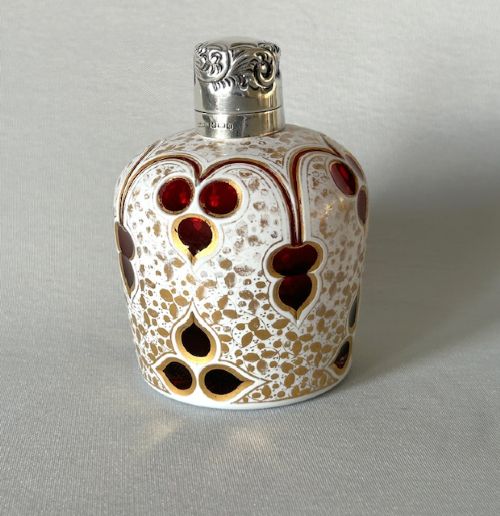
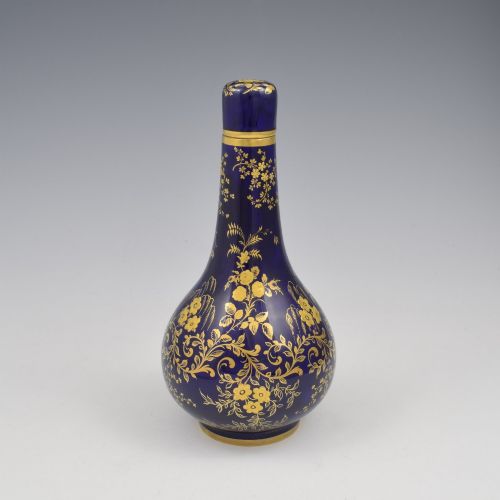
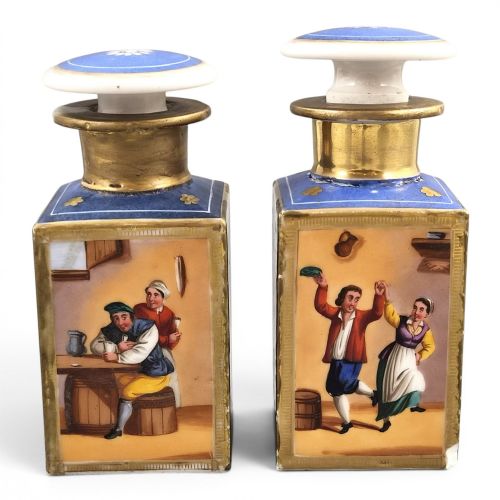
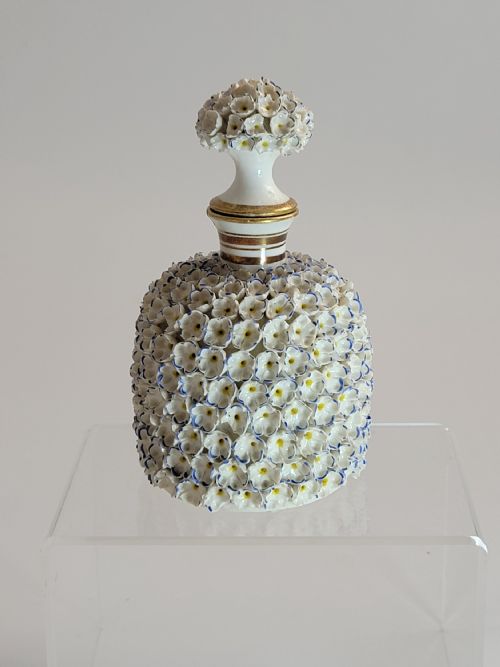
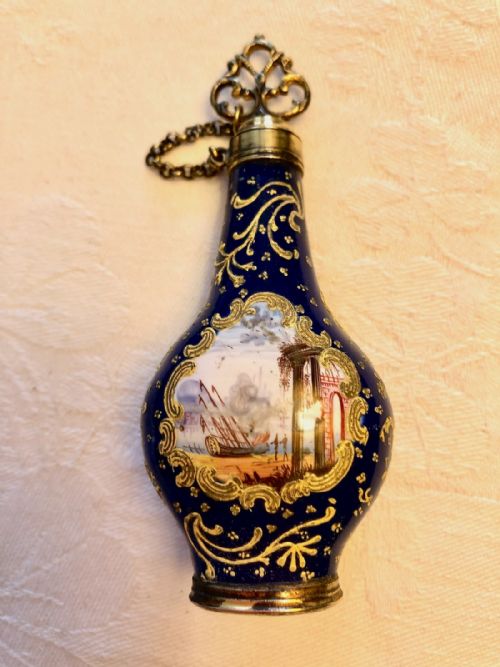
An antique gilded perfume bottle brings hand-painted enamel, vibrant glass and gleaming metal to a dressing table.
Antique Gilded Perfume Bottle
Origins span English factories like Worcester and Derby alongside continental glassmakers and French studios. Each piece reflects the decorative tastes of its period, from Georgian enamel work to Edwardian silver mounts.
How they were made
Maker techniques rely on hand-blown glass, moulded porcelain, and cast metal shaped into portable vessels. Artisans applied gold leaf and gilt paint directly onto surfaces, often combining metal mounts with glass or ceramic bodies.
Enamel painting and detailed scenes required precise brushwork fired in kilns to bond pigments to porcelain or glass. Silver and gilt metal components were frequently added as caps, collars, or chatelaine chains.
Materials documented across the inventory include gold leaf, enamel, porcelain, Bohemian glass, parian ware, and silver gilt.
What varies in quality
Quality rests in the crispness of the hand-painted scenes, the depth of the enamel work, and the preservation of the gilt decoration. Finer items exhibit intricate figural details or careful hand-applied encrustations rather than plain moulded surfaces.
The integrity of the original mounts, stoppers, and hinged lids dictates the desirability of a piece. Superior examples retain their original gilding and functional closures without replacement elements.
Moser·Crown Staffordshire·René Lalique·Royal Worcester·Flight Barr And Barr·Jacob Petit·Baccarat
The Antique Gilded Perfume Bottle Glossary
- Chatelaine scent bottle
- A small perfume container suspended from a chatelaine belt hook for portable use during the Victorian era.
- Gilt metal
- Base metal treated with a thin layer of gold or gold-coloured wash to imitate solid gold.
- Parian ware
- A fine white biscuit porcelain resembling marble, used for Victorian decorative objects and scent bottles.
- Rose water sprinkler
- A vessel with a perforated nozzle designed for sprinkling scented water rather than pouring.
- Bleu de Roi
- A deep royal blue glaze developed at the Sèvres porcelain factory and utilised by later makers.
Antique Gilded Perfume Bottle: Frequently Asked Questions
Were all these bottles meant for perfume?
Many contained concentrated perfumes, smelling salts, or rose water used for refreshment in unventilated rooms. Smaller examples were designed to hang from chatelaines for immediate access.
Larger vessels served as dresser items or formed part of matched sets housed in wooden caskets.
How do I tell a Georgian bottle from a Victorian one?
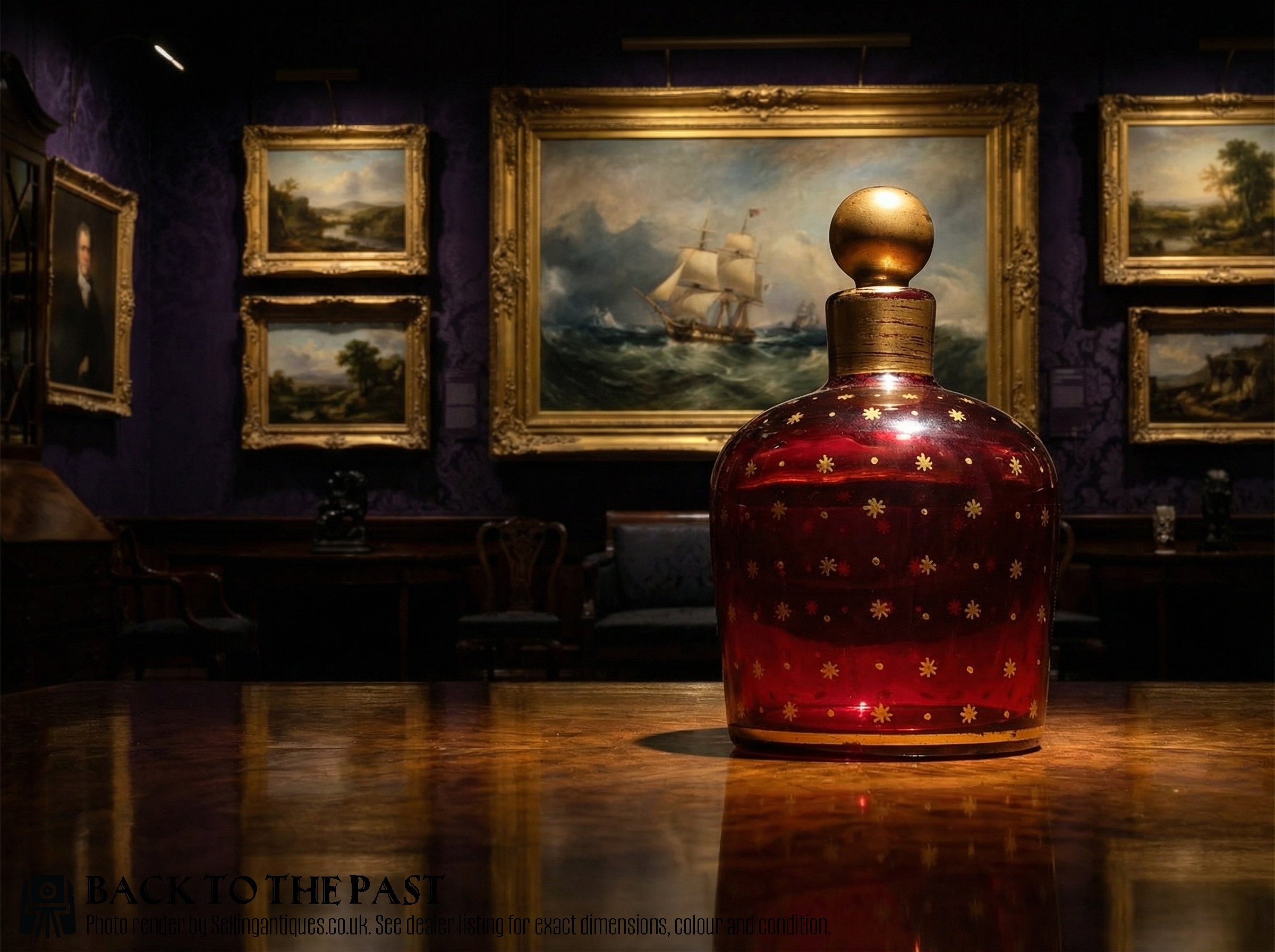
Georgian pieces often feature delicate hand-painted enamel scenes on small copper or porcelain bodies typical of the late eighteenth century. Victorian examples frequently employ heavier glass colours like cranberry and incorporate elaborate gilt metal mountings.
Consulting the overarching style and material helps assign a general decade.
Do stoppers usually match the bottle?
Original stoppers match the glass or porcelain body in colour, wear, and manufacture. Replacements occur frequently due to the fragile nature of small glass and ceramic necks.
Examining the ground glass fit helps determine if a stopper belongs to the piece.