

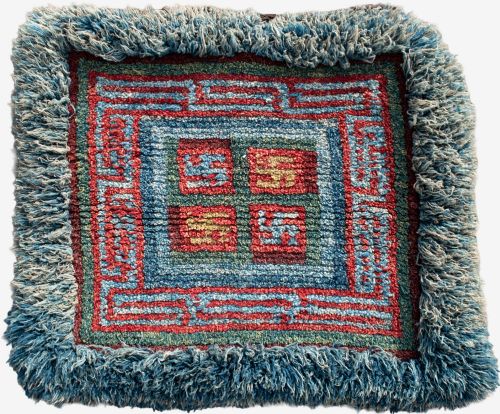
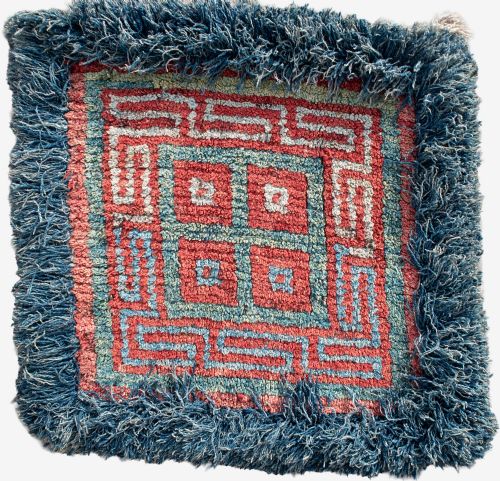
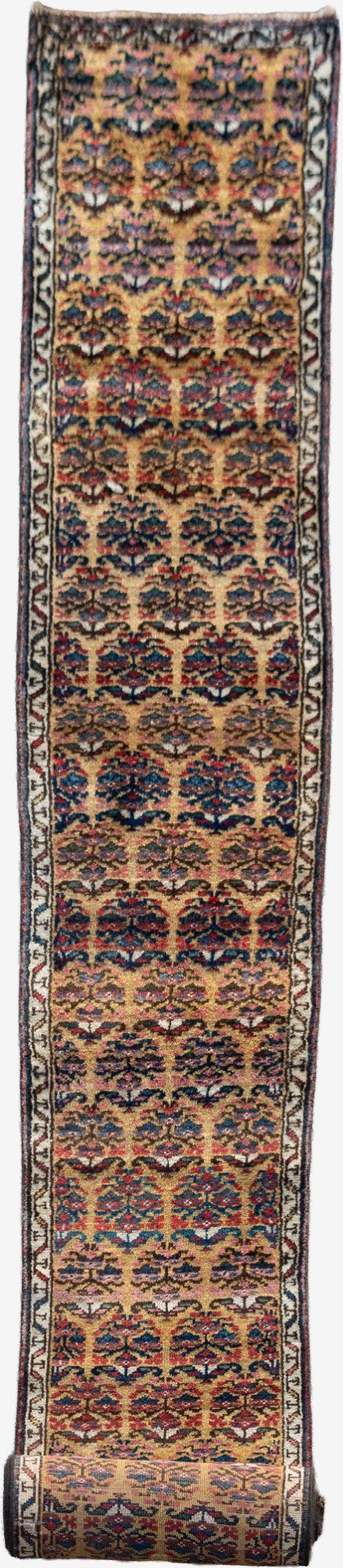
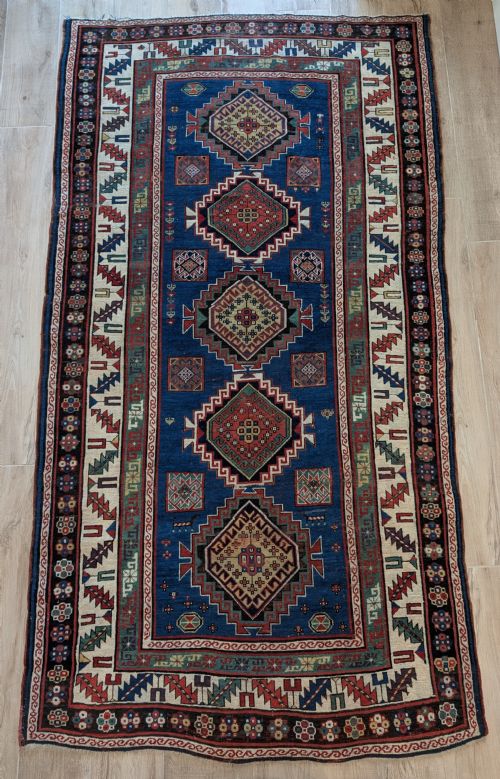
Antique Geometric Carpet
An antique geometric carpet brings structure and tribal energy to a room through centuries-old patterns woven in wool.
Antique Geometric Carpet
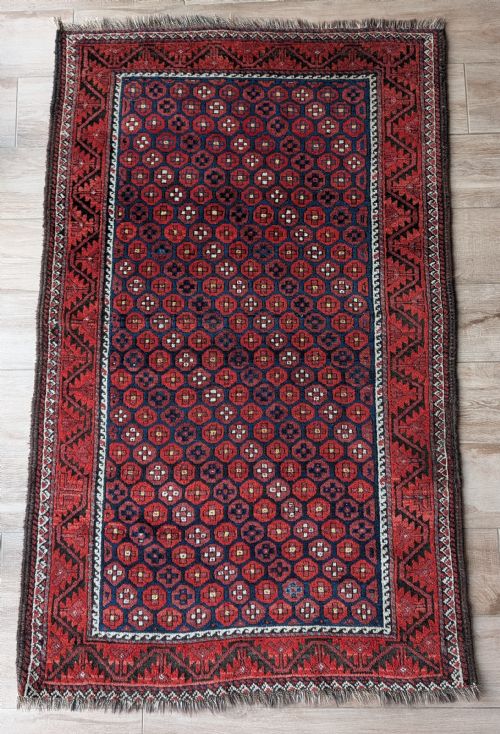
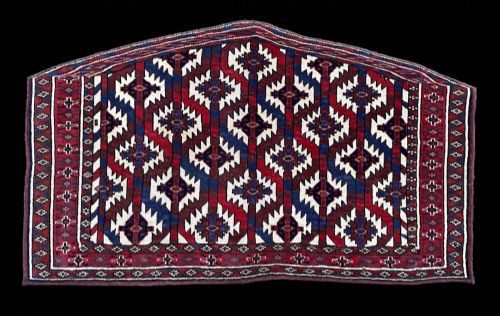
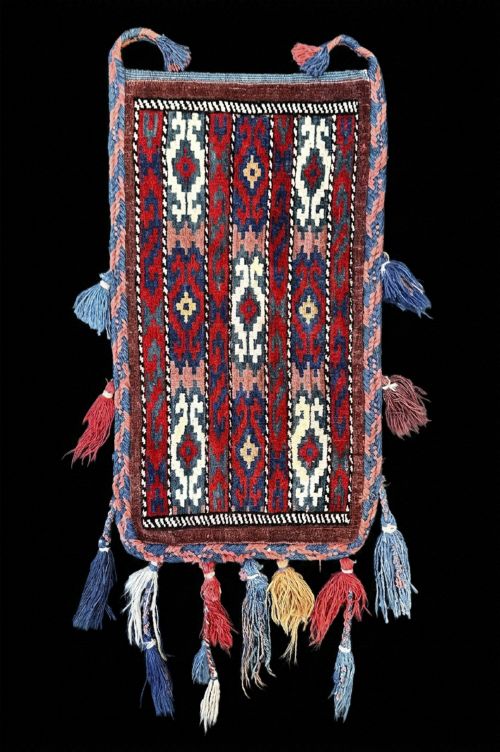
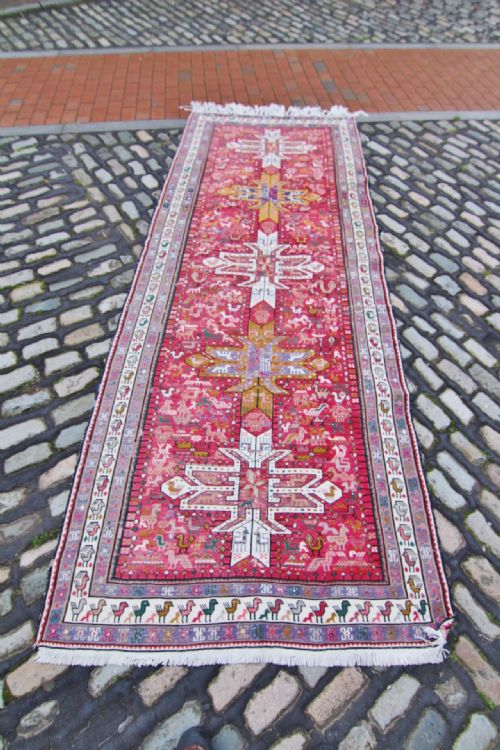
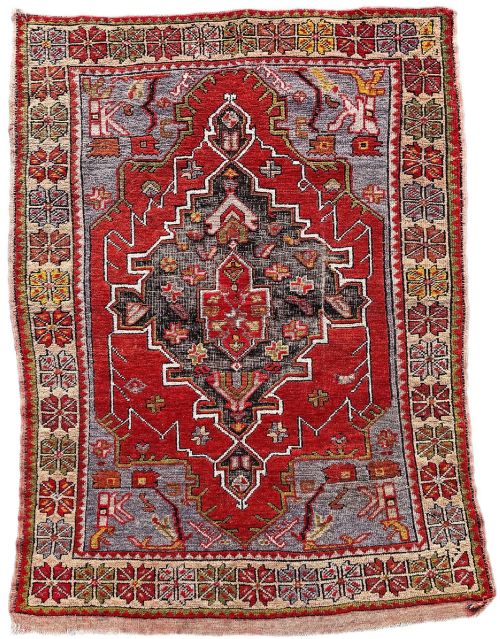
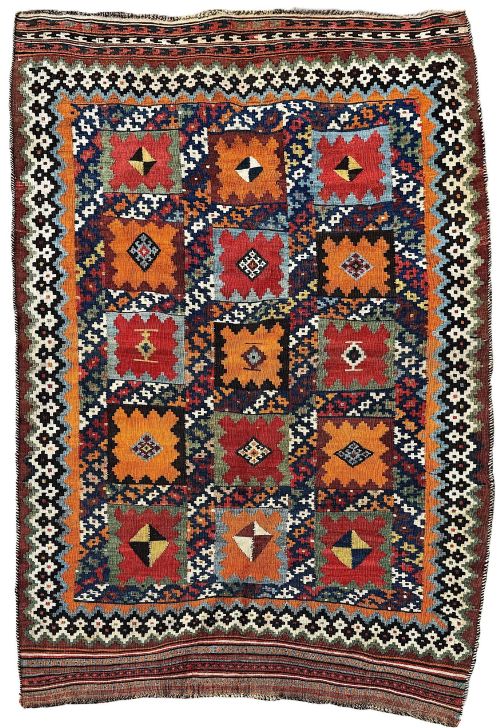
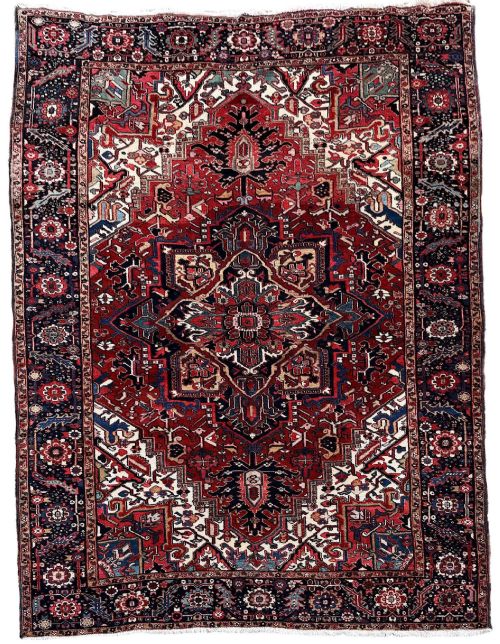
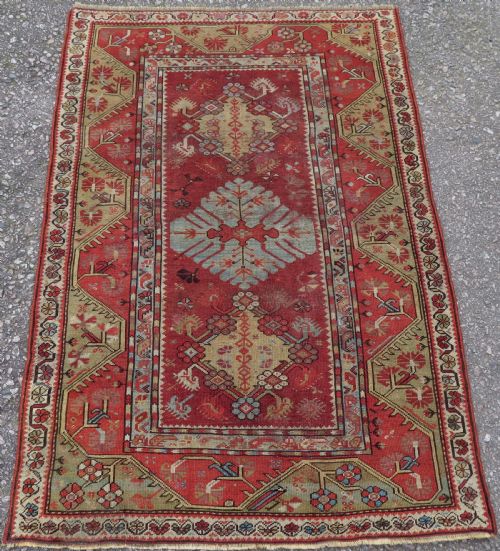
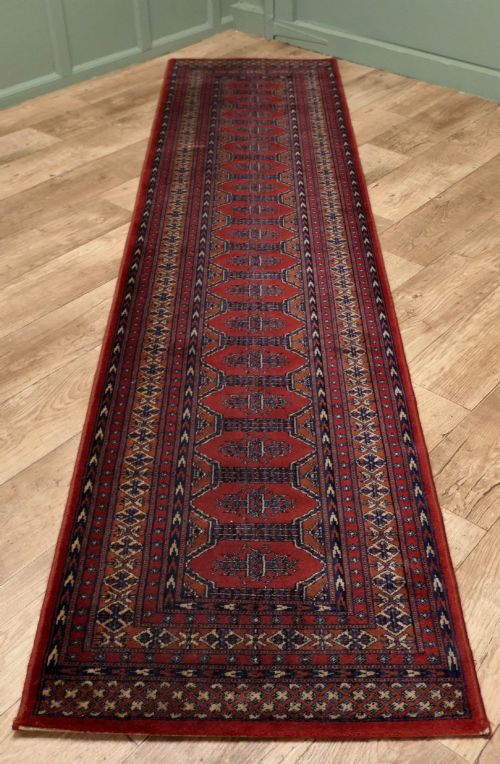
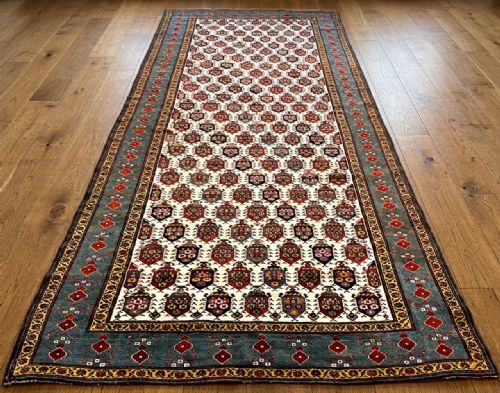
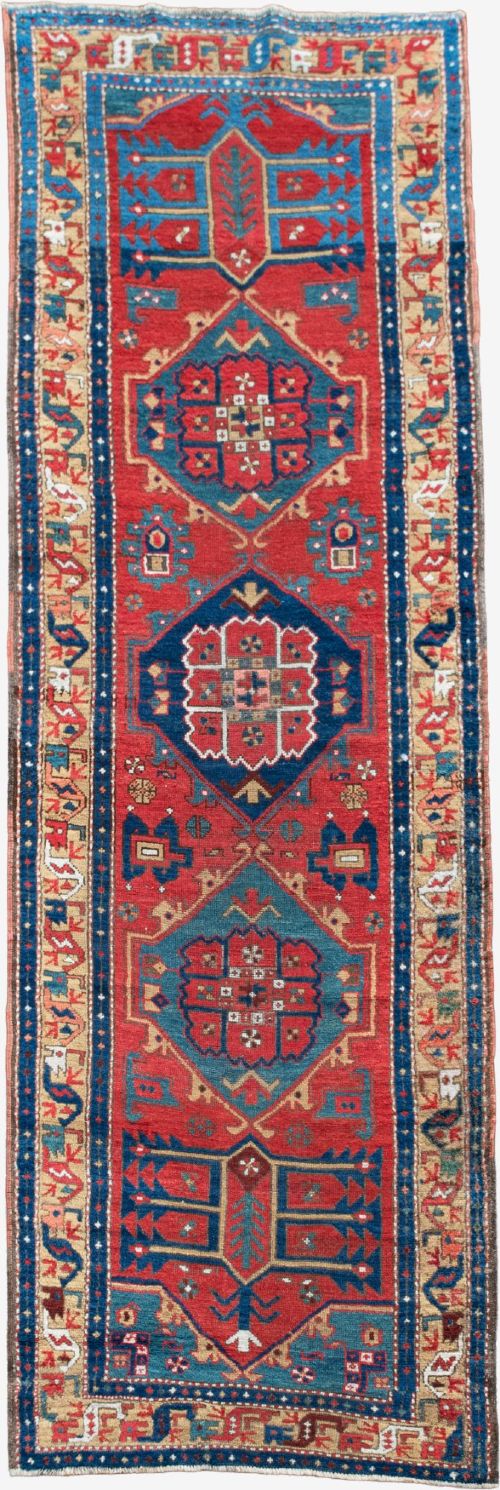
An antique geometric carpet comprises hand-knotted floor coverings from Persian, Caucasian, Anatolian, and Turkmen traditions dating from the nineteenth century into the early twentieth century. These pieces rely on angular medallions, repeating lattice motifs, and stylized tribal symbols rather than floral curves.
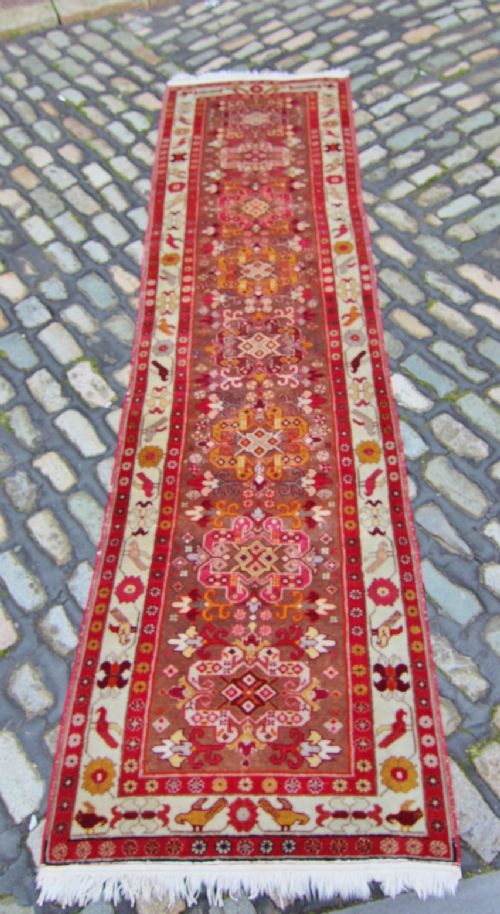
Buyers seeking this phrase encounter formats ranging from square room-size carpets down to long narrow runners and specialised prayer rugs. The designs stem from village and nomadic workshops across regions such as Heriz, Kazak, Baluch, and Hamadan.
The palette often spans deep reds, indigo blues, and earthy olives created through traditional dyeing practices. Each region employs distinct border arrangements and central medallion structures that identify its geographic origin.
How they were made
Makers utilised hand-spun wool and pure wool foundations combined with natural dyes derived from plants and minerals to build durable pile surfaces. Cotton often appears in the warp and weft foundations of town carpets, whilst village and nomadic pieces frequently incorporate camel wool or all-wool structures.
Weavers tied symmetrical or asymmetrical knots by hand onto vertical looms, varying knot density according to the regional tradition and the intended use of the floor covering. The resulting textiles withstand heavy foot traffic while retaining flexible drape and structural integrity.
Antique Geometric Carpet Retail Price Guide 2026
Typical asking prices for geometric carpet among the pieces listed under this phrase on Sellingantiques today, from the lower quarter to the upper quarter. They describe what is for sale here now, not the wider market.
Listings feature pieces spanning the nineteenth century through the 1930s, incorporating wool, cotton, and natural dyes across diverse regional styles.
What varies in quality
The distinction between ordinary and superior examples lies in the saturation and depth of the natural dyes, which develop rich abrash shading over decades of wear. Crispness in the drawing of angular motifs and precise symmetry in tribal medallions signal skilled weaving oversight.
Condition and pile retention across the field dictate how well a textile holds its original proportions and edge bindings. Finer knot counts allow intricate medallion geometry to remain sharp rather than blurred.
Kizyl Ayak Tribe·Kirsehir Prayer Rug·Yomut Carpet
The Antique Geometric Carpet Glossary
- Abrash
- Natural variation in wool colour caused by distinct dye batches or changes in yarn lots during weaving. This creates subtle horizontal bands of tone across the field.
- Medillion
- A central ornamental design motif placed in the middle of the carpet field. It often takes a diamond, star, or multi-lobed polygonal shape in tribal rugs.
- Mihrab
- A niche design element originating from Islamic architecture, commonly found pointing toward Mecca on prayer rugs. It provides a directional focal point in the upper field.
- Warp
- The vertical foundation threads stretched tightly on the loom before knotting begins. Fringe tassels typically emerge from these parallel structural elements.
- Weft
- The horizontal threads passed between rows of knots to secure the pile in place. Beating the weft tightly creates a firm and enduring textile structure.
Antique Geometric Carpet: Frequently Asked Questions
How do I clean an antique carpet?
Vacuum gently using a suction-only attachment without rotating brush rolls that catch wool fibres. Professional hand-washing by specialists in vintage textiles remains necessary for deep cleaning.
Avoid chemical spot treatments or soaking the foundation with excess water. Prompt blotting handles minor spills safely.
Where should I place a runner?
Narrow formats suit hallways, corridors, and galley kitchens where foot traffic benefits from cushioned wool underfoot. They also function well alongside beds or down long entryways.
Ensure an appropriate underlay secures the textile to prevent slipping on smooth wooden or tiled floors.
Are these rugs durable enough for daily use?
Hand-spun wool and natural dyes create resilient surfaces designed to withstand generations of domestic wear. Village and tribal carpets were originally built for practical floor service in homes.
Placing a breathable felt or rubber underpad beneath the textile reduces friction against hard flooring and extends usable life.
How do I identify a tribal design?
Tribal patterns rely on bold rectilinear geometry, repeated guls, and stylized animal or plant motifs woven from memory by nomadic makers. These designs lack the refined curves found in court manufactory carpets.
Asymmetry and spontaneous colour shifts often indicate village or tribal origins rather than mass production.