
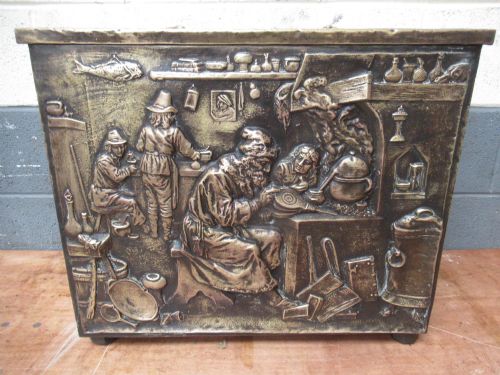


Antique Fuel Store
An antique fuel store keeps hearthside fuel ready to hand while bringing solid timber and polished metal into the room.
Antique Fuel Store
An antique fuel store gathers the receptacles designed to hold coal, peat, and logs beside the hearth. These pieces range from upright scuttles and lidded boxes to open coopered buckets and large bunkers.
The versions most common here belong to the Victorian and Edwardian eras, alongside pieces from the Georgian and Arts and Crafts periods. They turn utilitarian hearthside items into decorative room furnishings.
Makers fashioned these stores to suit different fuels, using lidded coal boxes to contain soot and open buckets to hold dry logs or peat. Their forms vary from simple country pine bins to inlaid mahogany boxes.
How they were made
Craftsmen built wooden fuel stores from oak, mahogany, walnut, pine, and wood staves held by metal hoops. Cabinetmakers used carving, inlay, and coopered construction to finish the bodies.
Metal versions relied on copper, brass, wrought iron, and cast iron. Workshops shaped sheet metal with hand-riveted joints and decorative repoussé work, particularly in Arts and Crafts designs.
What varies in quality
The grade of an antique fuel store rests on the selection of timber and the weight of the metal used in its construction. Solid oak, figured mahogany, and thick hand-hammered copper denote superior output compared to lighter commercial alternatives.
Joinery and decorative execution separate standard boxes from finer work. Dovetailed corners, crisp wood carving, secure brass mountings, and well-fitted interior liners elevate a piece.
The Antique Fuel Store Glossary
- Coal purdonium
- A box or cabinet designed to store coal near the fireplace, usually featuring a sloping drop-front lid and a metal interior liner. They often include a small interior shovel.
- Coopered
- A method of construction where narrow wooden staves are joined side by side and secured with metal bands, forming a rounded vessel like a bucket or tub.
- Helmet scuttle
- A traditional coal container shaped like a classical helmet with a wide mouth for pouring and a raised loop handle for carrying.
- Log bin
- A sturdy container designed specifically to hold firewood logs, constructed from heavy timber, iron, or riveted metal.
- Repoussé
- A metalworking technique where the artisan hammers the design from the reverse side to form a raised pattern on the surface.
Antique Fuel Store: Frequently Asked Questions
How do I tell an Edwardian coal box from a Victorian one?
Edwardian coal boxes often display lighter woods, delicate marquetry inlay, and refined proportions suited to Edwardian drawing rooms. Victorian examples tend to be heavier, relying on dark carved oak, substantial brass fittings, and robust proportions.
Arts and Crafts pieces from the late Victorian and Edwardian periods stand out through hand-hammered copper surfaces and minimal ornamentation. Examining the construction methods and wood types helps clarify the period.
Where should I place a log bucket in a room?
Log buckets sit naturally beside an active fireplace or wood-burning stove to keep fuel within arm's reach. They also function away from the hearth as planters or storage receptacles.
Copper and brass buckets catch the light near a fire, while oak and mahogany bins anchor the corner of a room with dark wood tones. Their practical design suits both traditional and modern interiors.
Are these fuel stores waterproof?
Many antique fuel stores contain original metal liners or removable buckets intended to hold coal or damp logs safely. Over time, some metal liners have developed wear or been replaced.
If you plan to use a copper bucket or wooden bin as a plant holder, inspect the interior for watertight integrity. Placing a modern plastic tray inside protects vulnerable antique timber from moisture.