

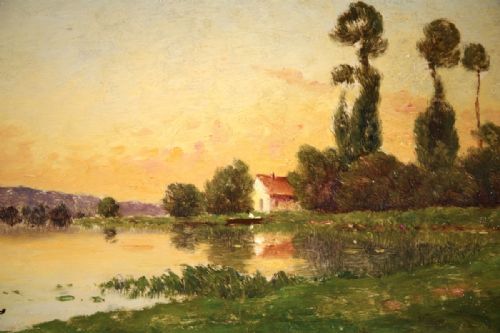


Antique French River Scene
An antique french river scene captures the quiet waterways of France through atmospheric brushwork, bringing domestic tranquility and pastoral charm into a room.
Antique French River Scene
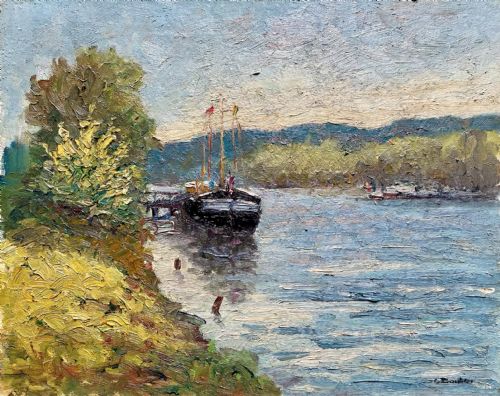
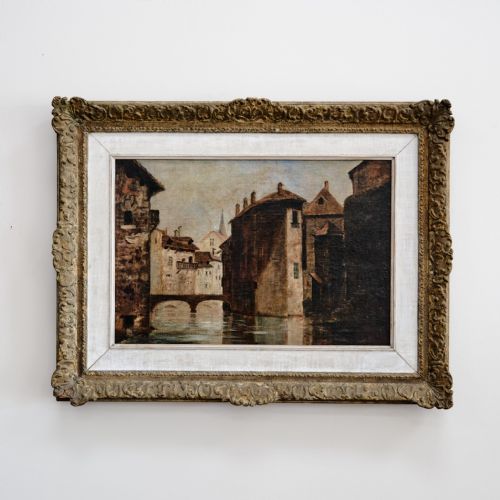
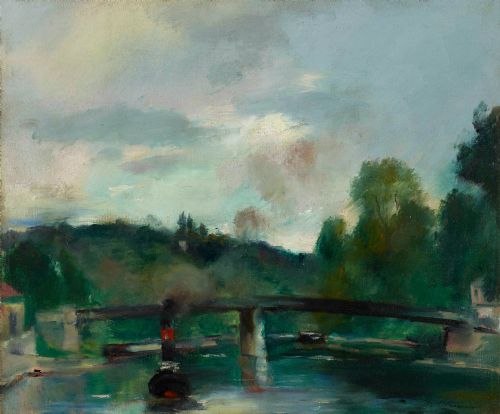
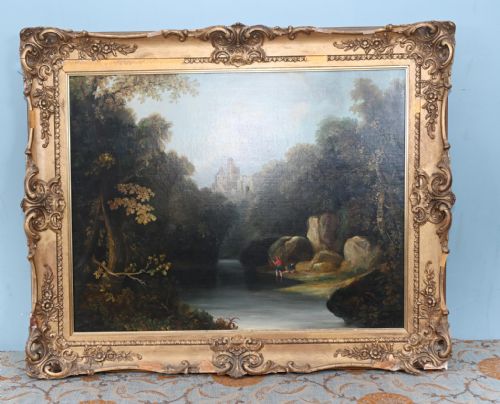
When you search for an antique french river scene, you encounter framed canvases and panels depicting waterways, chateaux, barges, and fishermen across the French countryside and Parisian banks. These works capture the changing light on the water through distinct regional movements.
The pieces on this page span the nineteenth century through the mid twentieth century, encompassing French Impressionism, Post-Impressionism, and the Barbizon School. You meet oils on canvas and panel alongside occasional pastels and works on board, recording locations from the Seine and the Loire to Normandy and Provence.
The most common subjects feature figures by the water, including washerwomen, fishermen, and boat traffic near bridges or chateaux. These compositions balance rural quiet with the industrial pulse of nineteenth century waterways.
How they were made
Artists painted these scenes primarily in oil on canvas or wood panel, often working plein air to capture immediate atmospheric conditions by the riverbank. Painters applied oil paint with varied brushstrokes, building texture and depth to represent water reflections and foliage.
Many works sit within gilt wood frames finished with gesso, adding traditional decorative weight to the paintings. Gold leaf details occasionally accent the frames, complementing the warm golden tones of summer river views.
Materials across these listings include oil on canvas, wood panel, gesso, and gold leaf.
What varies in quality
Quality rests in the handling of light and atmosphere, distinguishing rapid sketches from fully resolved compositions with confident brushwork. The subtlety of tonal transition across water and sky marks the distinction between standard decorative works and accomplished artistic statements.
The execution of perspective and spatial depth also separates pieces, with finer examples creating convincing distance along riverbanks and towpaths. Frame construction and original gilding state further contribute to the overall integrity of the piece.
Henri Ottmann·Honore Cavaroc·Henri Jaques Delpy·William Grant Murray·Armand Guillaumin·Edmond Defonte·Antoine Bouvard·Pierre Peltier·Adolphe Gumery·Charles Edmond Rene His·Rene His·Henri Joseph Harpignies
The Antique French River Scene Glossary
- Plein air
- Painting outdoors to directly capture the natural light and atmosphere of a landscape. This technique defined much of French Impressionist river painting.
- Barbizon School
- A nineteenth century movement focused on realistic landscape painting, often featuring pastoral river scenes and forests. Artists in this circle emphasised direct observation of nature.
- Gesso
- A plaster mixture applied to wood panels or frames as a base for painting or gilding. It provides a smooth surface for finishing details.
- Post-Impressionism
- An art movement extending Impressionism while rejecting its limitations, emphasising symbolic content and heavier brushwork. Works from this period often show bolder interpretations of Parisian waterways.
- Oil on panel
- A painting executed on a wooden board rather than stretched canvas. This rigid support was common for smaller plein air works.
Antique French River Scene: Frequently Asked Questions
What periods do these river paintings cover?
The works span from the nineteenth century through the mid twentieth century, capturing distinct stylistic shifts from the Barbizon School to Impressionism and Post-Impressionism.
Dates across the collection reach from the 1860s into the 1950s, reflecting changing approaches to landscape art in France.
Where were these river scenes painted?
Locations focus on French waterways, including the Seine in Paris, the Loire, the Orne in Normandy, and the Danube.
Artists also worked in regional locations such as Provence and Normandy, recording local chateaux, washerwomen, and river barges.
What materials were used to create them?
Most pieces consist of oil paint on canvas or wood panel, accompanied by occasional pastels on paper or board.
Frames typically combine wood, gesso, and gilt leaf finishes to complement the painted scenes.
How do I identify a plein air work?
Plein air paintings often exhibit spontaneous brushwork and natural lighting captured outdoors on location rather than in a studio.
These pieces frequently appear on smaller wood panels or portable canvases used by artists travelling along riverbanks.