
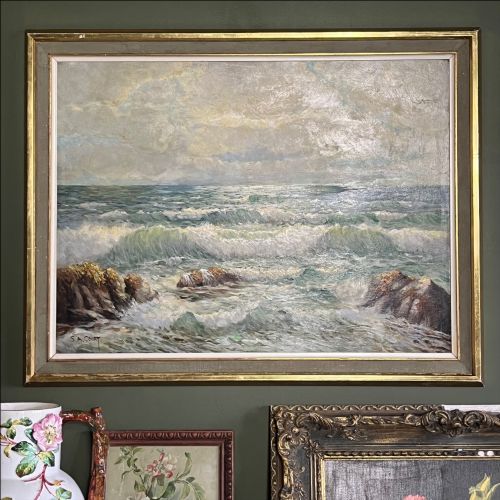
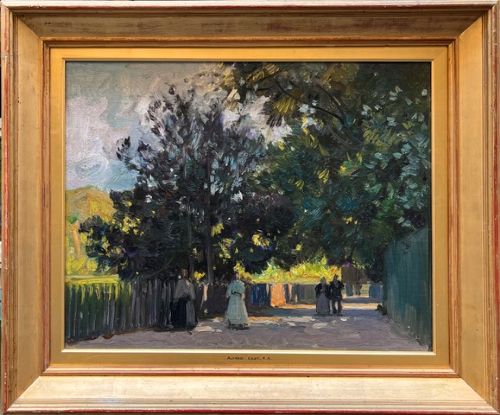


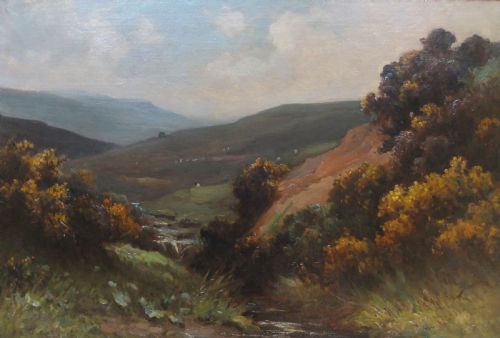


Plein Air Landscape Painting
Plein air landscape painting captures fleeting natural light and atmosphere directly outdoors, offering a direct window into the painter's immediate physical surroundings.
Plein Air Landscape Painting
When you search for plein air landscape painting, you encounter works executed outdoors rather than finished inside a studio. The pieces span from the nineteenth century through the mid twentieth century, capturing rivers, coastal scenes, moorlands, and parks. British Impressionism, French Impressionism, Post-Impressionism, and the Barbizon School form the core styles represented across the selection.
Most examples you meet on this page utilise oil paint applied to canvas, wood panels, or boards, frequently housed within period gilt wood frames. Subjects range from tranquil river paths and sunlit riverbanks to barges on the Seine and coastal Cornish views. These oil paintings reflect the direct observation of nature practised by artists working on location during the Victorian era and subsequent decades.
What varies in quality
The strength of the composition and the confidence of the brushwork separate the most compelling works from routine studies. Artists who successfully captured the specific light and atmosphere of a location achieved a greater sense of immediacy.
Condition plays a role, particularly the preservation of the original oil surface and the integrity of the panel or canvas. Original gilt wood frames that suit the period and scale of the painting also contribute to the overall integrity of the piece.
Several artists braved riverbanks, moorland streams, and sunbathing nudes just to catch the light.
Sidney A Court·Sir Alfred East·Honore Cavaroc·Ernest Higgins Rigg·Edmond Defonte·Fred Stead·Pierre Peltier·Kershaw Schofield·Kenneth Washburn·Henri Harpignies
The Plein Air Landscape Painting Glossary
- Plein air
- Painting outdoors to capture direct natural light and atmospheric effects. This method emerged as portable paint tubes allowed artists to leave the studio.
- Barbizon School
- A nineteenth-century French art movement dedicated to naturalistic landscape painting. Artists associated with this group worked directly from nature in the Forest of Fontainebleau.
- Impressionism
- A style characterised by relatively small, thin, yet visible brush strokes and open composition. The emphasis focuses on accurate depiction of light in its changing qualities.
- Panel
- A flat piece of wood used as a support for a painting instead of canvas. Painters frequently utilised wooden panels for outdoor sketching due to their rigidity.
- Gilt wood frame
- A wooden picture frame covered with a thin layer of gold leaf or gilt finish. These frames frequently accompany nineteenth and twentieth-century oil paintings.
Plein Air Landscape Painting: Frequently Asked Questions
What is plein air painting?
Plein air painting involves working outdoors to capture the direct effects of light and weather on a landscape. Artists execute these works on location rather than finishing them from memory inside a studio.
This method gained widespread popularity during the nineteenth century with the development of portable paint tubes and box easels.
How should I hang an oil painting?
Oil paintings on canvas or panel require stable interior environments away from direct sunlight and excessive humidity. Proper wall placement protects both the painted surface and the original frame.
Ensure the hanging hardware is securely fixed to support the weight of the frame and the canvas backing.
How do I identify a nineteenth-century work?
Nineteenth-century works often show specific characteristics in the preparation of the canvas, the composition, and the framing style. The materials used, such as older weaves of canvas or solid wood panels, offer clues to the age of the piece.
Signatures, framing methods, and stylistic traits like those associated with the Barbizon School further help date the painting.
What subjects appear in these landscapes?
Common subjects include river paths, coastal views, moorlands, cityscapes, and pastoral scenes. Artists sought out natural bodies of water, rural fields, and changing seasonal light.
These varied topographies reflect the locations where painters travelled to record outdoor views directly onto canvas or panel.