



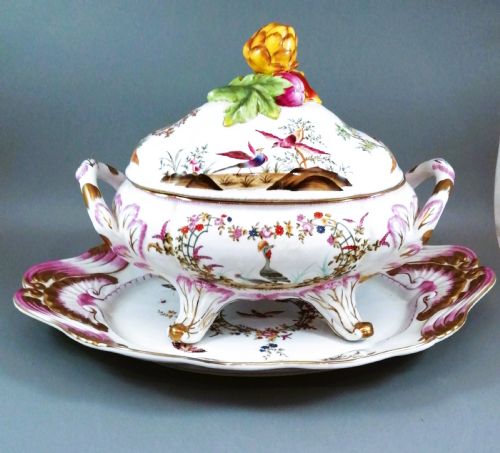


Antique French Porcelain Bowl
An antique french porcelain bowl brings weight and colour to a table, combining glazed ceramic with cast metal mounts.
Antique French Porcelain Bowl
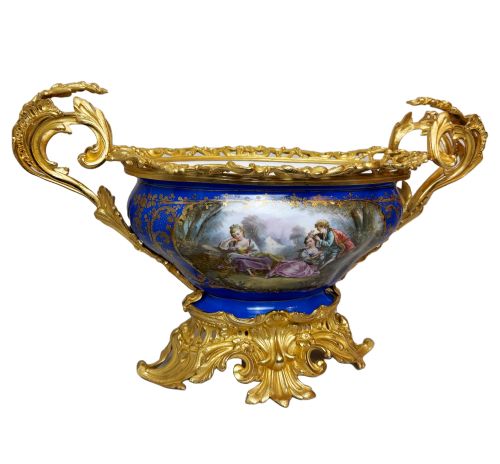
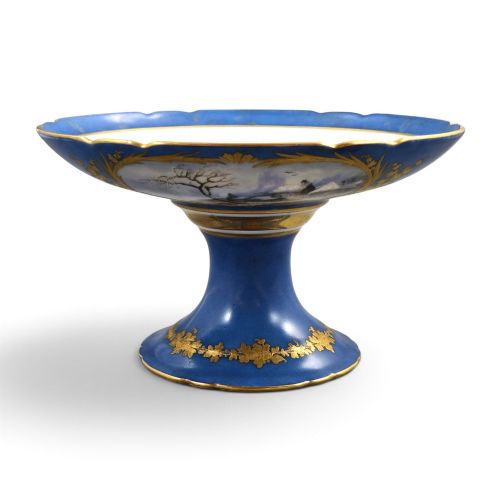
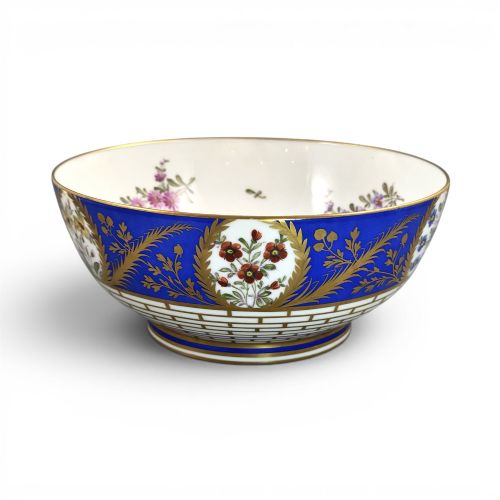
When searching for an antique french porcelain bowl, collectors encounter a range of forms including centrepieces, comports, powder boxes, and tazzas dating across the nineteenth and early twentieth centuries. These vessels often combine ceramic bodies with metal additions such as ormolu, gilt bronze, or gold leaf.
The nineteenth century examples frequently draw on earlier aesthetics like Rococo Revival and Chinoiserie, alongside items produced in the manner of Sevres or Paris porcelain. Later twentieth-century pieces shift towards Art Deco powder boxes and ceramic bowls associated with Limoges.
How they were made
The construction relies on fired porcelain or ceramic bodies finished with decorative glaze, enamel, and hand-painted details. Many pieces integrate cast metal components, utilising gilt bronze and ormolu mounts to frame or support the ceramic bowl.
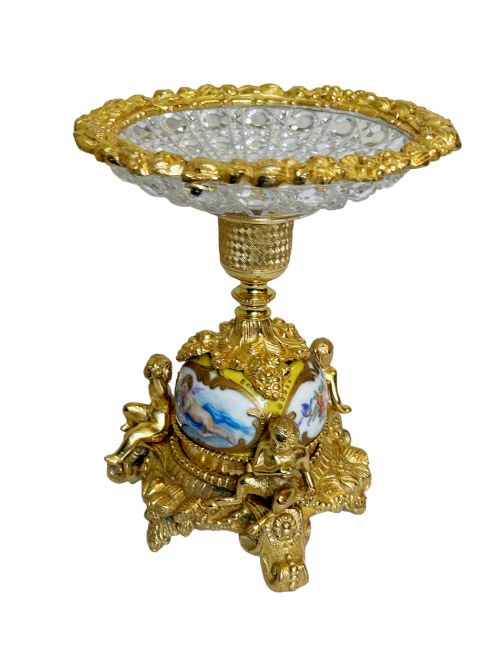
Makers employed techniques such as champleve enamel work and gold leaf application alongside cut crystal and bronze casting. These combined methods required distinct workshops for the ceramic firing and the metal mounting.
Antique French Porcelain Bowl Retail Price Guide 2026
Typical asking prices for french porcelain bowl among the pieces listed under this phrase on Sellingantiques today, from the lower quarter to the upper quarter. They describe what is for sale here now, not the wider market.
Several ceramic powder boxes from the 1930s feature charming half-doll figures perched on their lids.
What varies in quality
The standard of a piece rests on the crispness of the porcelain moulding and the detail within the hand-painted or enamelled surface. Finer examples display precise application of gold leaf and carefully finished glaze work.
Mounts in gilt bronze or ormolu show variation in their metalwork casting quality, where sharper chisel work and heavier bronze distinguish superior pieces. The integration between the ceramic bowl and its metal frame indicates the maker's skill.
Ahrenfeldt and Asalvary·Louis Pierre Malpass·Samson of Paris·Sevres
The Antique French Porcelain Bowl Glossary
- Ormolu
- Gilded bronze mounts applied to furniture, clocks, and porcelain bowls. The technique involves applying a mercury and gold amalgam to cast bronze.
- Comport
- A decorative pedestal dish or bowl used for serving fruit or display on a table. These elevated vessels often feature gilt bronze bases.
- Champleve
- An enamelling technique where troughs are carved into metal and filled with vitreous enamel before firing. It frequently appears on nineteenth-century mounts.
- Tazza
- A shallow saucer-like dish mounted on a stem and foot. They function as centrepieces or display bowls.
Antique French Porcelain Bowl: Frequently Asked Questions
How are antique French bowls cleaned?
Gentle dusting with a soft cloth protects the glazed surface and any delicate enamel work. Avoid abrasive cleaners that might damage the gilt bronze or porcelain.
Water immersion should be avoided if the piece contains metal mounts or old adhesives that moisture could weaken. Regular care simply requires keeping the bowl dry and away from direct sunlight.
What is a Sevres style bowl?
A Sevres style bowl mimics the porcelain forms, glazes, and decorative motifs produced by the royal French factory. These pieces often feature rich blue grounds and elaborate gilt highlights.
Many nineteenth-century workshops created items in this manner to satisfy collectors who admired the aesthetic of the famous French manufactory.
How do I identify an Art Deco powder box?
Art Deco powder boxes from the 1930s typically feature ceramic or porcelain bodies with modernist motifs, geometric lines, or figural handles such as flapper girls. Limoges and French ceramicists produced these smaller lidded vessels.
Unlike nineteenth-century centrepieces, these items were designed for dressing tables to hold cosmetic powders.
What is ormolu?
Ormolu refers to gilded bronze mounts used to decorate and support nineteenth-century porcelain bowls. The bright gold appearance comes from an amalgam of mercury and gold applied to the bronze base.
This technique adds weight and structural framing to the ceramic vessels, elevating their decorative presence.