



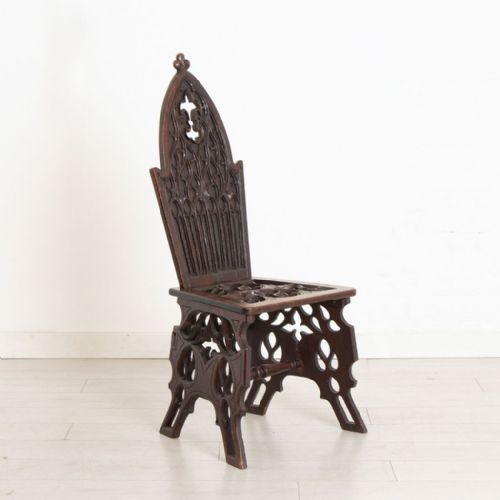

Antique French Oak Side Chairs
These antique french oak side chairs bring robust timber character and regional craft directly to the dining table.
Antique French Oak Side Chairs
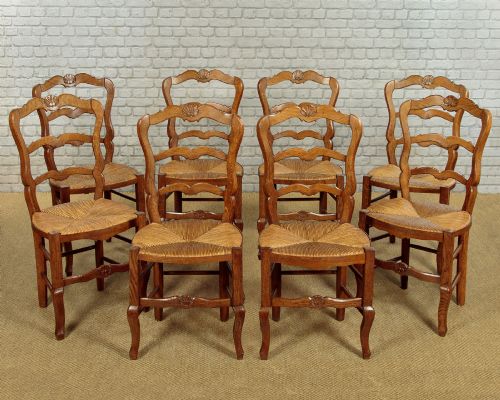
When you search for antique french oak side chairs, you are looking at solid seating pieces originating from France across the eighteenth, nineteenth, and early twentieth centuries. These chairs span rustic farmhouse forms, provincial ladder backs, and revival styles such as Louis XV, Gothic, and Renaissance.
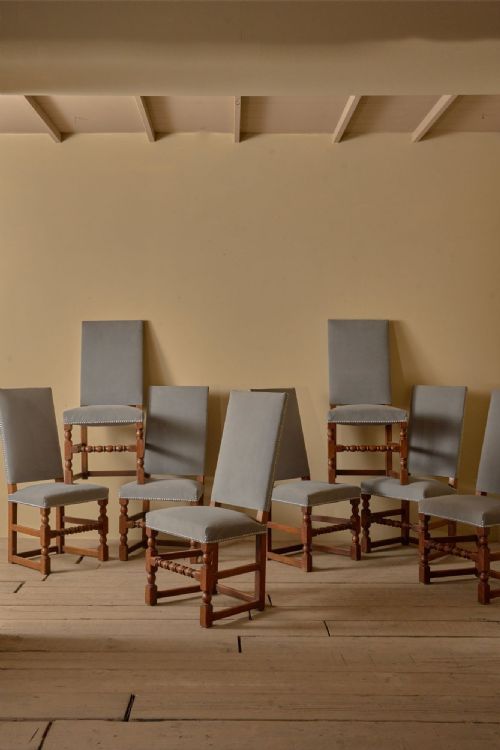
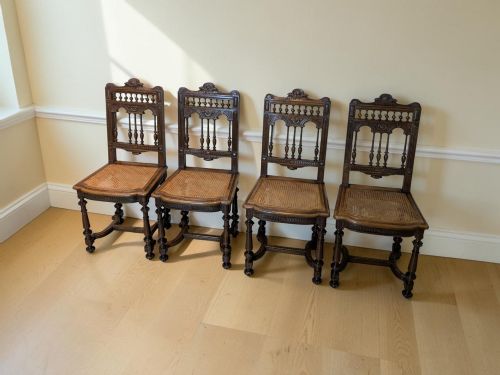
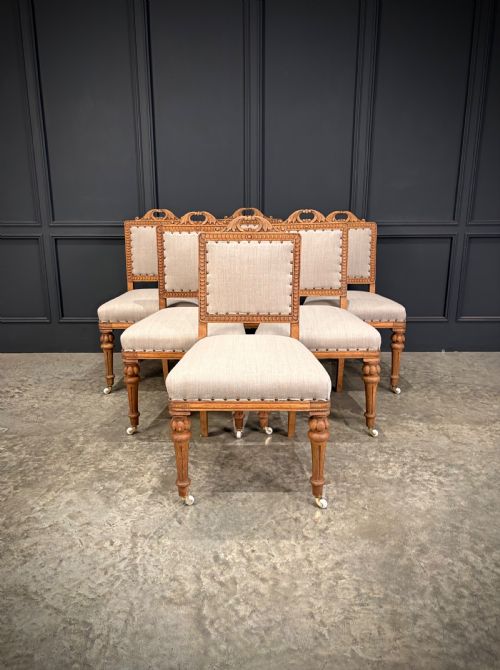
The versions you are most likely to meet on this page come in sets of four, six, or twelve, alongside occasional pairs and single country chairs. They combine sturdy timber frames with traditional seats made of woven rush, cane, or rattan, or upholstered in fabric, velvet, and textile.
Originating from workshops across France, including pieces made in Paris, these chairs serve primarily as practical dining and kitchen seating. Their forms range from unadorned country styles to intricately carved frames featuring regional detailing.
Materials and construction methods
The primary material underpinning these chairs is solid oak, selected for its strength and durability in heavy-use environments like kitchens and dining rooms. Some examples appear in a bleached oak finish, lightening the natural tone of the timber.
Seating areas rely on traditional artisan weaving techniques utilising natural rush, cane, or rattan to provide flexible support within the wooden frame. Other pieces incorporate padded upholstery finished in velvet, fabric, or textile materials.
Construction methods involve traditional joinery techniques suited to hardwood framing, frequently augmented by hand-carved decorative elements on the rails, stiles, and crests.
Antique French Oak Side Chairs Retail Price Guide 2026
Typical asking prices for french oak side chairs among the pieces listed under this phrase on Sellingantiques today, from the lower quarter to the upper quarter. They describe what is for sale here now, not the wider market.
Listings span periods from 1800 through the nineteenth century up to 1920, predominantly featuring oak paired with rush, cane, and textile materials.
Factors of quality and execution
The distinction between standard provincial seating and finer examples lies in the crispness of the hand-carving and the harmony of the overall proportions. Better pieces display carefully shaped rails and balanced turnings that reflect deliberate design rather than hurried workshop production.
The integrity of the structural joinery and the tightness of the woven rush or cane seating surfaces determine the physical longevity of each chair. Original timber patination, whether aged naturally or treated with a uniform bleached finish, adds visual depth that modern replicas cannot replicate.
The Antique French Oak Side Chairs Glossary
- Bleached oak
- Oak timber treated to lighten its natural dark brown tone, giving the wood a softer, sun-washed appearance. This finish is frequently found on twentieth-century farmhouse examples.
- Ladder back
- A chair back constructed with horizontal wooden slats or rails between the vertical uprights. This design is typical of traditional provincial and country seating.
- Rush seat
- A seating surface woven from dried marsh grass twisted into cords around a wooden frame. It provides a resilient, traditional base for kitchen and dining chairs.
- Gothic Revival
- An architectural and decorative style drawing inspiration from medieval forms, featuring pointed arches and vertical emphasis. In chairs, this manifests in pointed crest rails and panel tracery.
- Louis XV Revival
- A decorative style mimicking the asymmetric curves, scrolling foliage, and cabriole legs of the mid-eighteenth-century French court. These chairs show flowing, organic lines carved into the oak.
Antique French Oak Side Chairs: Frequently Asked Questions
Are these chairs suitable for daily dining use?
These solid oak chairs were built for practical everyday use in kitchens and dining rooms, offering robust construction designed to withstand regular seating.
Buyers intending to use them daily should check the stability of the joints and the tightness of the woven rush or cane to ensure they meet modern comfort requirements.
How do I distinguish between provincial and revival styles?
Provincial and country styles generally feature simpler, utilitarian lines with ladder backs or plain turned members suited to rural farmhouses. Revival pieces incorporate deliberate historical motifs, such as Gothic pointed arches or Louis XV scrolling curves, carved into the oak.
Examining the complexity of the carving and the overall silhouette helps identify whether a chair is a straightforward country piece or a later revival interpretation.
What maintenance do rush and cane seats require?
Woven rush and cane surfaces need basic care to prevent drying out and snapping, which involves avoiding overly dry indoor environments and excessive moisture.
Regular gentle dusting keeps organic debris from settling between the woven strands, preserving the flexibility of the natural fibres.
How can I tell the age of an oak chair?
Dating relies on observing construction marks, timber patination, and stylistic conventions associated with specific periods like the eighteenth century or the 1920s. Tool marks, hand-carving details, and the type of wear on the oak provide physical clues to the era of manufacture.
Comparing the stylistic vocabulary of the frame against known regional French forms helps narrow down the probable decade or century.