

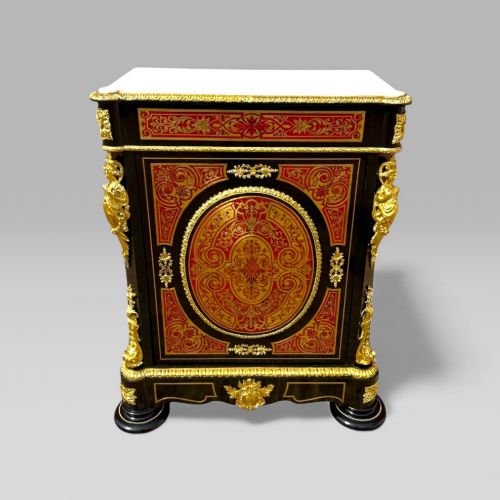


Antique French Marble Credenza
An antique French marble credenza brings together substantial cabinet work and polished stone tops for formal reception rooms.
Antique French Marble Credenza
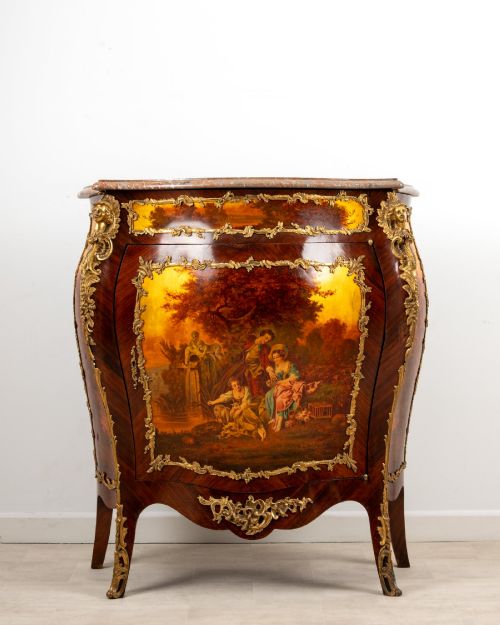
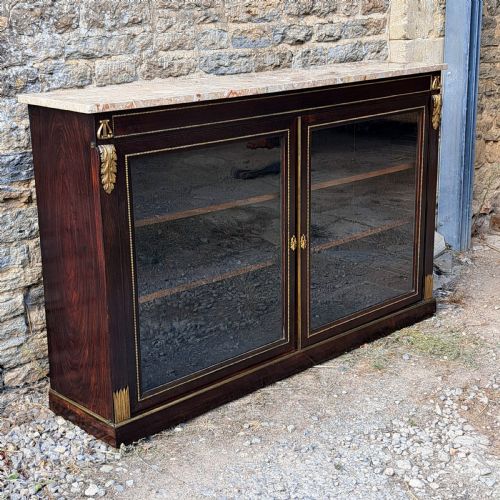
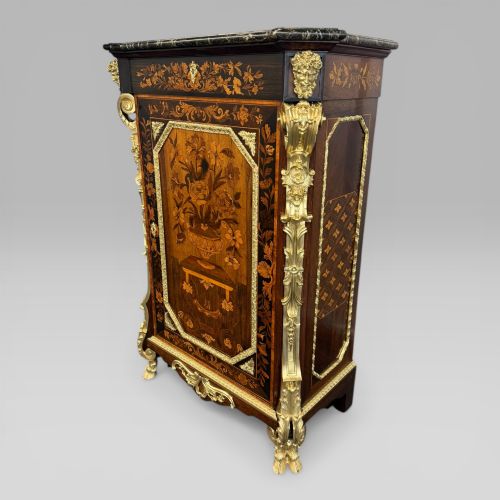
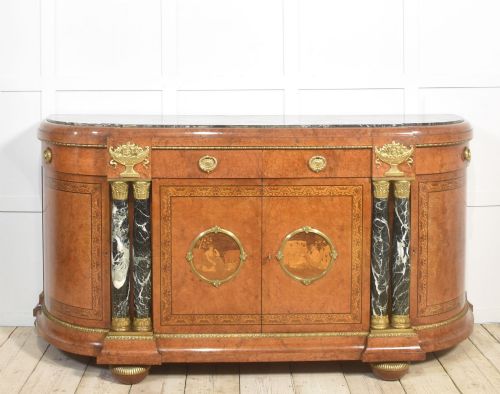
When you search for an antique French marble credenza, you encounter heavy storage furniture primarily comprising sideboards, commodes, pier cabinets, and bookcases dating from the nineteenth and early twentieth centuries.
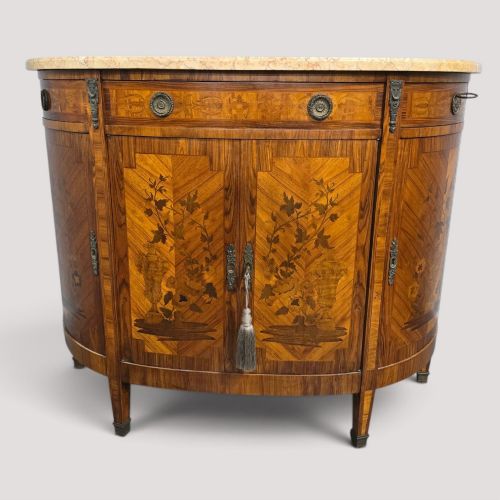
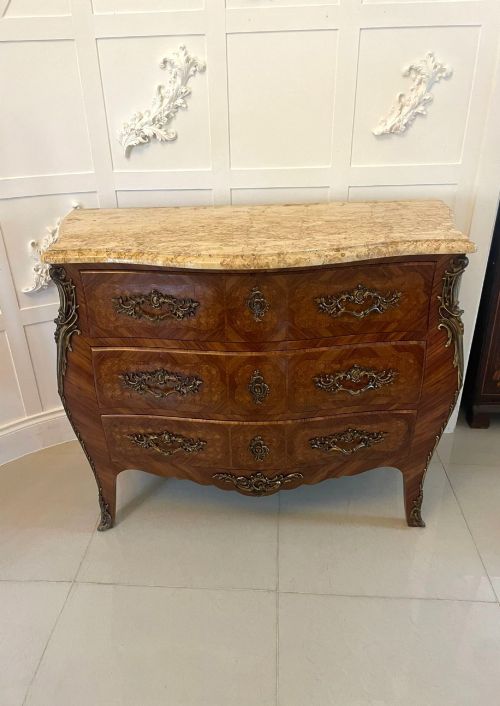
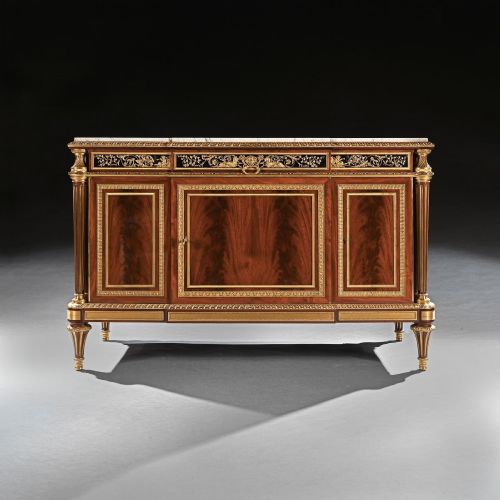
The pieces appearing on this page span diverse stylistic revivals, including Louis XV, Louis XVI, Napoleon III, and Art Deco interpretations.
Cabinets, sideboards, and commodes dominate the selection, each carrying a fitted stone slab across the upper surface.
Materials and construction
Cabinet makers utilised dense timbers such as walnut, kingwood, mahogany, rosewood, and ebonised wood as foundations for intricate marquetry and parquetry veneers.
Heavy stone slabs sit atop these carcasses, accompanied by cast or chased ormolu and gilt bronze mounts, brass detailing, and tortoiseshell inlay.
Makers shaped structural elements into bombe profiles, demi-lune curves, and straight-sided forms secured with panelled doors and fitted drawers.
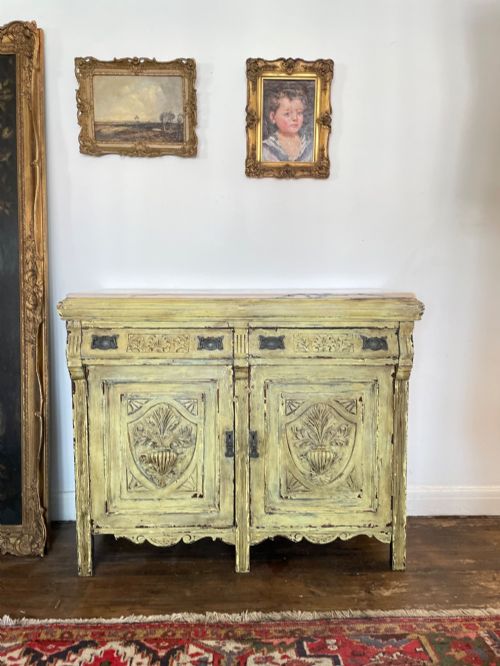
One listed sideboard emerges directly from a rural barn find.
Factors influencing execution
The standard of an antique French marble credenza depends on the precision of the timber veneers, the complexity of the floral or geometric marquetry, and the crispness of the cast ormolu mounts.
Finer examples demonstrate rigorous joinery in curved carcase construction, alongside selected marble slabs that fit flush and display harmonious natural veining.
Pieces bearing attribution to known cabinet makers or workshops often exhibit superior finishing details across interior shelving and backboards.
Henry Dasson·Edward Holmes Baldock·Maison Millet·Joseph Zwiener·Beurdeley
The Antique French Marble Credenza Glossary
- Ormolu
- Gilded bronze mounts applied to furniture. These decorative elements frame panels, corners, and legs.
- Marquetry
- Fitted wood veneers forming pictorial or floral patterns. Craftsmen cut contrasting timbers to create complex surface designs.
- Credenza
- A side cabinet or sideboard used for storage and display. The form evolved to incorporate heavy stone tops.
- Vernis Martin
- A European imitation of Japanese lacquer work. This polished resin finish produces glossy painted panels.
- Parquetry
- Geometric wood inlay patterns. Artisans arrange small timber blocks into repeating angular motifs.
Antique French Marble Credenza: Frequently Asked Questions
What is an antique French marble credenza used for?
These large cabinets provide enclosed shelving and surface space within dining rooms, hallways, and formal reception spaces. The stone top offers a durable platform for displaying decorative objects.
Historically, similar low sideboards functioned as serving surfaces or storage units for tableware and documents.
How do I identify the period of a credenza?
Stylistic markers point toward specific decades, such as the curved gilt mounts of Louis XV revivals or the geometric restraint of later Art Deco pieces. Timber choices and veneer patterns also shift across the nineteenth and early twentieth centuries.
Examining the construction methods inside the carcase reveals hand-cut joinery typical of nineteenth-century workshops versus later manufacturing.
How should I care for the marble top?
Polished stone surfaces require gentle cleaning with damp cloths and neutral soaps, avoiding acidic cleaners that etch the calcium-based material. Using coasters protects the polish from moisture rings and spills.
Regular dusting keeps the stone and timber frames safe from abrasive grit accumulation.
Are these cabinets heavy to move?
The combination of dense hardwoods, thick stone slabs, and cast bronze mounts creates substantial weight across every piece. Moving them generally requires multiple people and careful handling of the removable marble top.
Lifting from the wooden carcase base rather than projecting cornices or mounts prevents structural strain.