

Marble Top French Cupboards
Solid stone surfaces meet fine timber construction in marble top french cupboards, offering durable elegance and practical storage for the bedroom or salon.
Marble Top French Cupboards
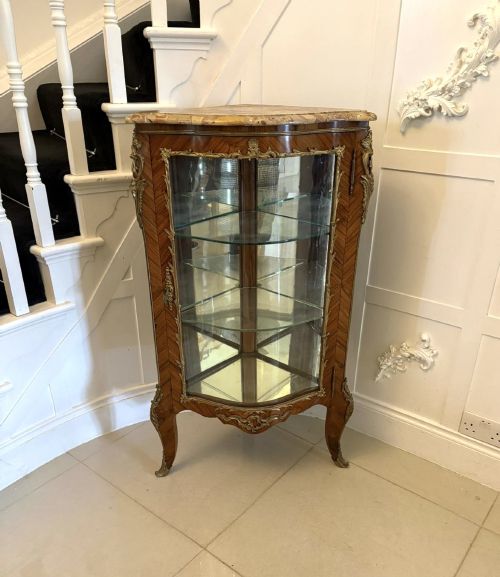
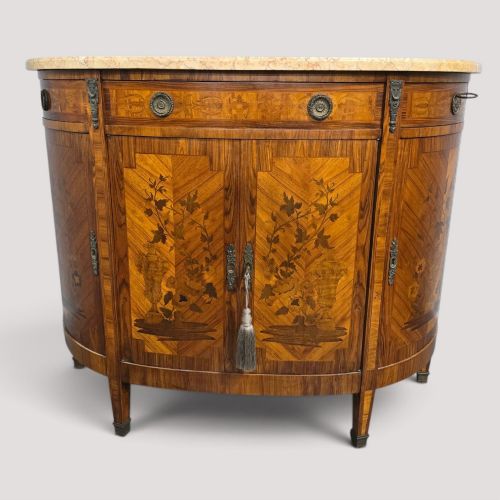
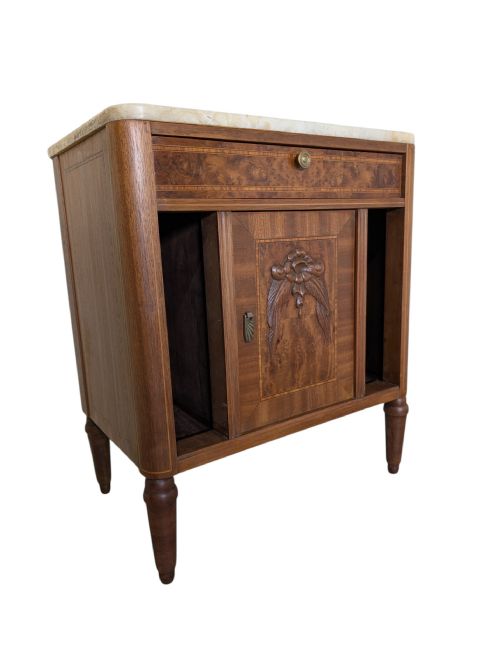
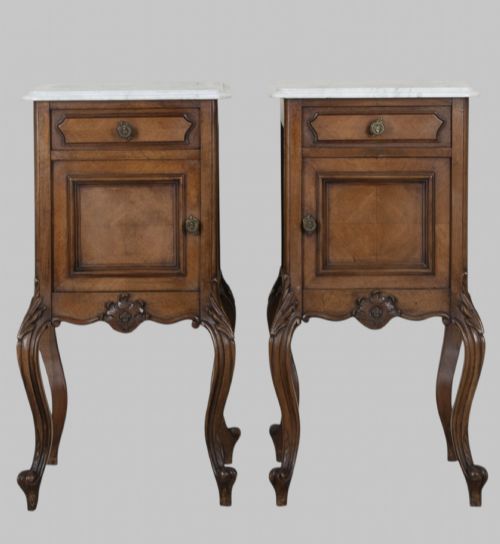
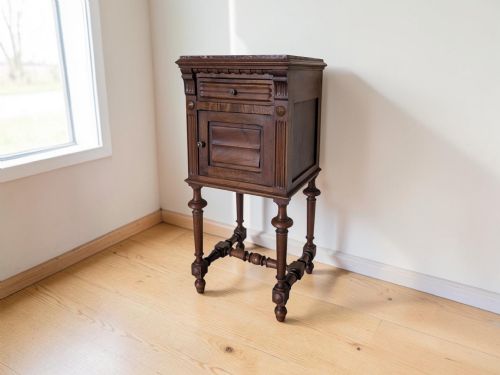
Marble top french cupboards comprise a diverse category of bedside cabinets, commodes, pier cabinets, and display pieces designed with stone surfaces. These items range from compact lamp tables to substantial sideboards originating across the nineteenth and early twentieth centuries.
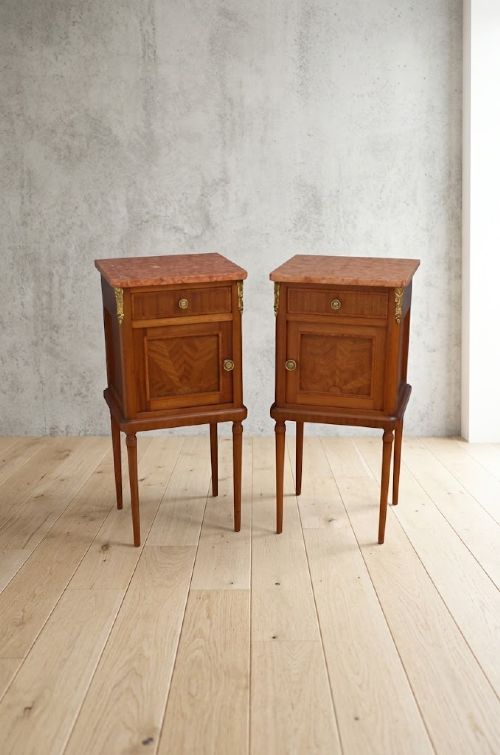
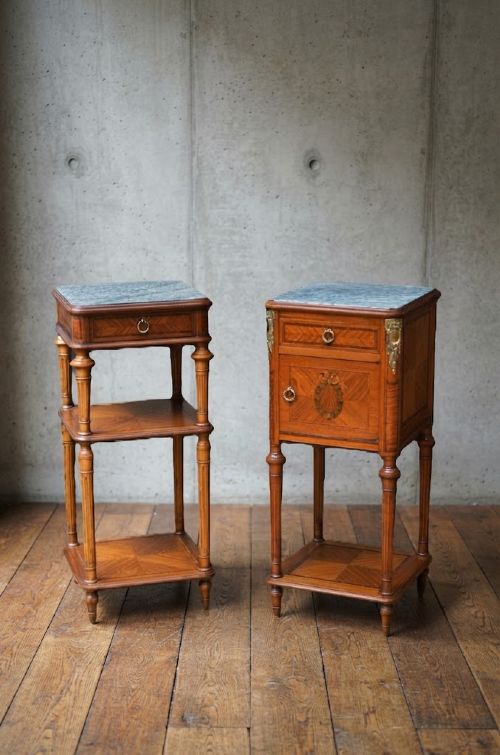
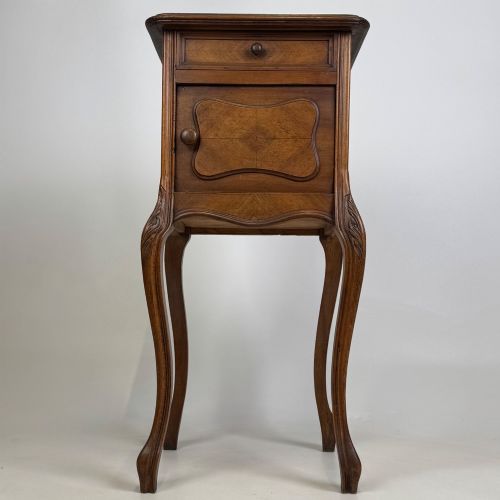
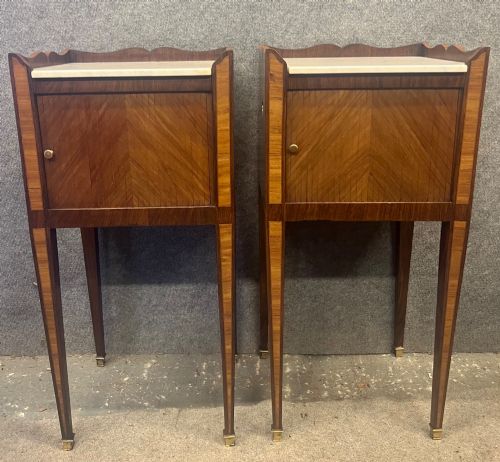
Bedside cabinets and small lamp tables dominate the selections, frequently appearing in matched pairs alongside single larger commodes and corner units. Walnut and oak form the structural core of many surviving pieces, alongside exotic veneers like kingwood and mahogany.
Makers and workshops across France produced these cabinets in varied regional interpretations, spanning provincial oak designs to elaborate revival styles. The integration of stone slabs onto wooden carcases provides both a functional tabletop and a decorative focal point.
How They Were Made
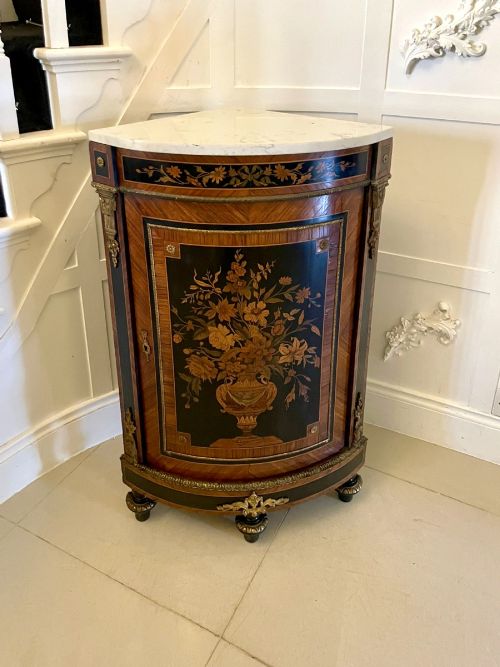
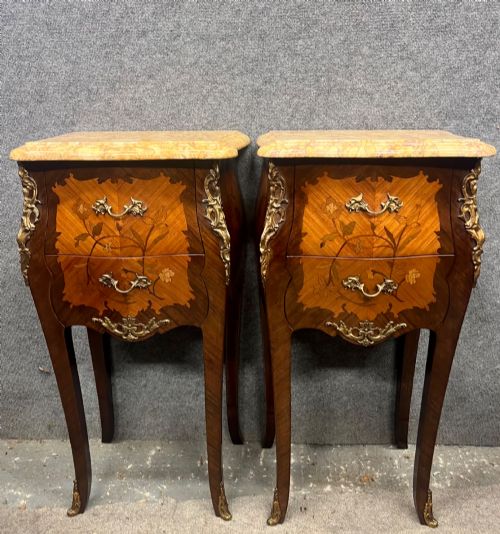
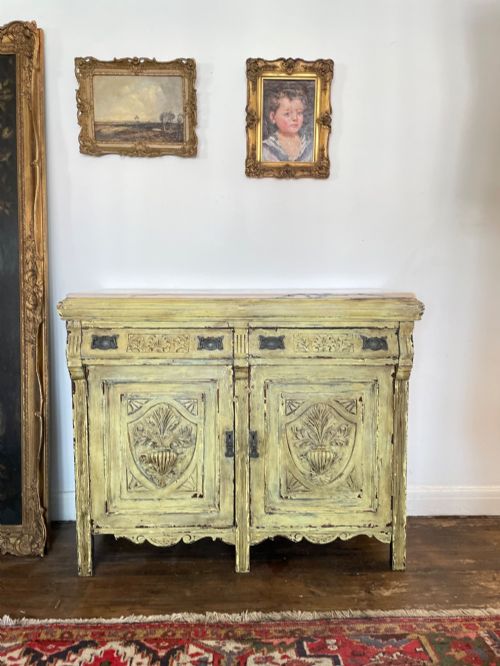
Cabinet makers utilised traditional timber framing methods, applying decorative veneers such as kingwood, walnut, satinwood, and fruitwood over secondary woods. Marquetry inlays and hand-carved details frequently adorn the drawer fronts and door panels of these storage pieces.
Heavy marble slabs, sometimes coloured or veined in shades of pink, rest directly upon the timber carcases to form waterproof and heat-resistant tops. Gilt bronze and ormolu mounts, along with brass handles and key escutcheons, secure the structural corners and enrich the exterior aesthetic.
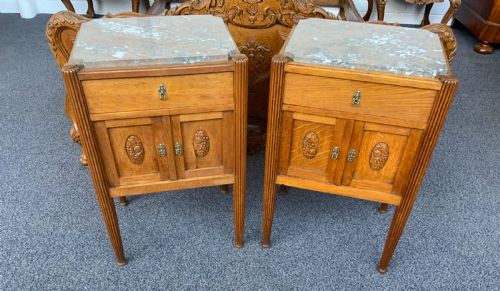
Listings feature items spanning the nineteenth century through the 1930s, incorporating Louis XV and XVI revivals alongside Art Deco forms in oak, walnut, and kingwood.
What Varies in Quality
The choice of timber and veneer dictates the baseline refinement, moving from solid regional oak and walnut to intricate kingwood marquetry and tortoiseshell boulle work. Dense figuring in the burr and fruitwood veneers indicates superior material selection by the maker.
Mount quality separates standard production from exceptional examples, observed in the crisp chasing of ormolu mounts and cast bronze details. The thickness, polish, and natural figuring of the marble top further establish the grade of the finished cabinet.
Antique Edward Holmes Baldock·E. Kahn
The Marble Top French Cupboards Glossary
- Ormolu
- Gilt-bronze mounts applied to furniture for decorative enrichment. This technique involves coating cast bronze in a layer of gold amalgam.
- Marquetry
- The art of applying small pieces of wood veneer to a structure to form decorative patterns. Craftsmen cut various timber types to create floral or geometric motifs.
- Commode
- A low French chest of drawers or cabinet with legs. These pieces often feature prominent marble tops and decorative mounts.
- Vernis Martin
- A type of simulated Japanese lacquer developed in France during the eighteenth century. Artisans used successive layers of varnish to achieve a glossy decorative finish.
- Demi Lune
- A half-moon or semicircular shape utilised in the design of cabinets and tables. This profile allows pieces to sit flush against walls while saving floor space.
Marble Top French Cupboards: Frequently Asked Questions
What rooms suit marble top french cupboards?
Bedside cabinets and lamp tables find natural placement beside a bed or seating area where stone surfaces resist liquid rings.
Larger commodes and display cabinets serve as focal storage units in hallways, drawing rooms, or dining spaces.
How do I care for the stone?
Marble requires gentle cleaning with warm water and pH-neutral soap to preserve the polished finish without scratching the calcium-based stone.
Avoid acidic cleaners and place coasters under drinks to prevent staining the porous surface.
Are pairs common for these cabinets?
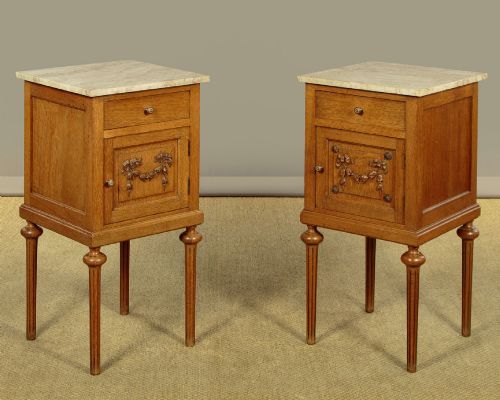
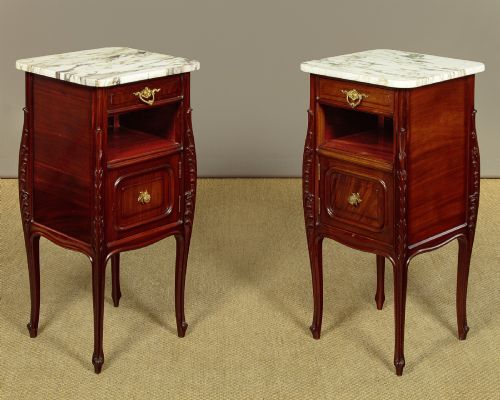
Many bedside chests and lamp tables survive in matched pairs designed to flank a bed evenly.
Single cabinets usually function as standalone side pieces or corner display units.
How do I identify the furniture style?
Louis XV revival styles display flowing cabriole legs and asymmetrical ormolu mounts, while Louis XVI revival pieces exhibit straight tapered legs and neoclassical symmetry.
Art Deco examples introduce geometric lines and simplified oak structures from the early twentieth century.