





Antique French Kitchen Furniture
Antique French kitchen furniture brings the honest utility and warm patina of provincial workspaces straight into the modern home.
Antique French Kitchen Furniture
Antique French kitchen furniture encompasses heavy utilitarian tables, substantial storage cupboards, bakers' racks, and dedicated preparation pieces originating from provincial France. Buyers searching this phrase typically encounter robust dining tables, benches, and butchers' blocks shaped by rural domestic and trade use.
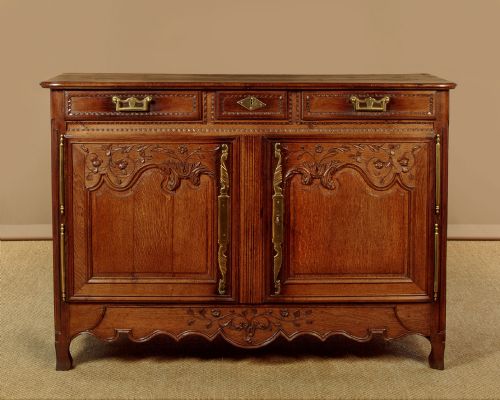
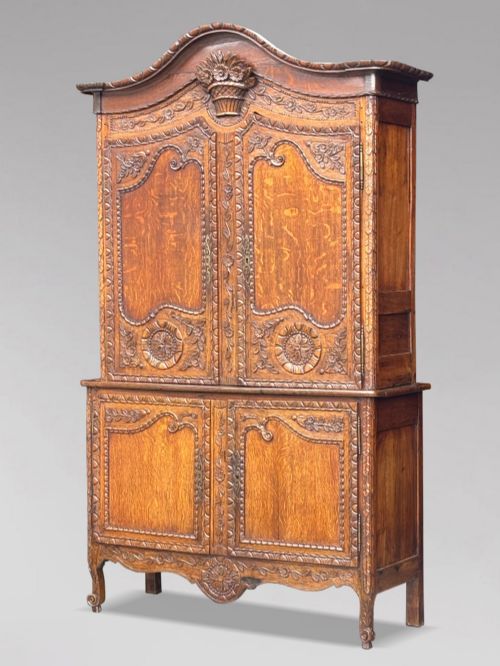
The selection ranges from eighteenth-century oak buffets and housekeeper's cupboards to later nineteenth-century industrial bakers' racks and beech butchers' blocks on stands. Regional pieces display the distinct characteristics of local workshops, utilising regional timbers such as cherrywood, walnut, elm, and pine.
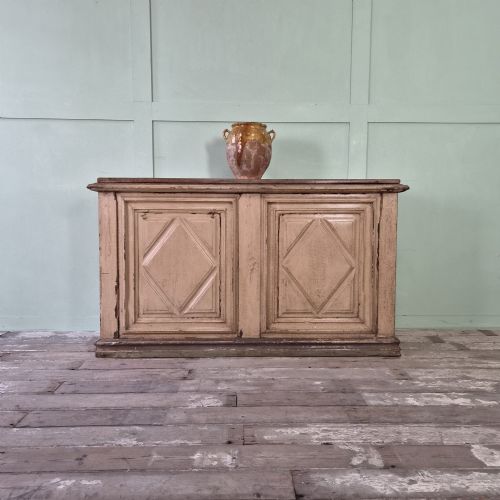
Functional items like panetieres, workbenches, and shop counters form a large part of the available selection, reflecting the practical needs of past French artisans and households. These pieces combine straightforward construction with the subtle decorative details of provincial styles like Louis XV.
Materials and construction methods
Makers constructed these pieces using dense hardwoods including oak, beech, walnut, and cherry, alongside practical softwoods like pine and poplar. Iron, wrought iron, and brass appear frequently on bakers' racks, shop counters, and workbenches, providing structural strength for heavy daily tasks.
Joinery techniques relied on traditional pegged mortise and tenon joints to withstand the heavy loads of cutting blocks and large dining gatherings. Surfaces often display the marks of hand tools, scrubbed finishes, or accumulated layers of historic paint rather than modern factory processing.
Antique French Kitchen Furniture Retail Price Guide 2026
Typical asking prices for french kitchen furniture among the pieces listed under this phrase on Sellingantiques today, from the lower quarter to the upper quarter. They describe what is for sale here now, not the wider market.
Bread safes whisper tales of crusty baguettes guarded carefully behind tiny wooden spindles from hungry kitchen mice.
Distinguishing quality across the range
Quality in these pieces depends heavily on the integrity of the timber, the depth of original patina, and the proportion of the form. Grain density in woods like oak and walnut, alongside the retention of original ironwork or stamped maker details, elevates certain examples.
The balance between robust utility and refined provincial styling separates standard utilitarian items from finer workshop-produced cabinets and tables. Unaltered surfaces bearing the authentic marks of labour carry more distinction than heavily restored or overly sanded examples.
Dubois of Lyon·Trussant & Cie
The Antique French Kitchen Furniture Glossary
- Buffet deux corps
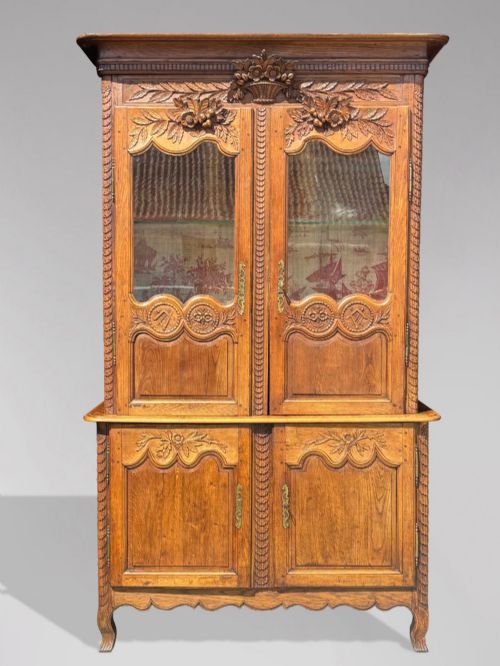
- A large two-section storage cabinet comprising a lower cupboard base and an upper display or shelving unit. These substantial pieces served as primary storage for household tableware in provincial homes.
- Panetiere
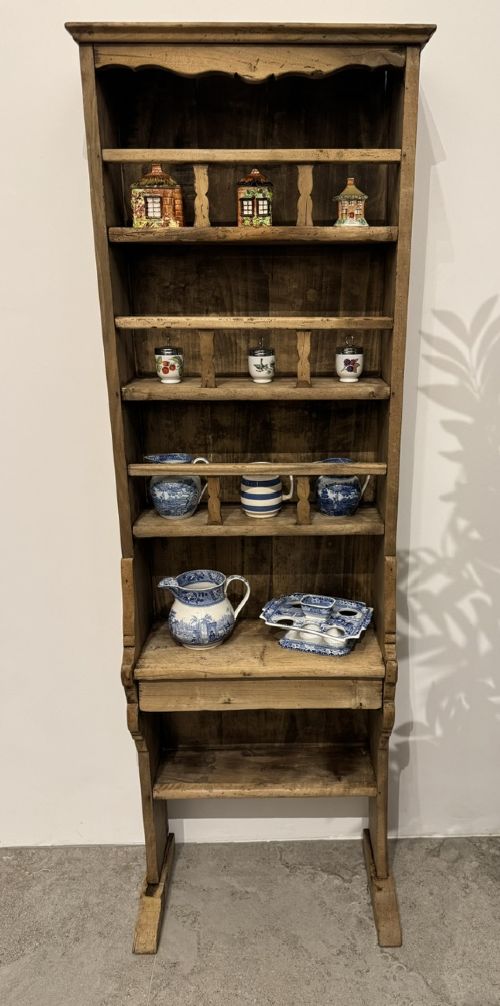
- A traditional ventilated bread safe used in French households to store loaves away from pests. They often feature turned spindle galleries and delicate woodwork.
- Vaisselier
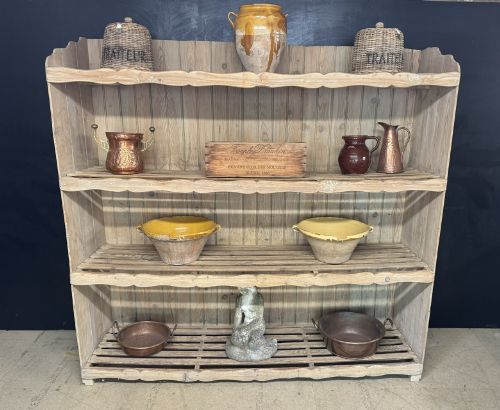
- A traditional dresser or open-shelved cupboard designed for displaying plates and serving dishes. They frequently incorporate lower cabinet doors or drawers beneath the open shelving.
- Trestle table
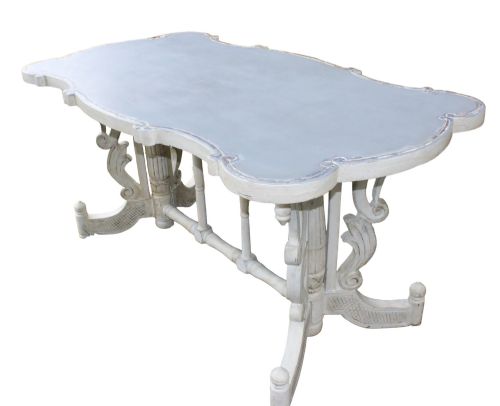
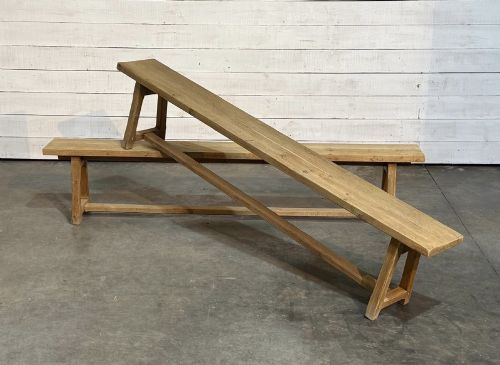
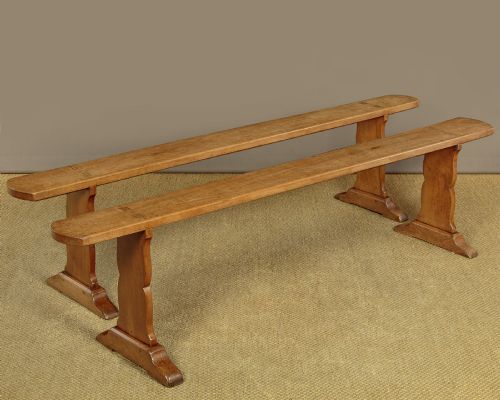
- A table construction consisting of two or more support trestles connected by a horizontal stretcher beam. This design allowed for maximum legroom and stability in large farmhouse kitchens.
- Butchers block
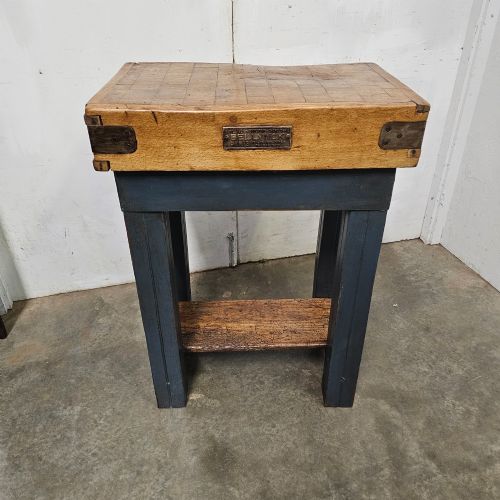
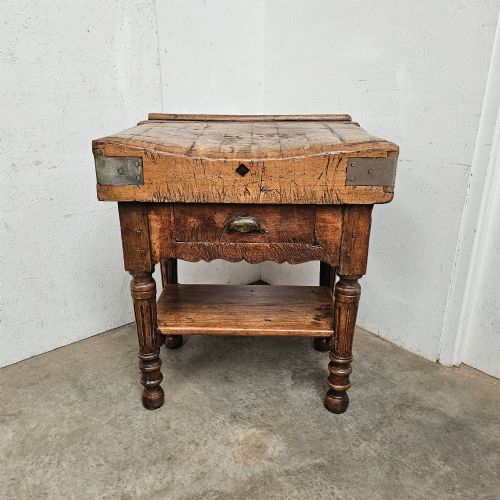
- A thick, solid block of end-grain timber mounted on a sturdy stand or base. They were utilised by butchers and cooks for heavy chopping and food preparation.
Antique French Kitchen Furniture: Frequently Asked Questions
Where were bakers racks originally used?
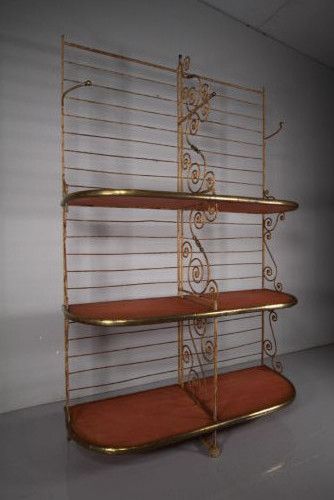
Bakers racks originated in commercial French bakeries and patisseries during the nineteenth century. Artisans used the tall wrought iron and metal shelving units to cool freshly baked bread and pastries.
Today, these versatile industrial racks find a second life in domestic kitchens as open storage for cookware, tableware, and pantry items.
How can I date an eighteenth-century oak cupboard?
Examine the construction joints, panel thickness, and fastener types to help determine the age of an oak cupboard. Hand-cut peg joints, irregular panel sizes, and wrought iron hinges usually point towards eighteenth-century craftsmanship.
Signs of timber movement and hand-planed surfaces further indicate traditional workshop origins predating industrial machinery. Look for authentic tool marks rather than uniform modern machine milling.
Are workbenches sturdy enough for daily kitchen use?
French workbenches and artisans' tables were originally built from heavy hardwoods like beech and elm to withstand intense manual labour. Their substantial construction makes them exceptionally stable for use as kitchen islands or prep surfaces.
Many retain functional vices and drawers that add practical utility to contemporary spaces. Their robust nature ensures they easily handle the demands of modern culinary preparation.