



Vintage Butcher Block
A vintage butcher block brings industrial utility and enduring timber character into modern domestic kitchens.
Vintage Butcher Block
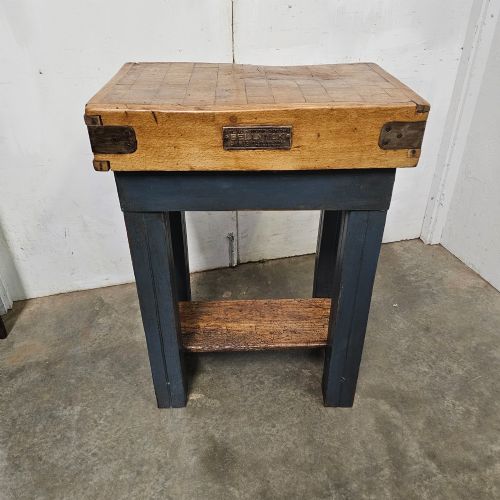
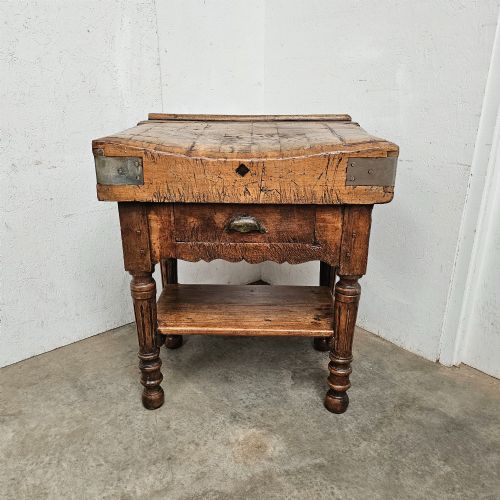
When you search for a vintage butcher block, you encounter heavy-duty timber prep surfaces originating from nineteenth-century and early twentieth-century workshops. These pieces appear as substantial kitchen islands, game blocks, and chopping tables designed originally for heavy trade use.
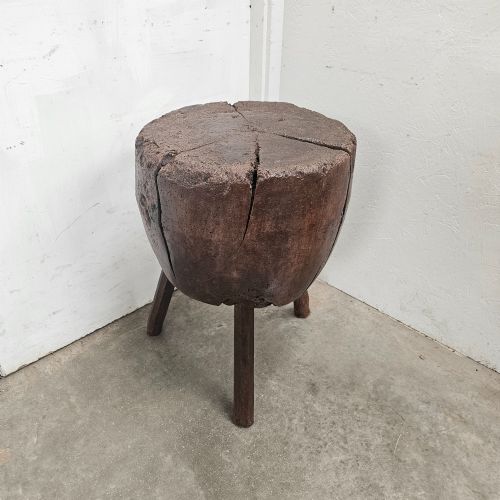
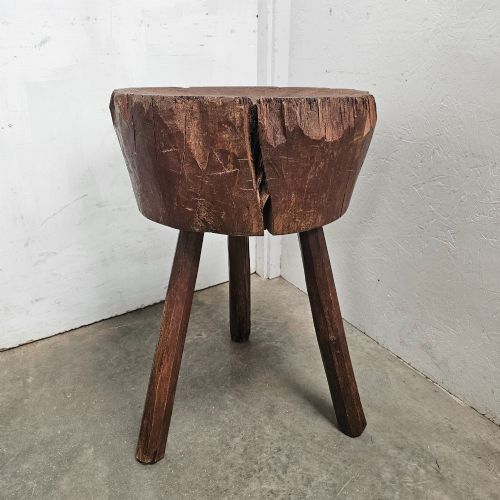
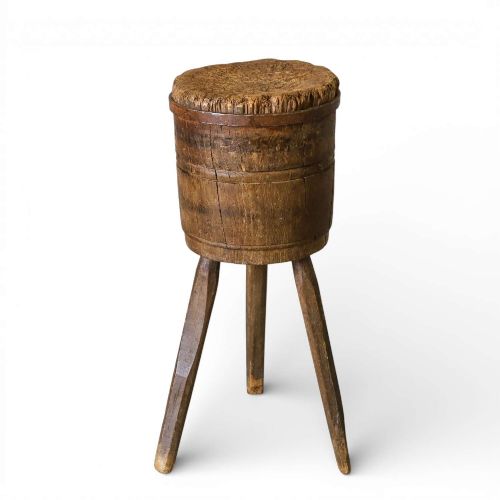
The most common examples on this page are French beech and oak pieces dating from the nineteenth century, alongside Hungarian painted designs and English prep tables. Forms range from simple tree trunks on stands to decorative bases and trestle tables.
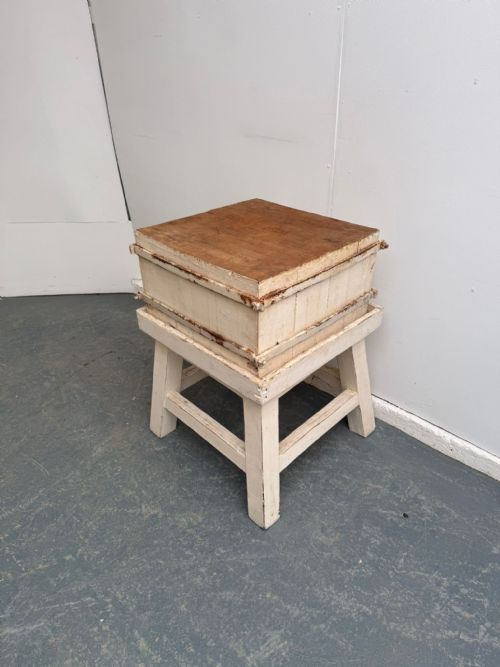
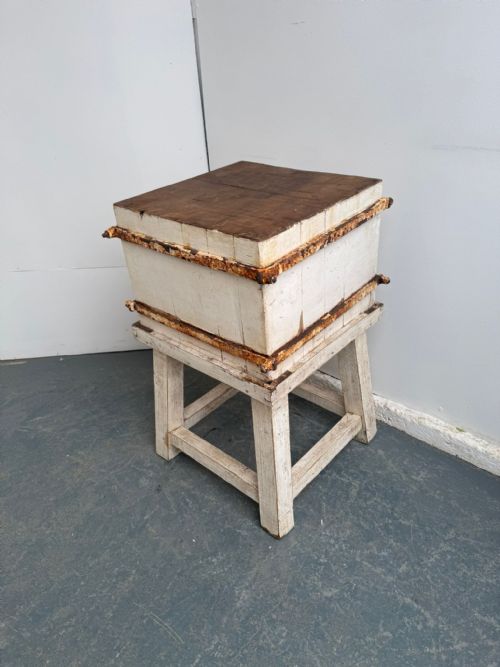
The selection encompasses primitive country items alongside industrial Victorian examples featuring iron and metal mounts. Each piece reflects the functional demands of food preparation from periods spanning the eighteen-sixties to nineteen-fifty.
Materials and construction
Construction relies heavily on dense hardwoods such as beech, oak, elm, and sycamore, chosen for their ability to withstand repeated chopping and heavy impacts. Timber sections are typically joined tightly to form thick end-grain or side-grain work surfaces.
Many items incorporate iron, metal, or bronze mounts, brackets, and drawers that add structural rigidity to the wooden bases. Painted finishes appear on specific regional variations, protecting the pine or hardwood carcasses beneath.
Listings feature timbers including oak, beech, elm, pine, and sycamore across periods from the eighteen-sixties to nineteen-fifty.
Quality factors
The standard of a vintage butcher block depends on the density of the working surface and the integrity of the timber joints. Pieces retaining their original proportions and substantial weight command greater appreciation among collectors.
Originality of the base, whether a decorative stand, trestle, or industrial metal mount, influences the character of the piece. The depth of surface patina earned through decades of genuine culinary use distinguishes superior examples.
Trussant & Cie·Hennes France
The Vintage Butcher Block Glossary
- Game block
- A specialised heavy chopping block traditionally used for preparing game birds and small animals. These typically feature thick tree trunk sections or solid beech construction.
- End-grain
- A timber cutting surface oriented so that the grain faces upward, allowing knife blades to slip between wood fibres rather than severing them. This construction minimises wear on both the blade and the block.
- Prep table
- A utilitarian work table fitted with drawers or lower shelves for kitchen implements. Examples often combine timber tops with painted or scrubbed wooden bases.
- Trestle table
- A table structure consisting of two or more support frames connected by a horizontal beam. This design provides sturdy legroom underneath heavy working surfaces.
Vintage Butcher Block: Frequently Asked Questions
How do I clean a vintage butcher block?
Maintain the timber surface by scraping away food debris and wiping with a damp cloth and mild soap. Avoid soaking the wood in water to prevent splitting.
Periodically apply food-safe mineral oil or beeswax to nourish the dense hardwood and preserve the historic patina.
Can I use it for food preparation?
Many buyers continue to use these solid timber surfaces for chopping, kneading, and general kitchen preparation. Ensure the wood is thoroughly cleaned and treated before contact with food.
Some collectors prefer to protect delicate historical patinas or glass tops placed over the historic timber.
How do I date a butcher block?
Examine the construction methods, tool marks, and wood species visible in the base and top. Nineteenth-century examples often display hand-sawn timbers and simpler joinery.
Twentieth-century pieces may incorporate metal brackets, branded maker plates, or standardised industrial mountings.
Are the bases original to the tops?
Many commercial prep tables and heavy blocks survived with their matching stands or trestle bases intact. Some workshop pieces were paired with replacement bases or iron mounts during their working lives.
Inspect the joinery where the top meets the base to understand how the components connect.