



Antique Chopping Block
These heavy timber surfaces give an antique chopping block its working authority, built to endure generations of meat preparation.
Antique Chopping Block
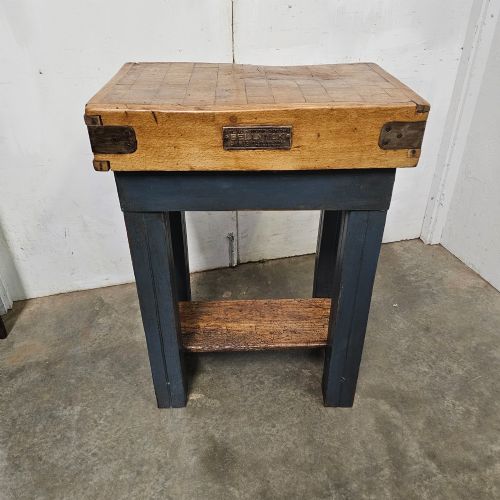
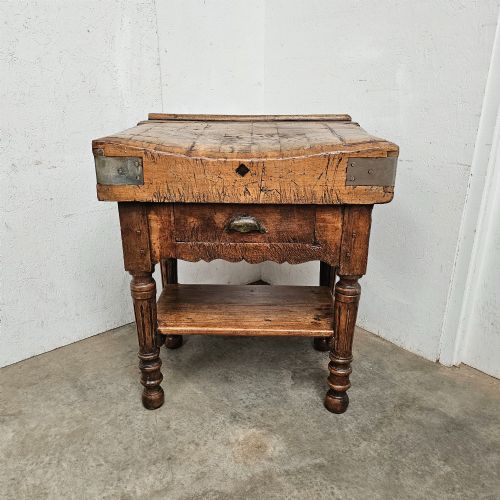
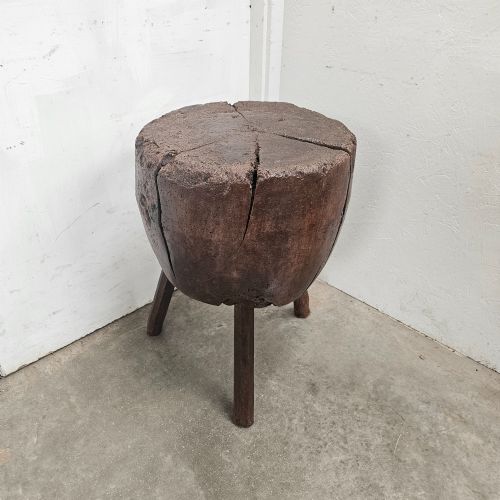
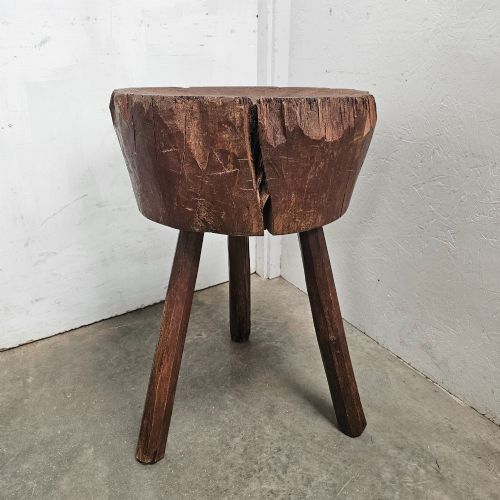
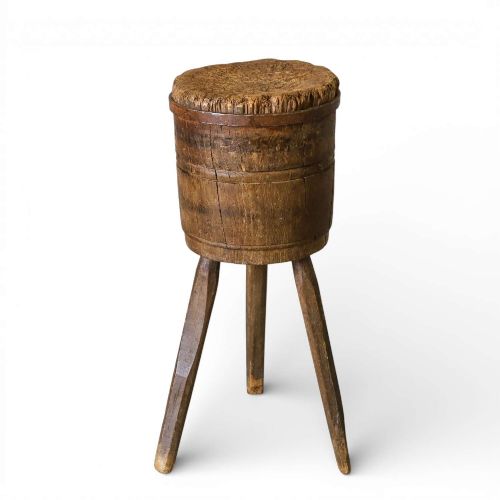
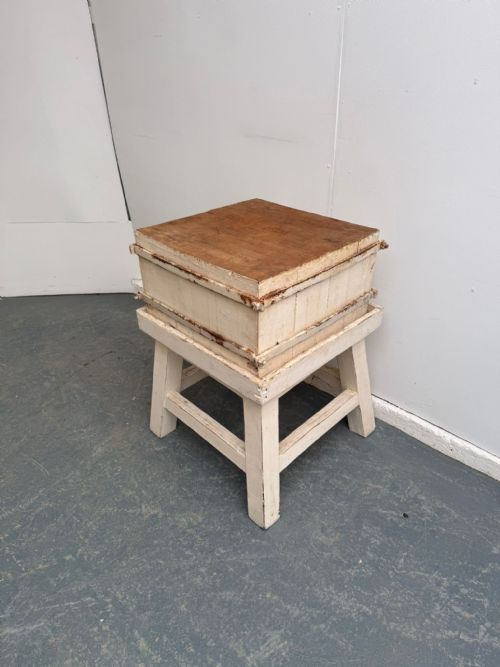
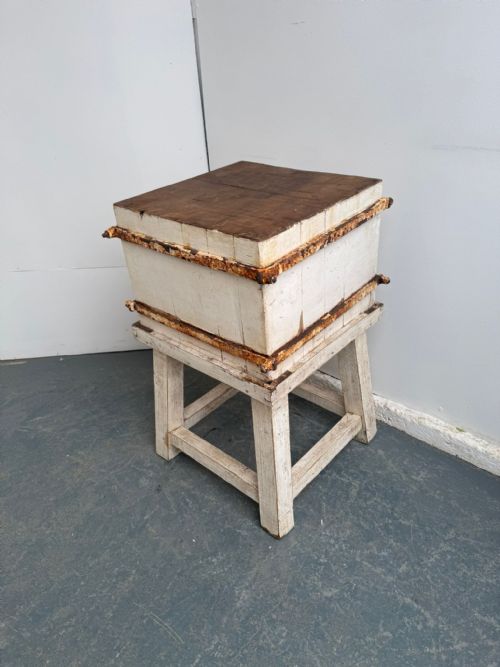
When you search for an antique chopping block, you encounter thick working surfaces designed for heavy daily use in domestic kitchens or professional butcher shops. The examples found here span the nineteenth century up through the nineteen-thirties, taking the form of low game blocks, tall kitchen islands, and side tables on original stands or legs. French provincial and Hungarian origins dominate the selection, alongside English pieces.
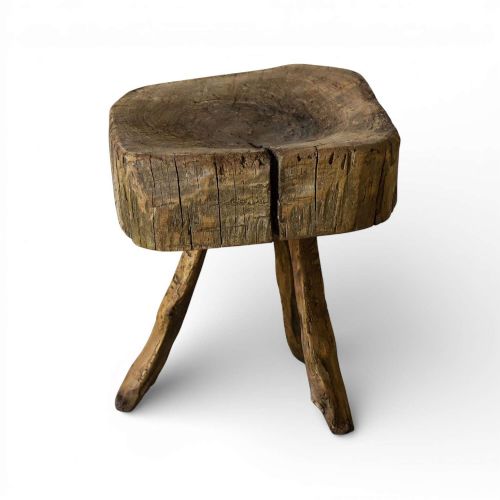
Most items meet the eye as substantial end-grain or plank-top tables made from beech, oak, or elm. Many show the deep scoring and natural patina earned from centuries of cleavers and knives. You will find both simple tree-trunk sections and sophisticated examples mounted on decorative or industrial bases.
The objects serve equally well as central kitchen workspace or decorative furniture within rustic and industrial interiors. Their varied heights and proportions reflect whether they originated as portable game blocks or fixed shop counters.
How they were made
Makers constructed these surfaces primarily from dense hardwoods like beech, oak, sycamore, and elm, relying on timber chosen for resistance to splitting. Iron and metal components, including bronzed mounts, brackets, and original stands, provide structural reinforcement to heavy timber tops.
Joinery methods prioritized durability under impact, utilising thick wooden pegs, iron bolts, and robust framing. Tree-trunk sections and game blocks were cut directly from heavy timber limbs or trunks, while larger tables employed joined planks and heavy-duty underframes.
The listings feature oak, beech, elm, sycamore, and pine alongside iron and metal hardware across nineteenth and twentieth-century periods.
What varies in quality
Quality rests upon the integrity and thickness of the timber block itself, alongside the originality of its base or legs. Pieces retaining their authentic gnarled wooden supports, original painted finishes, or specialised metal mounts stand apart from later replacements.
The character of the surface wear dictates desirability, where honest knife scoring and deep patination enhance the piece. Proportion, stability, and the selection of superior hardwoods like oak or beech over softer timbers further separate standard utility pieces from exceptional examples.
Hennes France
The Antique Chopping Block Glossary
- End-grain
- A block constructed with the wood grain running vertically rather than horizontally, presenting the hardest surface for chopping and resisting knife damage.
- Game block
- A compact, heavy chopping block historically used for preparing game birds and small animals in French provincial settings.
- Vernacular rural
- A style reflecting local, traditional building methods and materials without academic design influences, typical of country workshop production.
- Bronzed mounts
- Metal fittings treated with a bronze-like finish to strengthen and decorate the corners, legs, or structural joints of the block.
- Primitive country
- An aesthetic describing utilitarian objects made with basic tools and straightforward construction, prioritizing function over refinement.
Antique Chopping Block: Frequently Asked Questions
Can I use an antique chopping block for cooking?
These thick timber surfaces remain entirely functional for food preparation after proper cleaning and oiling with food-safe products.
Many cooks utilise them daily, though the historic patina and knife-scored wood require careful maintenance to preserve the antique surface.
How do I clean an old butcher block?
Maintenance requires scraping away surface residue and wiping the timber with a damp cloth and mild soap rather than soaking it in water.
Regular applications of mineral oil keep the hardwood from drying out and cracking while maintaining the natural dark tone.
Are these blocks heavy to move?
The dense hardwoods and thick timber sections make these pieces remarkably heavy, often requiring two people to reposition them safely.
Certain examples feature original stands, wheels, or trolleys designed to help maneuver their substantial weight across kitchen floors.
How do I date an antique block?
Dating relies on examining the tool marks, the style of the base construction, and the specific type of timber fasteners used in the frame.
Nineteenth-century examples frequently display hand-adzed legs and pegged joinery, whereas later twentieth-century pieces incorporate metal bolts and industrial mounts.