


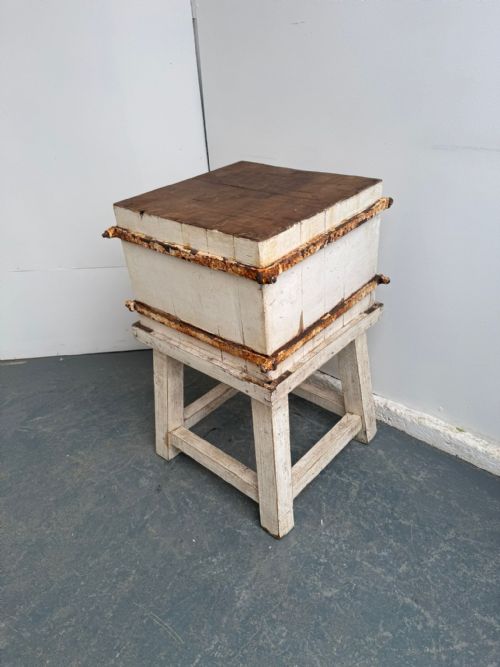


End Grain Chopping Table
An end grain chopping table is a sturdy utilitarian surface built from vertical wood fibres designed to withstand heavy daily culinary prep.
End Grain Chopping Table
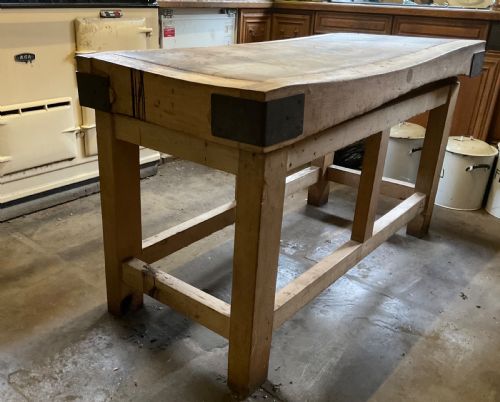
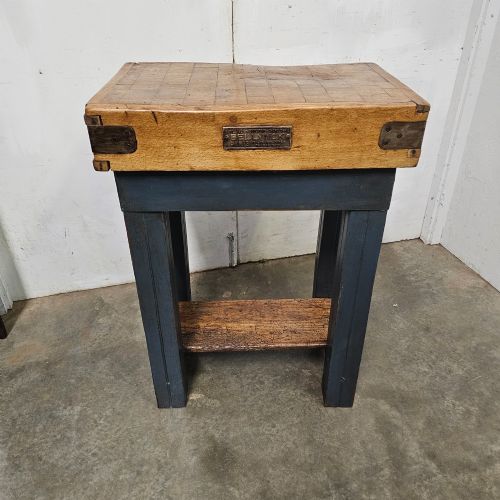
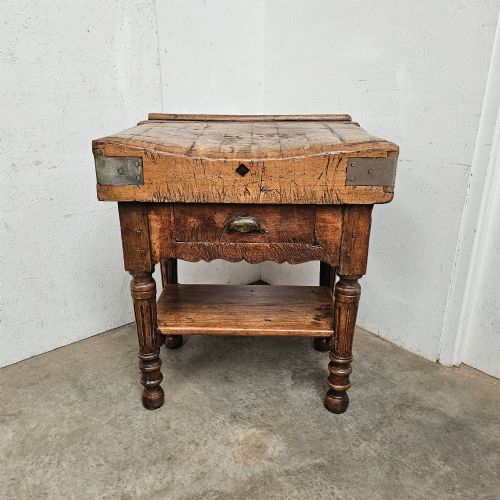
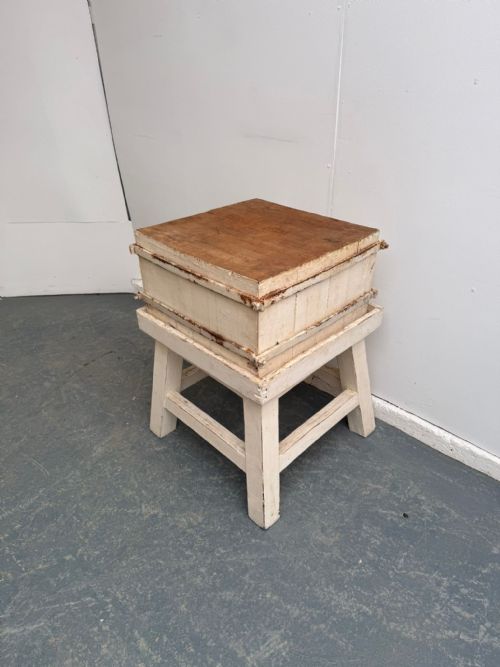
When you search for an end grain chopping table, you are looking at robust food preparation surfaces built to handle heavy daily use in kitchens and butcher shops. The examples found here span several distinct periods including the Victorian era, Edwardian period, and mid-twentieth-century designs from 1920 to 1950. These practical workspaces primarily manifest as butchers blocks, butchers blocks on stands, and kitchen islands.
The most common versions you will meet on this page are French and Hungarian blocks, often featuring substantial beech, elm, or hardwood tops mounted on painted wood or metal bases. You will encounter styles ranging from French Provincial and Rustic Country to Victorian Industrial and French Industrial. Many of these sturdy tables combine utilitarian function with decorative painted stands or tripod bases.
Originating from working environments, these tables bring authentic industrial and rustic character into domestic kitchens today. Their thick timber surfaces bear the marks of genuine past use, making them both functional workspaces and striking focal points. Whether you prefer a compact 1920s French model or a larger Victorian block, each piece reflects the robust craftsmanship of its era.
How they were made
The construction of these pieces centres on heavy hardwood timbers such as beech, elm, and oak arranged with the grain running vertically to absorb the impact of cleavers and knives. This end grain orientation creates a self-healing surface where wood fibres part rather than sever under pressure. Manufacturers combined these thick wooden blocks with robust supporting structures made from iron, steel, or painted wood.
Makers utilised traditional joinery and heavy-duty fastenings to secure the dense wooden blocks to their bases, which frequently include decorative stands or tripod configurations. The integration of metal elements alongside painted wooden bases provided the necessary stability to support the immense weight of the solid timber tops during rigorous daily culinary tasks.
End Grain Chopping Table Retail Price Guide 2026
Typical asking prices for end grain chopping table among the pieces listed under this phrase on Sellingantiques today, from the lower quarter to the upper quarter. They describe what is for sale here now, not the wider market.
Listings feature items spanning the Victorian and Edwardian eras through to the 1950s, constructed from beech, elm, oak, and iron.
What varies in quality
The distinction between standard examples and superior pieces rests largely on the density and thickness of the timber used for the top, alongside the integrity of the base. Premium specimens utilise tightly packed hardwood blocks with deep working surfaces that demonstrate minimal structural movement over decades of heavy service.
Quality also reveals itself in the harmony between the upper block and its support structure, whether that is a decorative painted stand, an industrial iron base, or a tripod configuration. Finer examples maintain their original proportions and patination without excessive replacement parts, preserving the historical integrity of the piece.
The End Grain Chopping Table Glossary
- End grain
- The surface formed by the cross-section of a tree trunk or branch where the growth rings are visible. This orientation provides a resilient chopping surface that resists dulling knife blades.
- Butchers block
- A thick, heavy wooden table traditionally used by meat purveyors for jointing carcasses. In domestic settings, it serves as a central kitchen preparation island.
- Tripod base
- A three-legged supporting structure often utilised to provide stability on uneven floors. This form appears on specific circular hardwood blocks.
- French Provincial
- A style originating from regional France characterised by unpretentious utility and simple decorative details. Pieces in this style often feature native timbers like elm or beech.
- Patina
- The surface sheen and colour developed through age, wear, and handling over many years. This quality indicates the authentic history of the timber.
End Grain Chopping Table: Frequently Asked Questions
What is an end grain chopping table?
An end grain chopping table is a heavy-duty culinary preparation surface constructed with wood fibres oriented vertically upward. This construction method allows knife blades to slip between the wood fibres rather than cutting across them, protecting both the blade and the timber.
Historically utilised in professional butcher shops and commercial kitchens, these substantial tables now function as central islands in domestic kitchens, offering both a durable workspace and a distinct historical aesthetic.
How do I maintain the wooden surface?
Maintaining the surface requires regular cleaning with mild soap and water, followed by thorough drying to prevent moisture absorption. Applying food-safe mineral oils or specialised waxes periodically helps nourish the dense hardwood and preserves the natural grain.
Avoid soaking the timber or exposing it to extreme temperature fluctuations, as these conditions can cause the heavy blocks to warp or split over time.
Can I use these tables for food preparation?
These tables were originally built specifically for food preparation and butchery, making them entirely suitable for culinary tasks. The thick end grain construction is naturally resilient against heavy chopping and slicing.
Routine cleaning and proper conditioning ensure the surface remains hygienic and functional for everyday kitchen use while retaining its historical character.
How do I identify the period of a block?
Identifying the period involves examining the specific timber types, construction methods, and base designs associated with different eras. Victorian and Edwardian examples often feature distinct proportions and heavier painted or metal bases, while mid-twentieth-century pieces display simpler utilitarian lines.
Comparing the manufacturing techniques and wear patterns against documented examples helps narrow down the approximate decade of production.