
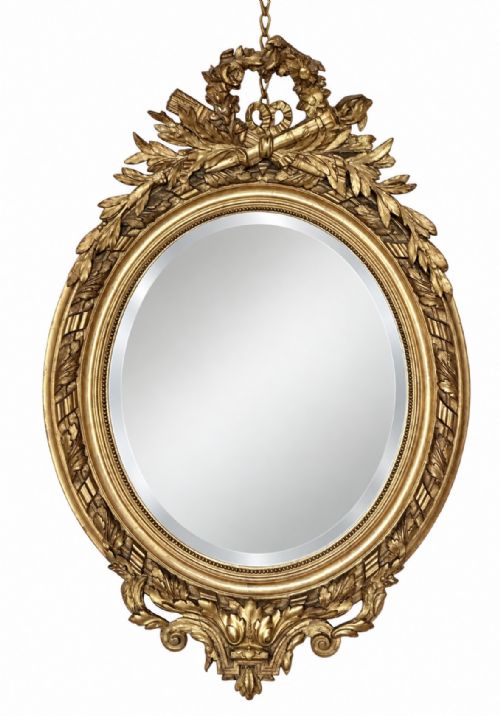
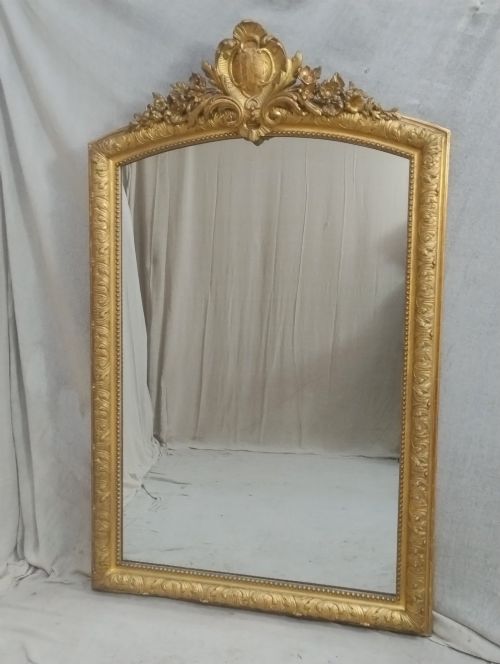
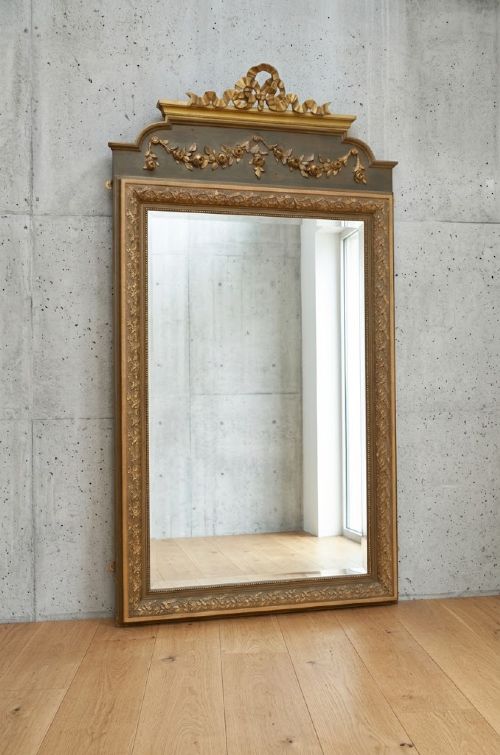
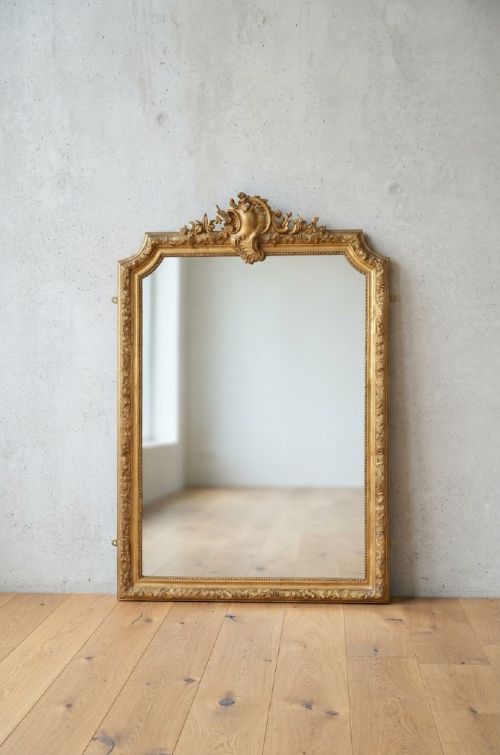
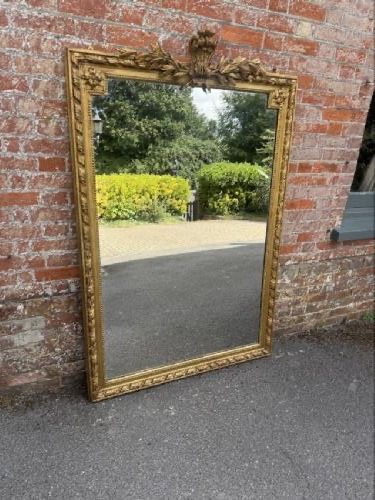
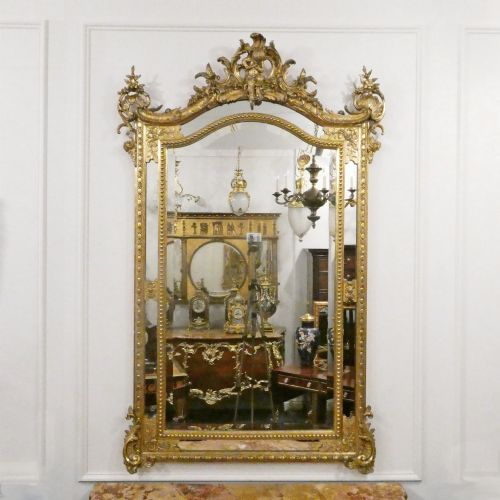
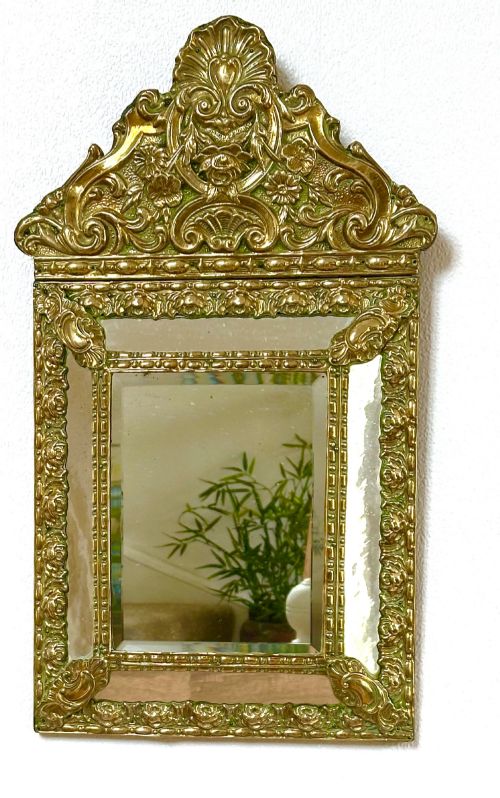
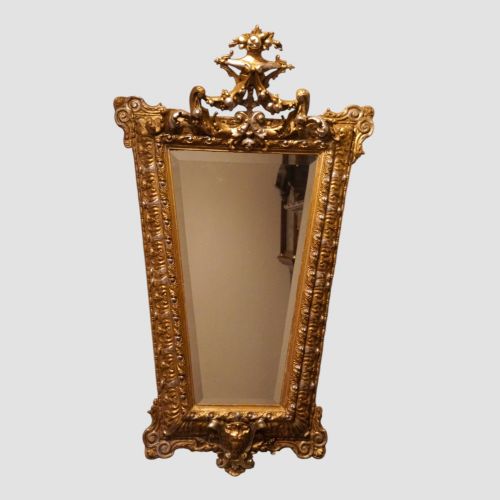
Antique French Crest Mirror
An antique French crest mirror brings carved woodwork and reflective depth to a room, carrying the distinct ornamentation of the nineteenth century.
Antique French Crest Mirrors
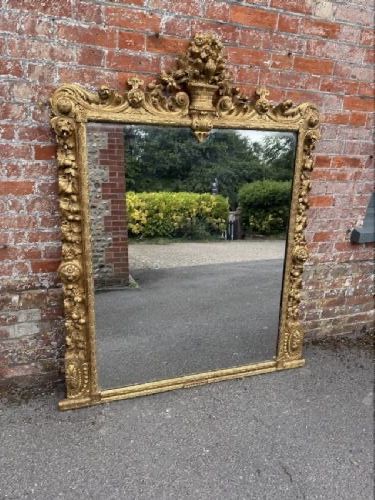
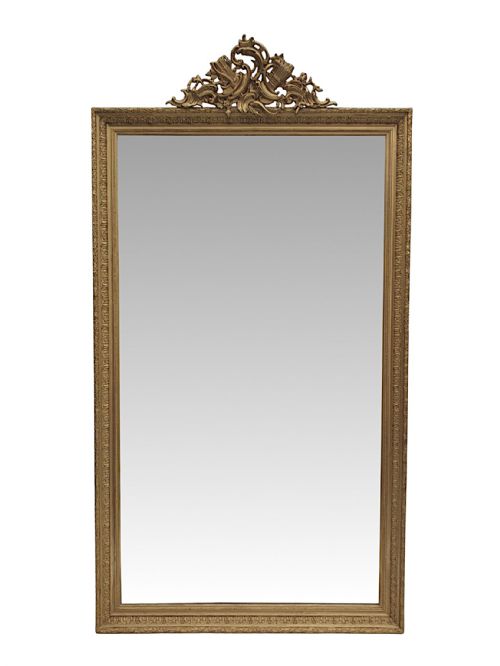
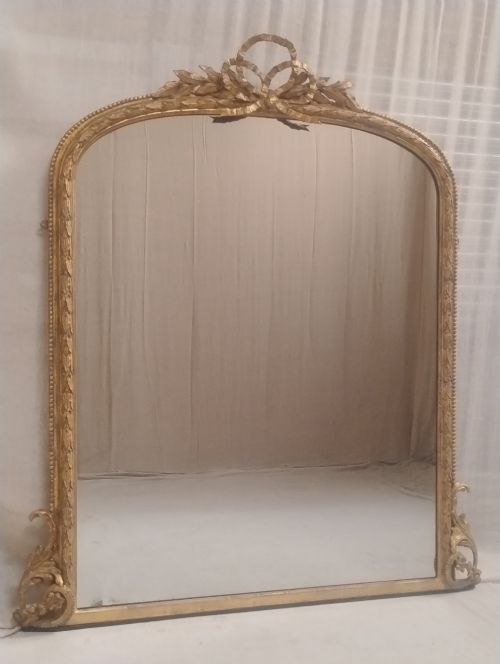
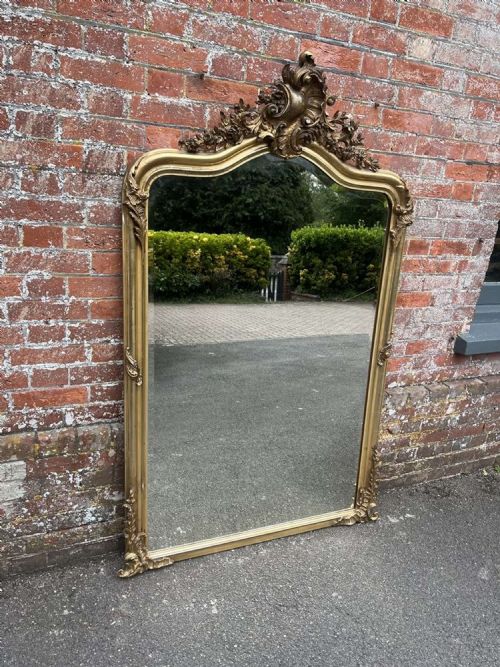
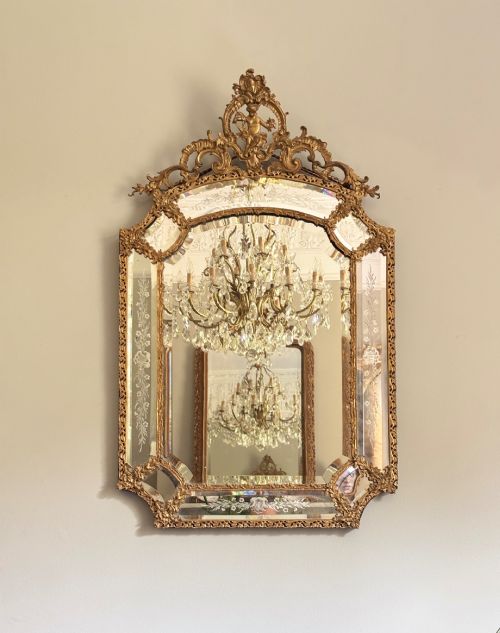
An antique french crest mirror is a wall hanging featuring a prominent decorative ornament mounted above the main glass plate. These pieces originate primarily from the nineteenth century, spanning periods from around eighteen hundred to the late eighteen eighties.
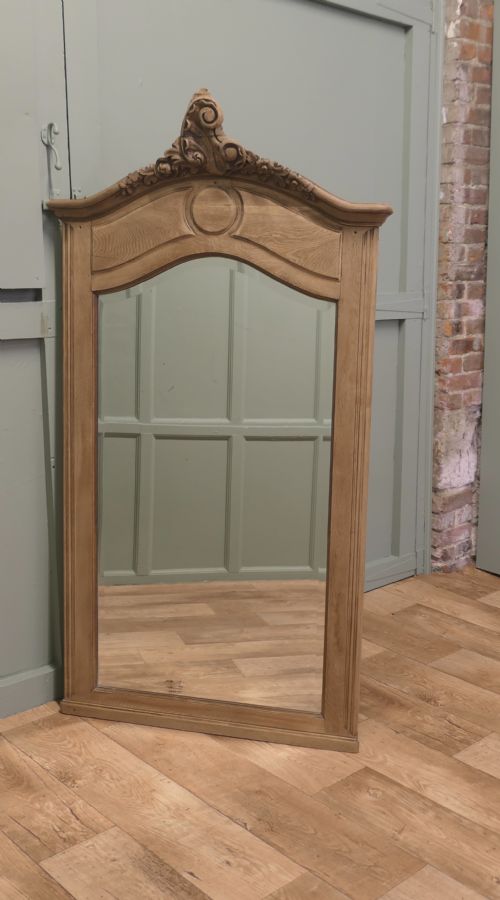
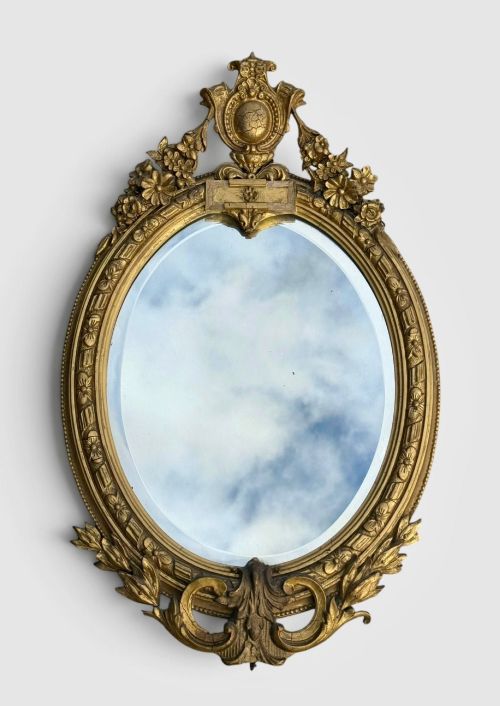
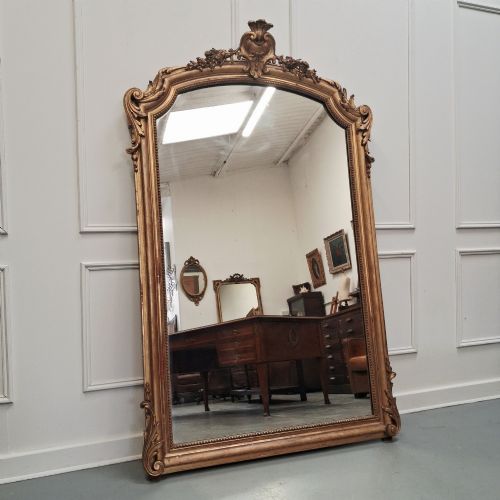
The forms on this page include large wall mirrors, arched top designs, oval shapes, cushion frames, and tall leaner mirrors. Styles draw from French Rococo Revival, Neoclassical, Restauration, and Napoleon III traditions.
Buyers most frequently encounter large carved wood and gesso frames finished in giltwood, gold leaf, silver leaf, or paint. Many examples incorporate original mercury glass and ornate crests depicting wreaths or floral motifs.
Materials and Construction
Frames are constructed from carved wood built up with gesso to receive intricate surface ornamentation. Gilding is applied using gold leaf or silver leaf, whilst other examples feature painted finishes or metal mounts.
Mirrors utilise traditional glass plates, notably mercury glass in earlier pieces, held securely within architectural or shaped timber frames. Ornate crests are carved separately and secured to the upper section of the mirror frame.
Retail Price Guide 2026
Typical UK retail prices for french crest mirror, calculated from the Sellingantiques database of over a million retail prices indexed since 2003. This retail price guide relies exclusively on Sellingantiques data; no external sources or auction records are used, so the figures do not describe the wider market.
Some nineteenth-century French mirrors still hide original handwritten chalk inscriptions from Parisian frame makers tucked behind their dusty timber backs.
Assessing Quality
The fineness of the hand-carved woodwork dictates the depth and definition within the crest and frame mouldings. Crisp botanical and architectural relief work separates superior artisan execution from simpler production.
Original surface treatments, including untouched gold leaf or genuine silvering on mercury glass, retain historical integrity. The preservation of the original backing and structural joints also determines the standing of a piece.
The Antique French Crest Mirror Glossary
- Crest
- The decorative wooden ornament mounted at the top of the mirror frame. This feature often displays detailed carvings of foliage, scrolls, or wreaths.
- Gesso
- A plaster-based mixture applied to wood frames to create a smooth surface for gilding or painting. It allows craftsmen to carve intricate relief details before finishing.
- Mercury glass
- An early type of silvered glass produced by pouring a mercury amalgam between double-walled glass. It creates a characteristic mottled, deep reflection.
- Giltwood
- Timber coated with gold leaf or gold paint to give a lustrous metallic appearance. It remains a primary finish across nineteenth-century French frames.
- Restauration
- A French design period spanning the early nineteenth century between the fall of the Empire and the July Revolution. Pieces from this era blend classical restraint with refined decorative touches.
Frequently Asked Questions
How were these mirrors used?
These mirrors functioned primarily as architectural wall decorations positioned above mantelpieces, console tables, or dressing furniture. Their reflective surfaces amplified natural daylight within chateaux and salons.
Larger versions were often utilised as leaner mirrors placed directly on the floor to alter the perceived scale of a room.
Where should I hang one?
An antique French crest mirror suits placement above a fireplace or a low sideboard where the ornate upper carving can be viewed without obstruction. Secure wall fixings are essential due to the substantial weight of carved wood and gesso frames.
Ensure the hanging height allows the crest to command the wall space effectively while anchoring the surrounding furniture.
How do I date an antique mirror?
Dating relies on examining the construction methods of the wooden frame, the composition of the glass plate, and stylistic markers. Nineteenth-century pieces often display hand-carved gesso details and specific revival motifs associated with Napoleon III or Restauration periods.
Earlier examples from around eighteen hundred frequently feature mercury glass and distinct backboard construction.
What is mercury glass?
Mercury glass is a double-walled glass material silvered between the layers using a liquid mercury amalgam. This technique produces a warm, uneven reflection with characteristic dark spots and historical foxing.
It is commonly found in pieces dating from the early nineteenth century.