


Antique French Caryatid
These antique French caryatid pieces bring sculpted architectural figures into domestic interiors as supports for lighting, tables, and furniture.

Antique French Caryatid
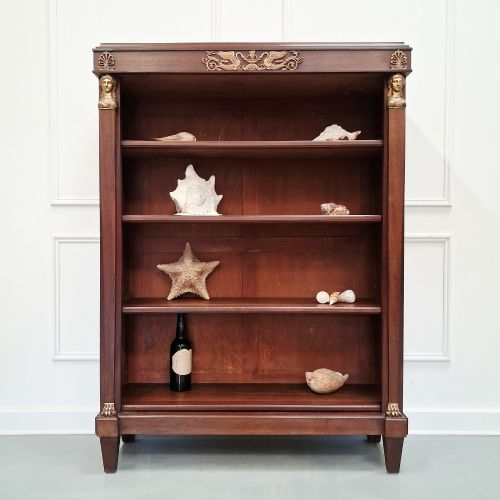
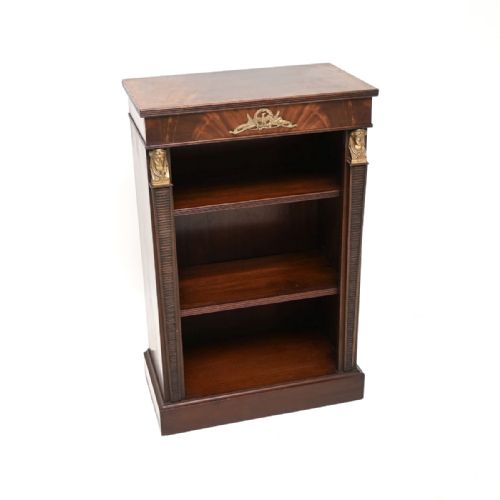
When you search for antique french caryatid, you encounter sculptural supports taking the form of draped female figures integrated into decorative arts and furniture. The selection centres heavily on nineteenth-century lighting, console tables, and bookcases where these figures serve structural or decorative roles.
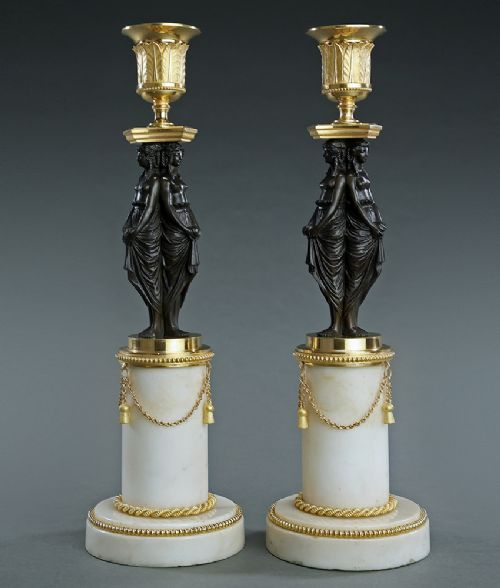
You meet candlesticks, lamps, and wall sconces cast in bronze and ormolu alongside larger timber console tables and bookcases featuring carved wooden figures. The styles span French Empire, Neoclassical, and Louis XVI, reflecting classical architectural influences adapted for interior display.
Materials and construction methods
Foundry work dominates the metal pieces, combining cast bronze and brass with fire-gilded ormolu to create contrast between patinated dark surfaces and bright gilt details. Sculptors shaped these figures using lost-wax casting or sand casting before chasing the surface details by hand.
Cabinetmakers utilised dense hardwoods like mahogany and walnut for furniture frames, carving structural caryatids and term figures directly from the timber. Marble tops and alabaster elements frequently accompany the metal and wood components in tables and clocks.
Listings feature 19th Century, Victorian, Regency, and 1920s periods, incorporating gilt bronze, marble, ormolu, brass, bronze, mahogany, patinated bronze, and walnut.
Distinctions in craftsmanship and design
The precision of the metal chasing separates standard production pieces from finer works, where facial expressions, drapery folds, and hair strands retain crisp definition after gilding. Superior examples maintain the original fire-gilding depth and retain tight joints in timber frames without structural timber shrinkage.
Proportion and stance dictate the visual success of the figure within the object, with masterworks displaying balanced weight distribution and anatomical accuracy derived from classical statuary. Weaker examples show stiff casting with blurred surface details and poorly fitted mounts.
Hugues Sambin·Thomas Hope
The Antique French Caryatid Glossary
- Caryatid
- A sculpted female figure serving as an architectural support in place of a column or pilaster. These figures appear frequently on the corners of furniture and the shafts of lighting.
- Ormolu
- Finely ground high-carat gold applied to a bronze base using a mercury amalgamation technique, producing a durable golden finish. This method creates the characteristic warm lustre seen on nineteenth-century mounts.
- Athenienne
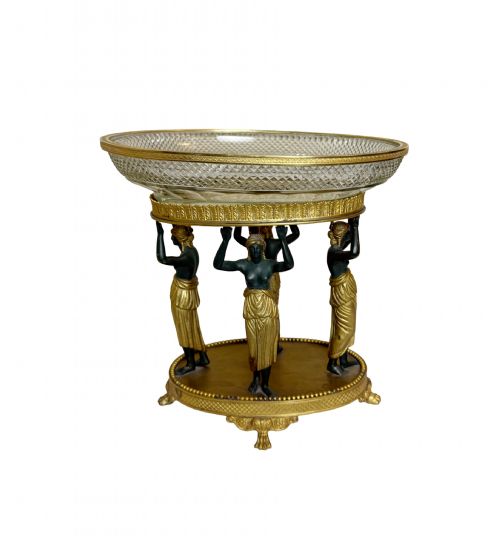
- A three-legged neoclassical stand or burner resembling a tripod altar, often decorated with caryatid figures. These decorative forms gained popularity during the French Empire period.
- Gueridon
- A small circular table supported by a central column or multiple figures, frequently utilised as a centre table. Examples from the nineteenth century often incorporate figural bronze mounts.
- Term
- A pedestal figure where the upper body emerges from a tapering lower pillar or sheath. These architectural supports derive from ancient boundary markers.
Antique French Caryatid: Frequently Asked Questions
What is an antique French caryatid?
An antique French caryatid is a carved or cast human figure used structurally or decoratively within furniture, lighting, and architectural elements. These figures typically adopt classical female forms to support weight.
Originating from ancient Greek architecture, the motif experienced widespread revivals during the Neoclassical, Empire, and Victorian periods in France.
How were caryatids used in interior lighting?
Caryatid figures served as the main vertical shafts for candlesticks, candelabra, and table lamps, holding drip pans or light sockets aloft. Their sculpted bodies provided visual interest to functional metalwork.
Foundries cast these figures in bronze or brass, often pairing patinated dark bronze bodies with bright ormolu mounts to highlight the architectural drapery.
How do I identify French Empire period pieces?
French Empire pieces display strict symmetry, military motifs, and heavy classical references inspired by ancient Rome and Greece. The timber choice leans towards dark flame mahogany with prominent ormolu mounts.
Figures from this era wear classical drapery and stand on rigid plinths, reflecting the aesthetic preferences dominant during the early nineteenth century.
Where should I place a console table?
Console tables with caryatid supports suit entryways, hallways, or living rooms against flat walls, often paired with a matching wall mirror above. Their flat backs require placement against a vertical surface.
These tables frequently feature marble tops that complement the gilded bronze mounts and carved timber bases of the nineteenth-century designs.