
Antique French Carved Seat
An antique french carved seat brings classical European elegance and traditional craftsmanship directly into a modern interior.
Antique French Carved Seat
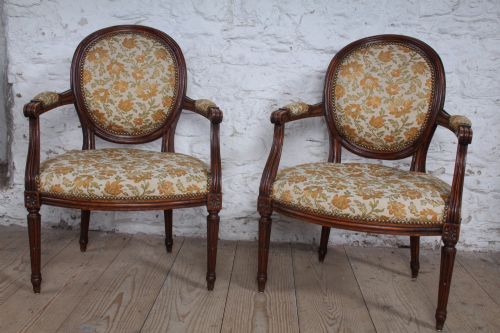
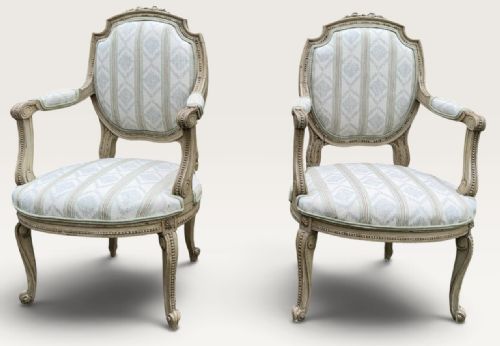
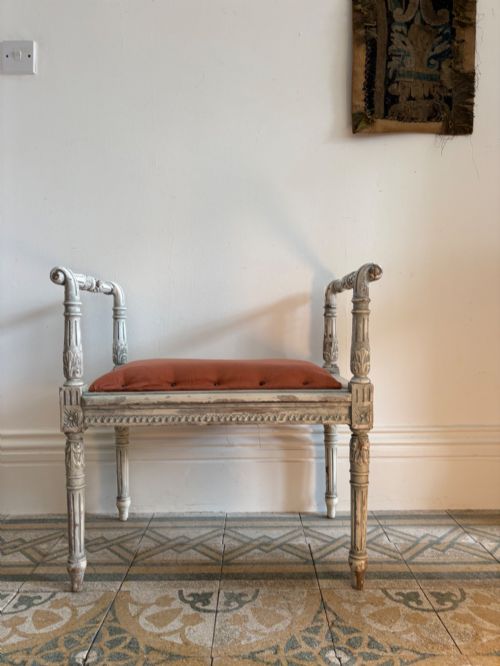
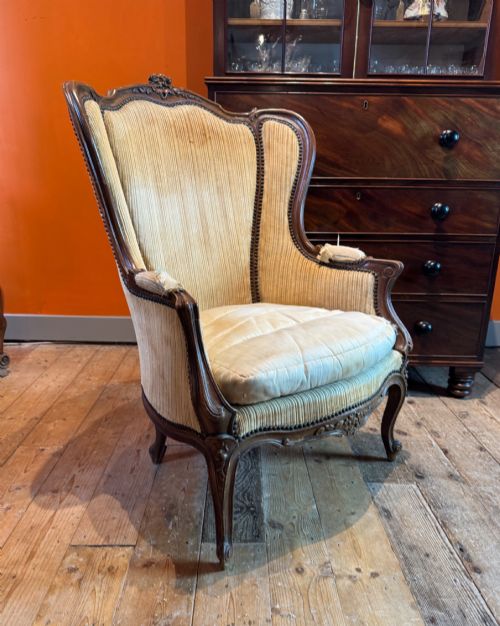
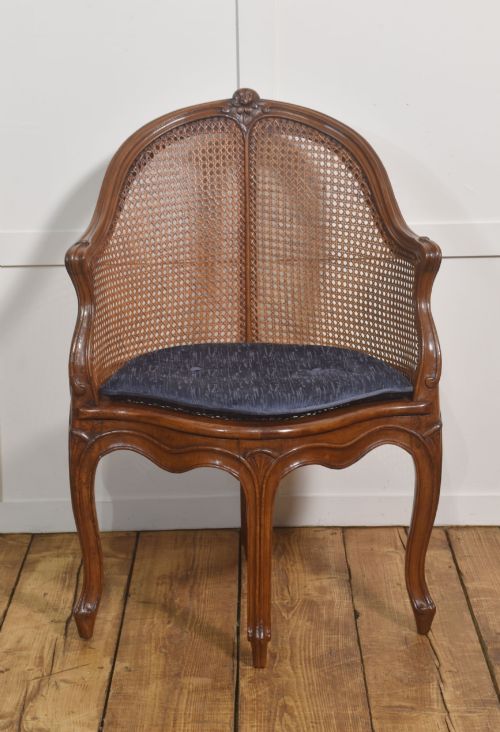
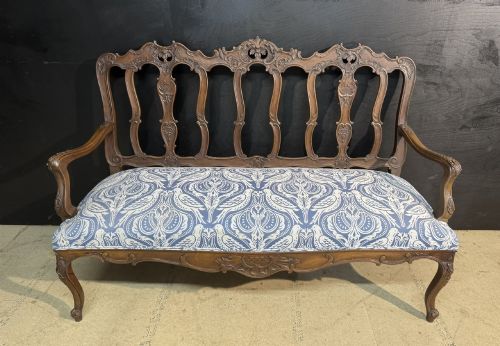
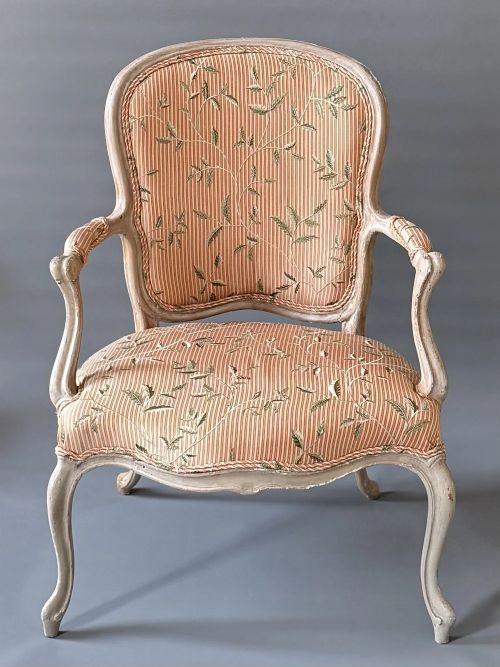
When searching for an antique french carved seat, buyers encounter a diverse range of historic seating forms including armchairs, open armchairs, bergere chairs, sofas, canapes, window seats, and stools. These pieces originate primarily from the eighteenth and nineteenth centuries, spanning periods from the reign of Louis XV and Louis XVI through to the Victorian era and later revivals.
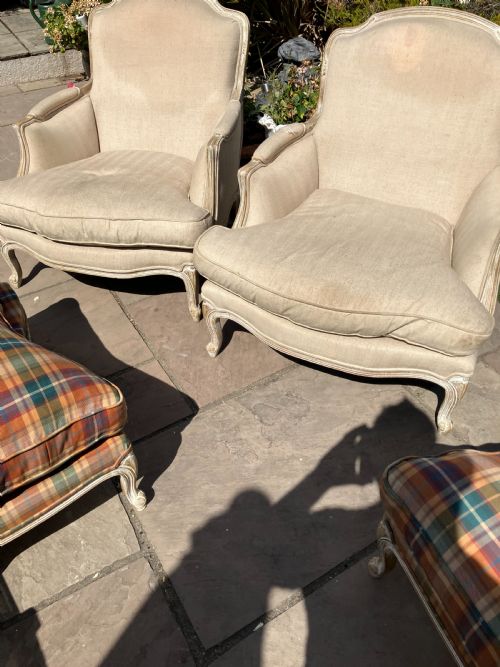
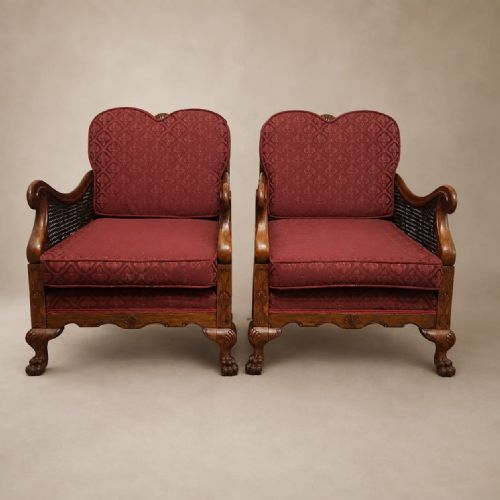
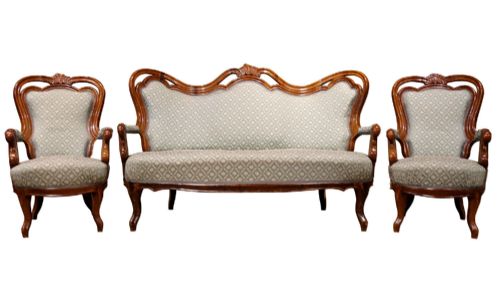
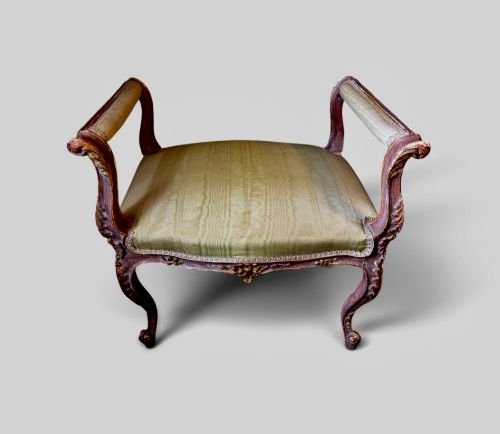
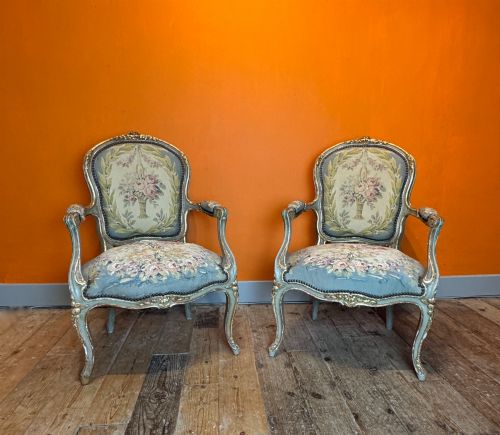
The most common examples on this page are nineteenth-century pieces executed in the Louis XV and Louis XVI styles, alongside provincial variations and revival designs. Forms range from compact footstools and X-frame stools to expansive three-piece salon suites and paired armchairs carved from walnut, mahogany, beech, and giltwood.
Design vocabulary leans heavily on historical motifs such as rococo curves, neoclassical straight lines, and gilded or painted surfaces. Buyers select these seats for both formal reception rooms and daily living spaces, where historic woodwork and period upholstery provide distinct character.
Materials and construction methods
Carved wooden frames form the structural backbone of these seats, utilising hardwoods such as walnut, oak, mahogany, and beech that allow for intricate hand-carved detail. Joinery relies on traditional mortise and tenon techniques to ensure stability across open armchairs and large sofas.
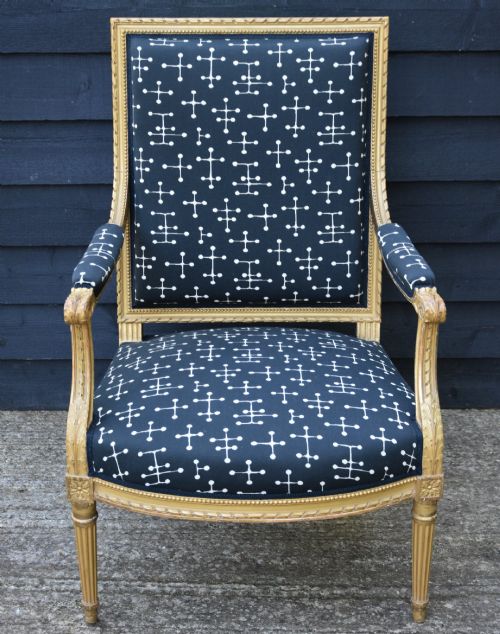
Surface finishes vary widely between natural wood patinas, original paint, parcel gilding, and bright giltwood applications. Upholstery incorporates traditional textiles including silk, velvet, tapestry, and contemporary designer fabrics stretched over webbing and sprung or stuffed foundations.
Assessing quality in period seating
Depth and crispness of the hand carving distinguish superior frames from simpler production pieces, particularly where floral motifs, scrolls, and acanthus leaves meet the structural joints. Sharply defined moulding and fluid lines indicate skilled cabinet work.
The integrity of the timber frame and the survival of original surface treatments - such as early paint or gold leaf - play a major role in establishing the character of the piece. Upholstery choices, whether historic needlework or specialist silk, complete the composition.
The Antique French Carved Seat Glossary
- Bergere
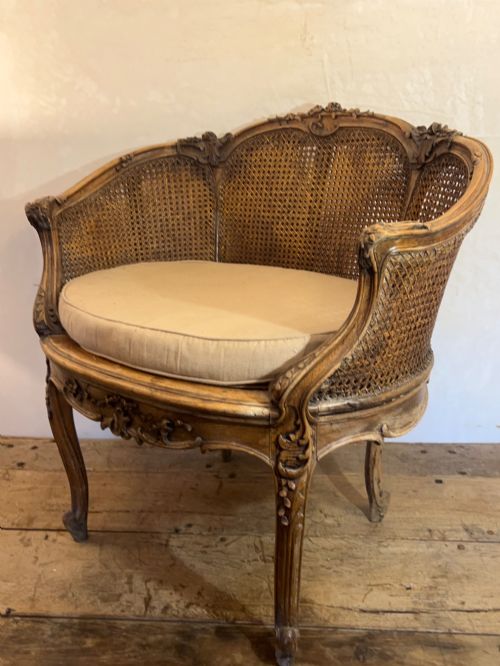
- A closed-arm upholstered armchair with wooden framing and typically a stuffed seat cushion. These often feature cane panels on the back and sides.
- Canapé
- A traditional French term for a long sofa or settee designed for multiple sitters. They mirror the carved show-wood frames of matching armchairs.
- Giltwood
- Timber coated with a thin layer of gold leaf over a prepared gesso ground. This technique creates a luminous, reflective surface popular in formal reception rooms.
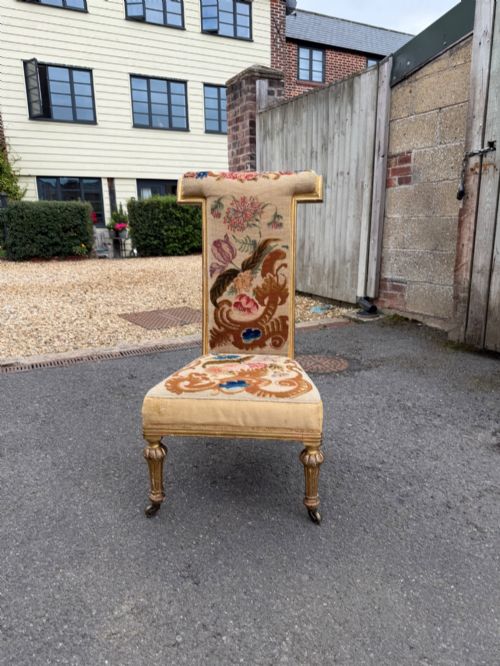
- Prie Dieu
- A devotional prayer chair characterised by a low seat and a tall, narrow upper rail designed for kneeling and leaning.
- Tapestry
- Woven textile art often utilised for heavy upholstery on period chairs. These panels typically depict floral, figurative, or pastoral scenes.
Antique French Carved Seat: Frequently Asked Questions
How do I identify a Louis XV style chair?
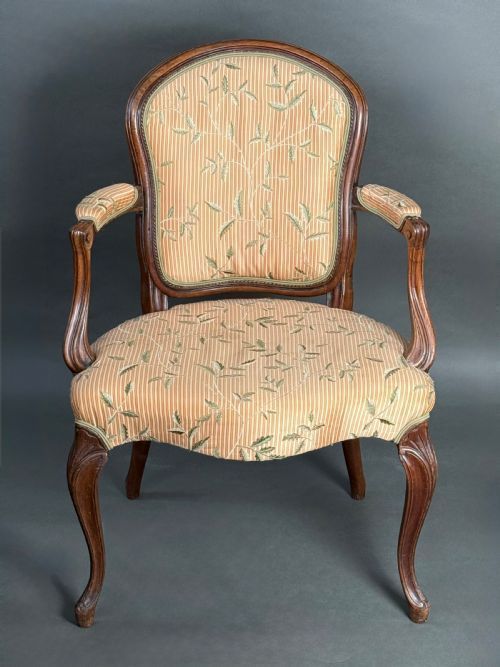
Louis XV style seats are defined by asymmetric curved lines, cabriole legs, and organic floral carving without straight structural members.
The woodwork often displays subtle serpentine contours designed to flow seamlessly into upholstered backs and open arms.
Can I use antique seating every day?
Most historic wooden frames are structurally robust enough for daily use provided the joints remain tight and secure.
Modern buyers often check the internal webbing and padding to ensure the seat offers adequate support for regular sitting.
What is the difference between giltwood and painted finishes?
Giltwood involves applying delicate sheets of gold leaf over a prepared base to create a bright, metallic decorative surface.
Painted furniture relies on coloured pigments applied directly to the timber, sometimes accented with parcel gilt highlights.
How do I match antique chairs with modern decor?
Historic seating works well as accent pieces alongside contemporary sofas and minimalist tables, introducing texture and historical contrast.
Selecting frames with neutral wood tones or complementary upholstery helps integrate the piece into existing room layouts.