
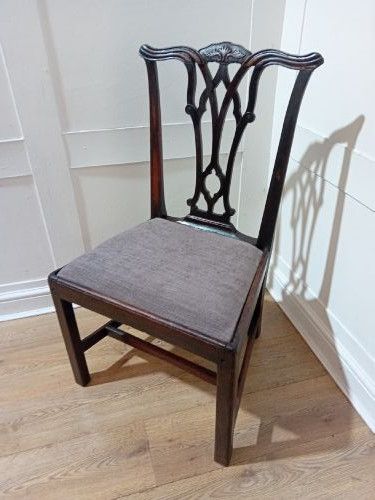
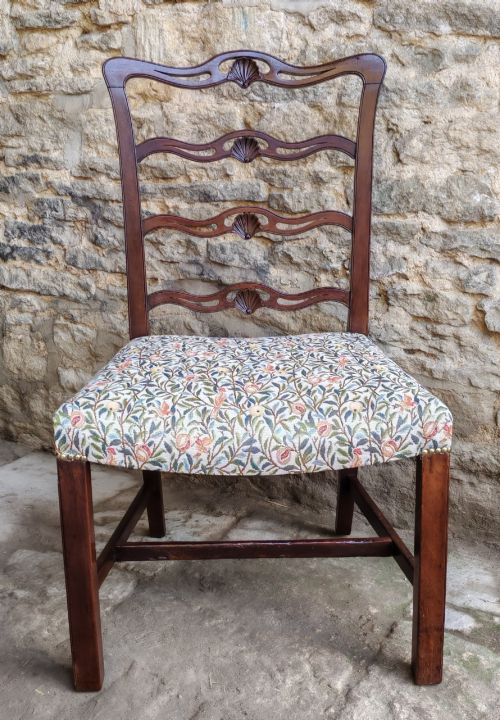
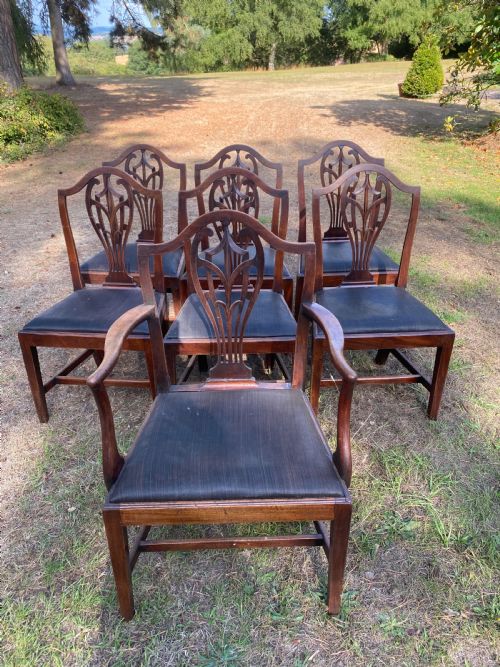
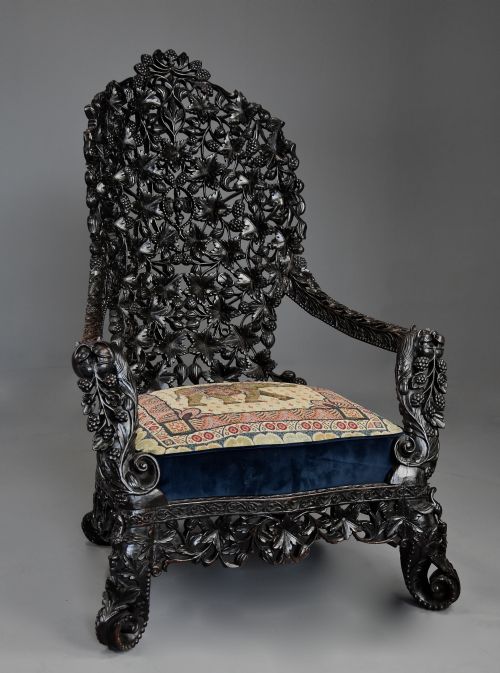
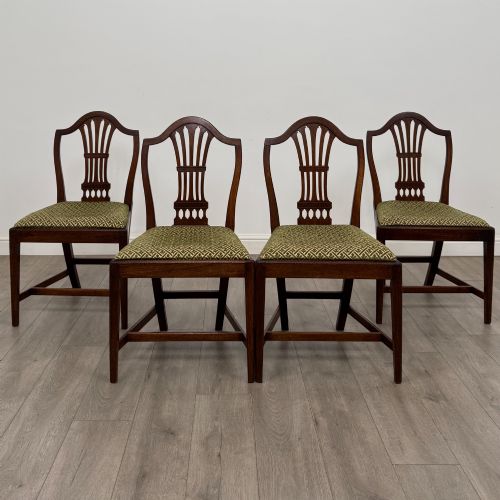
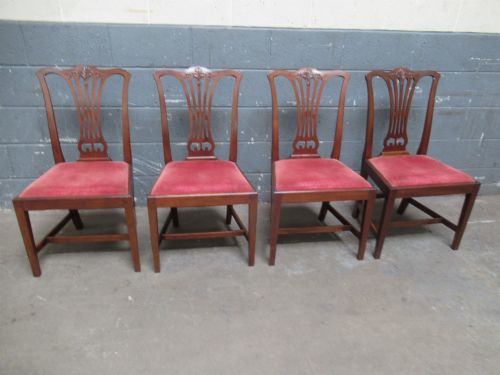
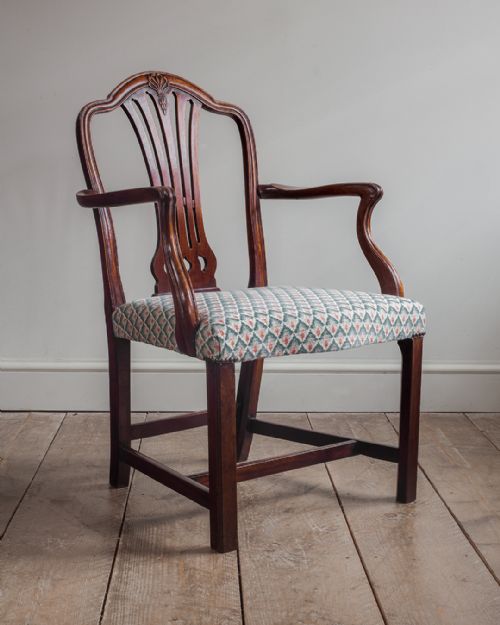
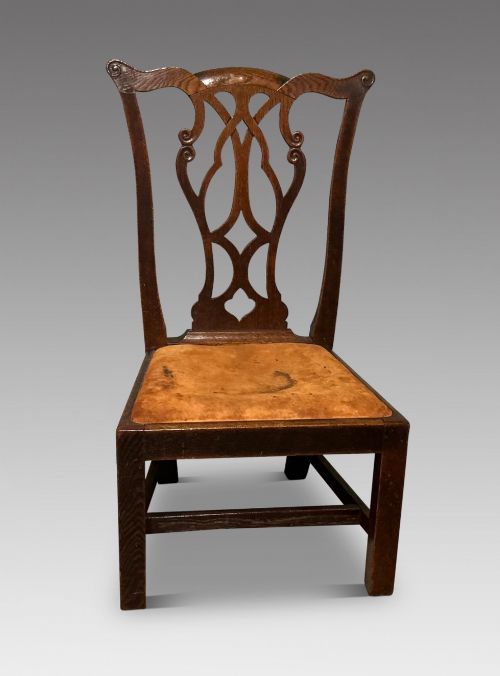
Pierced Carved Wood Chair
These pierced carved wood chair examples span Georgian dining seats to Victorian Windsors, offering sturdy traditional seating shaped by centuries of craftsmanship.
Pierced Carved Wood Chair
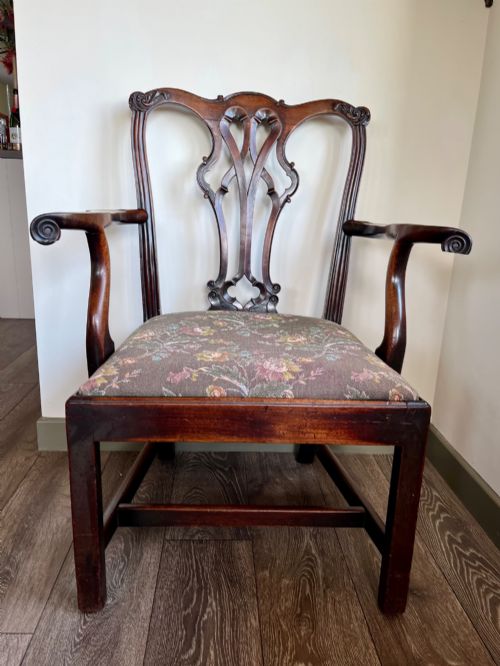
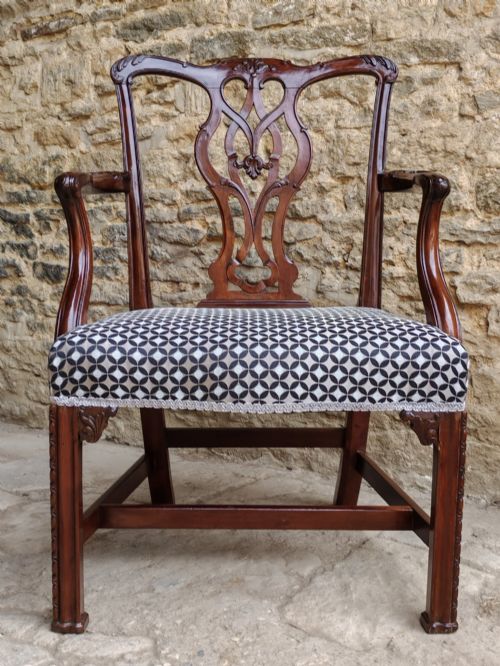
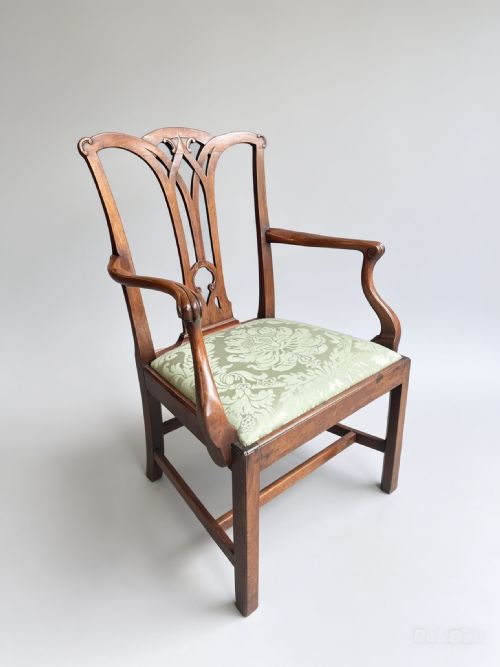
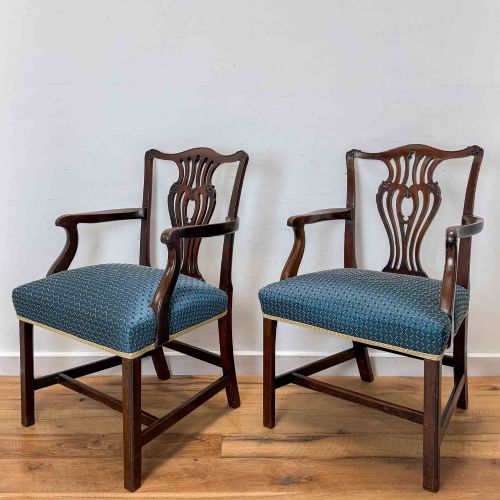
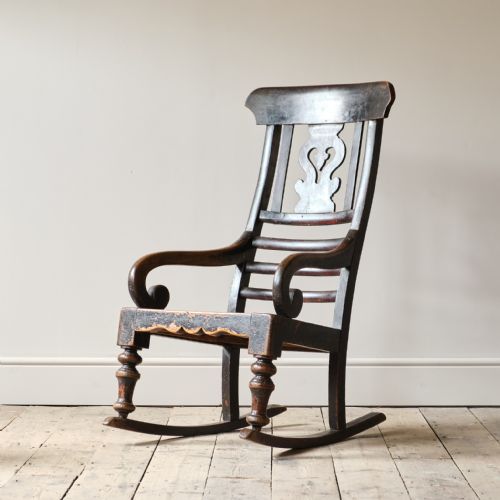
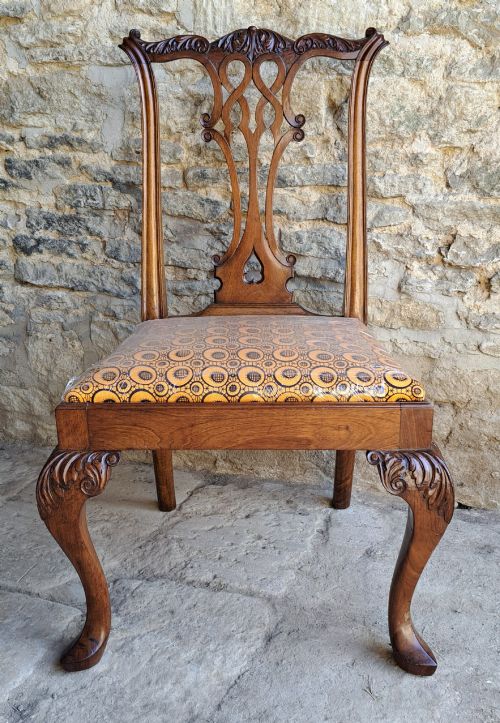
A pierced carved wood chair brings functional seating and intricate ornament together through traditional forms like dining chairs, armchairs, and hall chairs. Buyers seeking a pierced carved wood chair encounter pieces originating primarily from the eighteenth and nineteenth centuries, spanning Georgian, Victorian, and Edwardian periods.
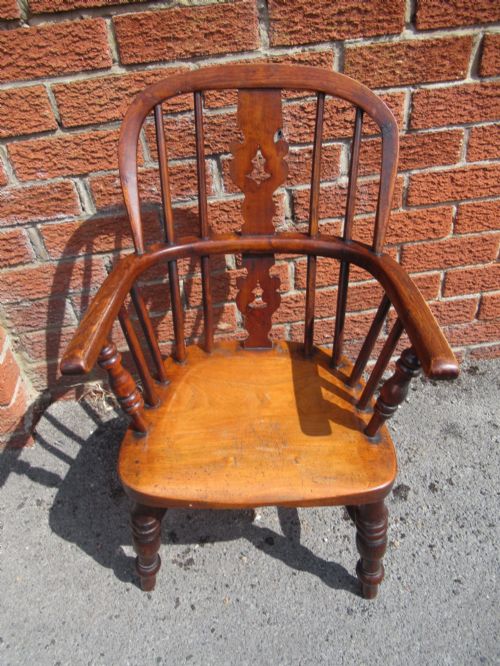
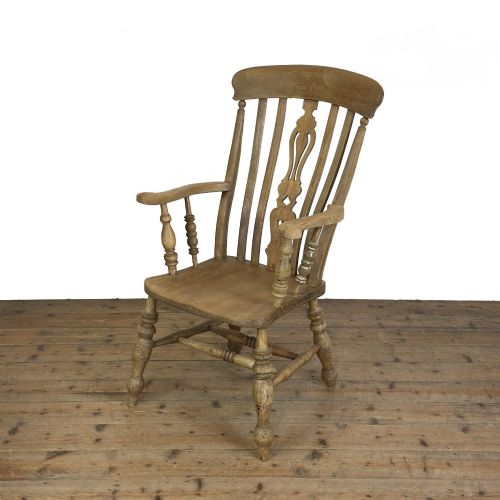
The selection ranges from formal mahogany Chippendale style models to vernacular elm and fruitwood Windsor armchairs. Dining sets, paired side chairs, and single master armchairs make up the core of what appears on this page.
Materials and construction
Makers relied heavily on dense hardwoods like mahogany, walnut, and oak for formal seating, while utilising elm, ash, fruitwood, and occasional blackwood or padouk for vernacular and regional pieces. Timber selection dictated whether a frame could sustain deep pierced carving along splats and crest rails.
Joinery combined traditional mortise and tenon construction with turned components, supported by drop-in seats upholstered in fabric, leather, or tapestry.
Several chairs include gossip seats designed for intimate hallway chats.
Factors determining quality
Depth and crispness of the carved detail define the upper tiers of these chairs, separating standard production from master craftsmanship. Pierced splats that retain sharp edges and harmonious proportions show superior execution by the joiner.
Timber figure and grain continuity across structural members also signal high standards, alongside the integrity of the original joints and frames.
Wheelers of Arncroach·Thomas Chippendale
The Pierced Carved Wood Chair Glossary
- Splat
- The vertical wooden strip down the centre of a chair back. Pierced splats are a hallmark of Chippendale and revival designs.
- Windsor
- A traditional wooden chair constructed with a solid sculpted seat into which the legs and back spindles are wedged. These often incorporate bentwood bows.
- Ladderback
- A chair back featuring multiple horizontal arched slats resembling a ladder. This vernacular form appears frequently in nineteenth-century examples.
- Chippendale
- A style derived from the eighteenth-century cabinetmaker Thomas Chippendale, characterised by interlaced pierced splats and cabriole legs.
Pierced Carved Wood Chair: Frequently Asked Questions
How do I date a wooden armchair?
Dating relies on examining the timber species, joinery methods, and stylistic cues such as splat geometry or leg profiles. Eighteenth-century pieces often utilise Honduras mahogany with hand-cut joinery, while later Victorian and Edwardian examples show machine assistance.
Comparing the secondary woods and upholstery substructure helps confirm the period of origin.
Are these chairs suitable for daily dining?
Most antique wooden dining chairs and carvers remain sturdy enough for regular daily use provided the frame joints are sound. Periodic checking of the leg glue blocks and stretcher joints maintains their structural integrity.
Pairing them with appropriate modern table heights requires verifying seat dimensions beforehand.
What wood types are most common?
Mahogany dominates formal eighteenth and nineteenth-century formal seating due to its stability for carving. Elm, ash, and fruitwood appear frequently in regional Windsor and farmhouse chairs.
Walnut and oak represent earlier stylistic revivals from the seventeenth and eighteenth centuries.