

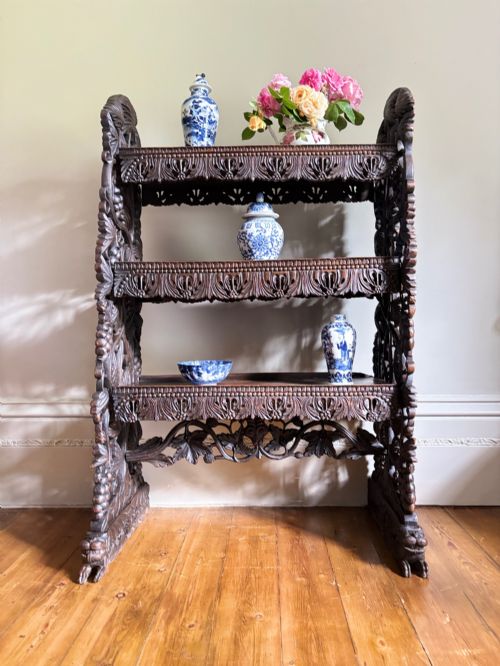
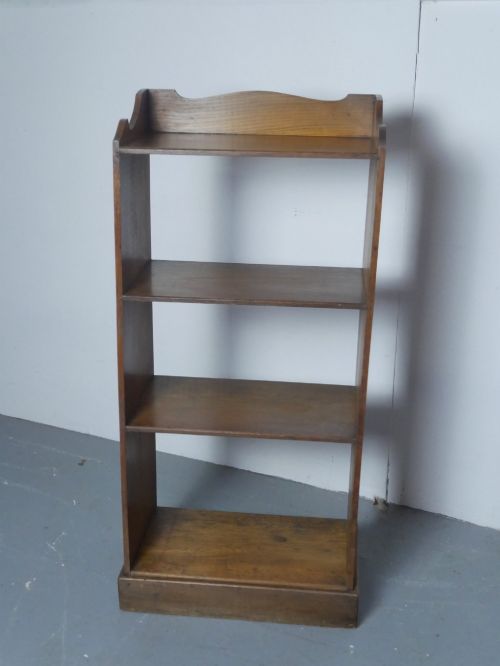
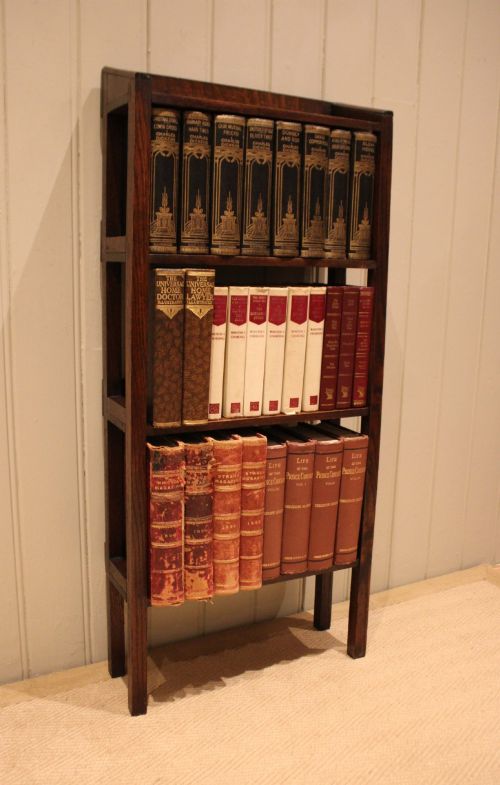
Antique Freestanding Shelves
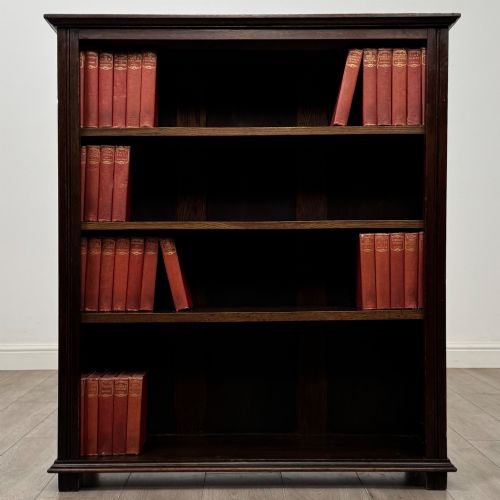
These antique freestanding shelves bring architectural timber and practical open tiers into a room, offering adaptable display space for books and objects.
Antique Freestanding Shelves
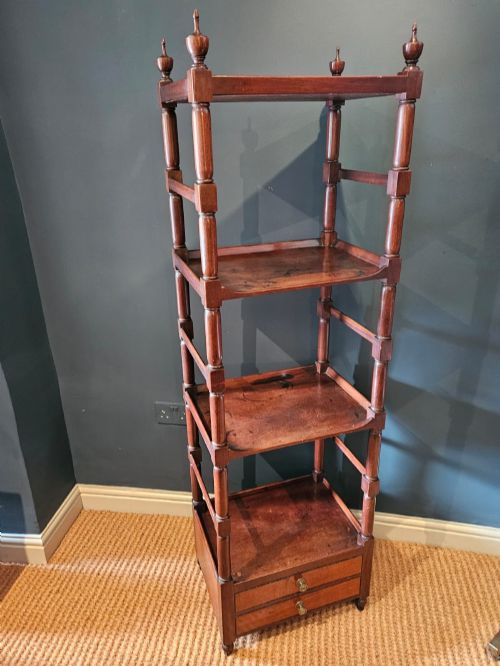
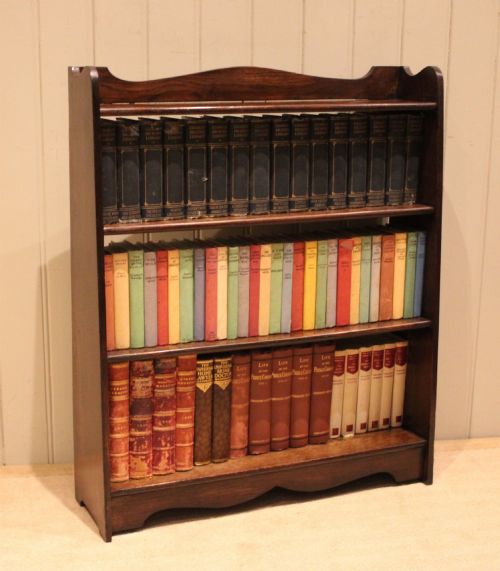
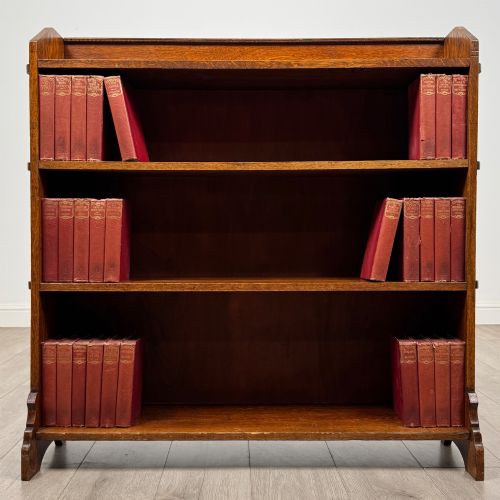
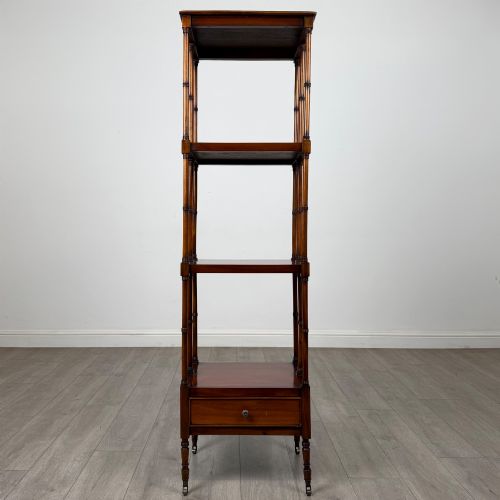
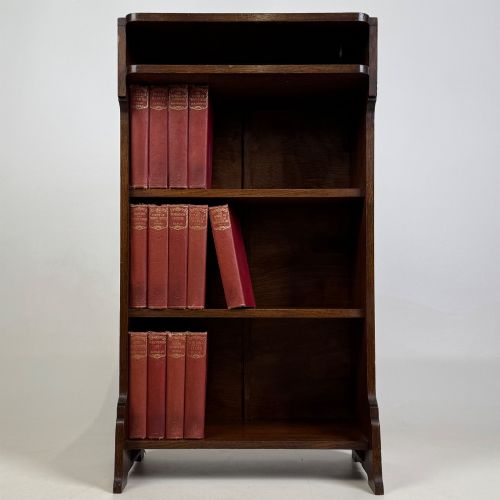
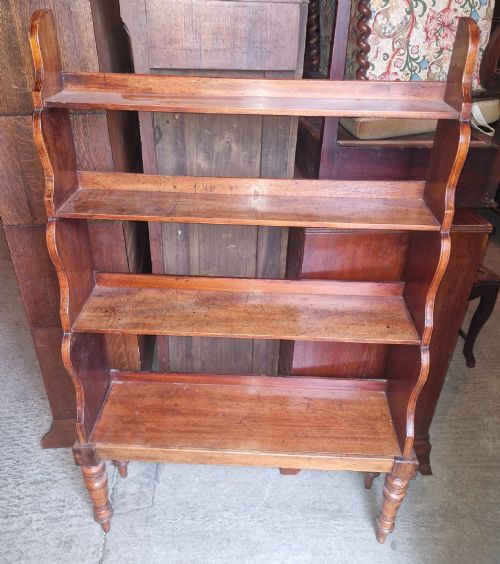
When you search for antique freestanding shelves, you encounter pieces designed to stand away from walls or anchor corners without fixed brackets. The selection spans the nineteenth century through the 1930s, encompassing forms such as multi-tiered whatnots, open bookcases, revolving book stands, and bakers racks.
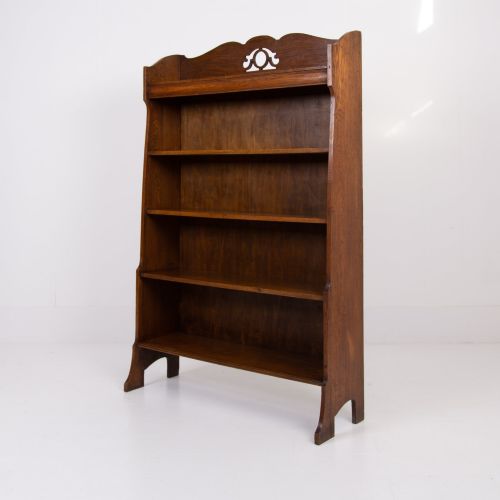
Edwardian and Victorian oak or mahogany open bookcases dominate the listings, alongside earlier Regency what-nots and French industrial bakers racks in iron and wood. Makers utilised varied timbers including walnut, pine, padauk, and kingwood to construct adaptable storage units for libraries, sitting rooms, and hallways.
Pieces range from compact corner whatnots and small magazine rack combinations to large continental library bookcases and extensive display cabinets. The variety reflects domestic storage needs from the mid-nineteenth century onward, shifting from formal multi-tiered display furniture to simpler utilitarian shelving units.
What varies in quality
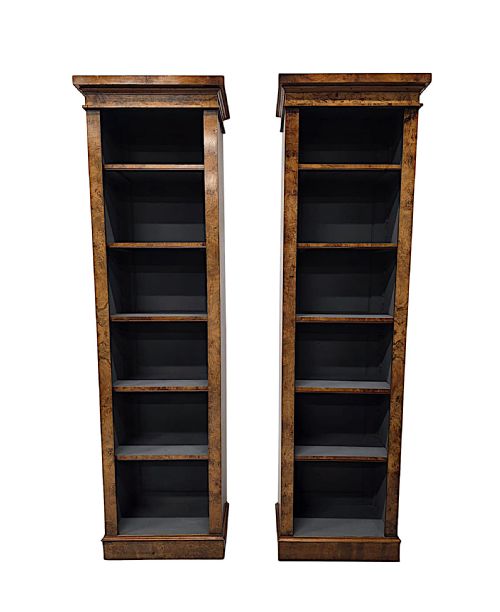
The distinction between standard utility shelving and top-tier exhibition pieces rests upon the choice of timber and the ambition of the design. Master cabinetmakers selected exceptionally figured burr walnut, kingwood, or padauk, pairing these materials with crisp carving, balanced proportions, and sophisticated tier arrangements.
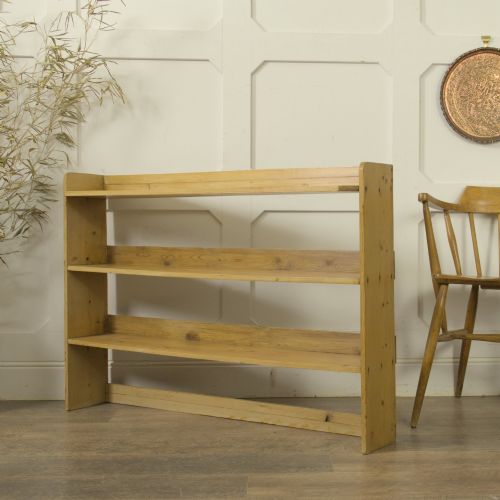
Simpler pine or oak pieces rely on straightforward construction for daily storage, whereas pieces bearing maker attributions or complex architectural details demonstrate greater technical skill. Quality resides in the harmony of the proportions, the integrity of the joints, and the depth of the polished surface.
Listings feature oak, mahogany, walnut, pine, and wrought iron across periods spanning from the mid-nineteenth century to the 1930s.
Dubois of Lyon·Waring & Gillow
The Antique Freestanding Shelves Glossary
- What-not
- A multi-tiered piece of freestanding furniture designed for displaying ornaments, books, or small objects. These pieces often feature graduated shelves supported by slender turned columns.
- Waterfall bookcase
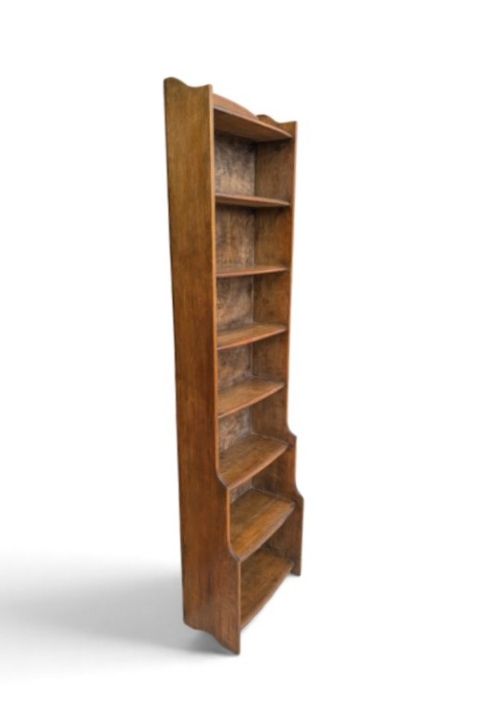
- A set of open shelves where each tier steps back progressively from the one below it, creating a cascading profile. This form gained popularity during the nineteenth and early twentieth centuries.
- Canterbury
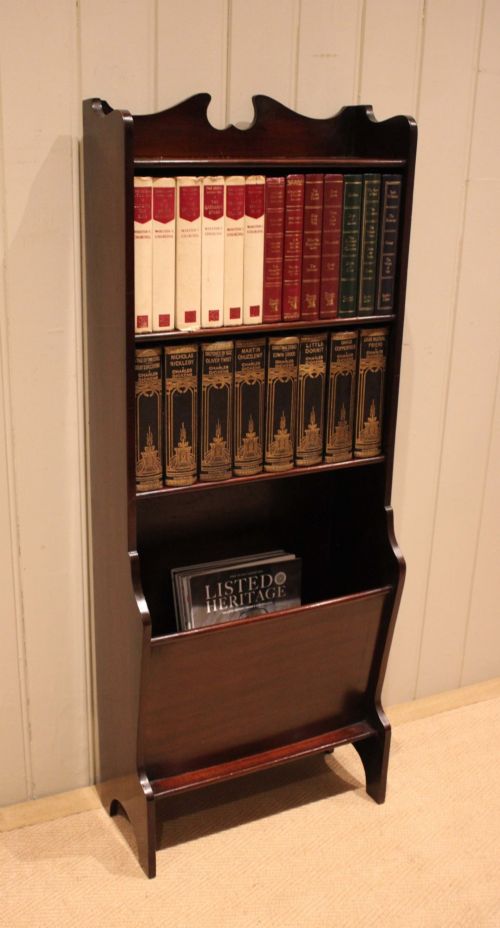
- A low, freestanding piece of furniture fitted with upright divisions for holding sheet music, books, or magazines, often incorporating lower drawer storage. Victorian examples frequently utilise burr walnut.
- Baker's rack
- A tall, open metal and wood shelving unit originally utilised in commercial bakeries for cooling goods. French industrial examples now serve as robust freestanding kitchen or living room storage.
Antique Freestanding Shelves: Frequently Asked Questions
How do I use a whatnot?
Place a whatnot in a corner or against a wall to display ceramics, small collections, or books without overwhelming the floor space. Their multiple open tiers allow light to pass through while keeping objects accessible.
Historically, these pieces served as decorative focal points in Victorian drawing rooms. Today, they function well in sitting rooms or studies for organising smaller decorative items.
Where should I place an open bookcase?
Position an open bookcase against an interior wall away from direct sunlight to protect antique timbers and book bindings from fading. Freestanding models also work perpendicular to walls to divide larger rooms.
Ensure the floor is level so the piece remains stable without relying on wall fixings. This placement keeps the entire cabinet accessible from multiple sides.
What is a revolving bookcase used for?
A revolving bookcase holds a collection of frequently referenced books within arm's reach while sitting at a desk or armchair. The rotating mechanism allows access to all four sides from a stationary position.
These pieces were popular in studies and libraries where maximising vertical storage and accessibility mattered. Their compact footprint suits modern spaces where floor area is limited.