



Antique Forest Scene Painting
An antique forest scene painting brings the quiet depth of woodland paths and sunlit clearings directly into a room.
Antique Forest Scene Painting
When you search for an antique forest scene painting, you find works that capture trees, glades and woodland paths from centuries past. The most common examples on this page date from the nineteenth century and the early decades of the twentieth century.
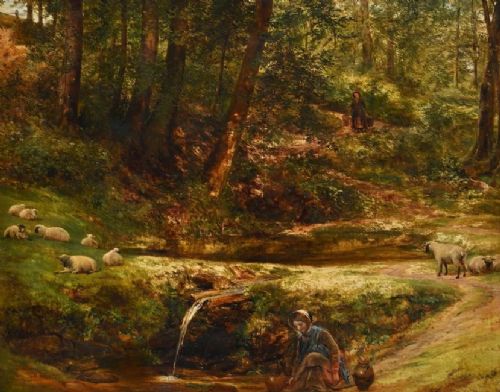
These works appear as oil paintings on canvas or wood panel, alongside watercolours and pastels on paper. Painters often depict rivers running through trees, cattle grazing beneath branches, or figures walking along quiet forest tracks.
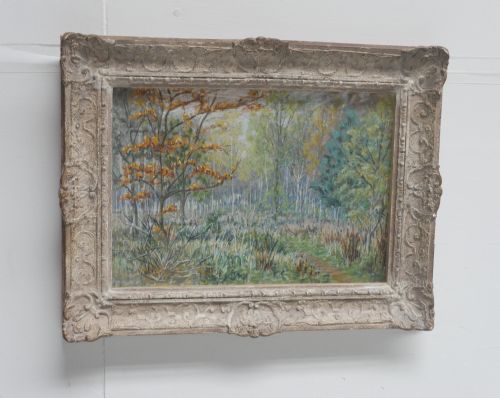
Originating largely from British and European hands, these pieces range from detailed Victorian naturalism to loose impressionist brushwork. Each canvas preserves a specific snapshot of woodland light, from summer greens to autumnal oranges and stark winter snow.
Materials and techniques
Artists painted these woodland scenes using oil paint or watercolour applied to canvas, prepared wood panels, or paper. Oil pigments allowed painters to build rich layers of colour for deep shadows and luminous patches of sunlight breaking through a canopy.
Watercolour works rely on washes of pigment on paper to capture the soft, damp atmosphere of a woodland floor or a misty river glen. Many of these paintings remain set within their original wooden frames, which often show period gilt or painted finishes.
Several woodland paths lead toward hidden cottages and grazing sheep, inviting you to wander off the beaten track without muddying your boots.
Variations in quality
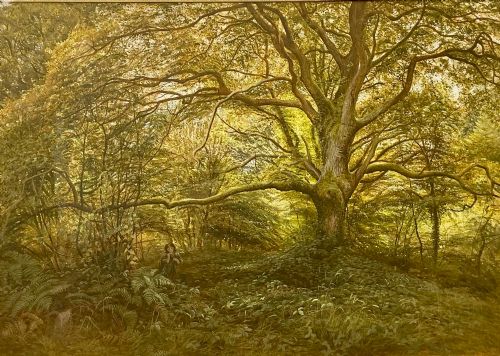
The strength of an antique forest scene painting rests on the artist's handling of light and depth beneath the trees. Superior works draw the eye along a natural path into the distance, using colour and shadow to make the woodland feel vast and three-dimensional.
Lesser pieces often rely on stiff, repetitive brushstrokes that flatten the foliage and obscure the structure of the trunks. The most accomplished paintings capture the transient atmosphere of sunset or dappled midday light with confident control over the medium.
William H Myers·Thomas W Lascelles·Richard Redgrave·David Watts·James Proudfoot·Jan Evert Morel·Rowland Henry Hill·Edmund George Warren·Charles James Adams·Augustus William Enness·Charles Branwhite·Walter Emsley·William Mellor·Sam Bough·Carl Milton Jensen·Joseph Thors
The Antique Forest Scene Painting Glossary
- Canvas
- A heavy woven fabric stretched across a wooden frame to serve as a support for oil painting. It provides a slightly textured surface that holds thick applications of pigment.
- Wood Panel
- A rigid wooden support used by artists instead of canvas. Panels often survive from the nineteenth century and earlier, offering a smooth surface for detailed brushwork.
- Watercolour
- A paint consisting of pigment suspended in a water-based solution, typically applied to paper. It produces translucent washes that create soft atmospheric effects.
- Impressionism
- A style of painting focused on capturing the visual impression of a moment, paying attention to light and its changing qualities. Artists often used rapid, visible brushstrokes rather than smooth blending.
Antique Forest Scene Painting: Frequently Asked Questions
How do I date an antique forest painting?
Look at the materials, the framing, and the artist's recorded active period. Canvas stretched on older keyed frames and wooden panels often point to nineteenth-century working methods.
Signatures, exhibition labels on the reverse, and stylistic clues like Victorian naturalism or later impressionism help narrow the date further.
Where should I hang a woodland scene?
These paintings suit spaces that benefit from natural tones and calming views, such as studies, living rooms, or hallways. Keep them away from direct sunlight and damp walls to protect the paint and paper.
Matching the frame to the surrounding interior helps integrate these older pieces into modern or traditional rooms alike.
Are watercolours as durable as oils?
Watercolour paintings on paper are more sensitive to light and moisture than oil paintings on canvas or wood. They require framing behind glass with acid-free mounts to prevent fading and paper degradation.
Oil paintings tolerate ambient indoor conditions better, though thick impasto still requires gentle dusting with a soft, dry brush.
What subjects appear besides trees?
Many forest scenes include figures walking on paths, cattle resting beneath branches, or sheep droving through winter landscapes. Rivers, streams, and bridges frequently run through the woodland settings.
Some compositions focus purely on the architecture of the trees, capturing the changing seasons from bluebell woods in spring to autumnal leaves.