
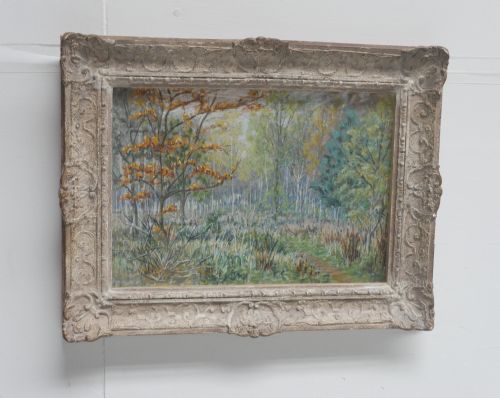


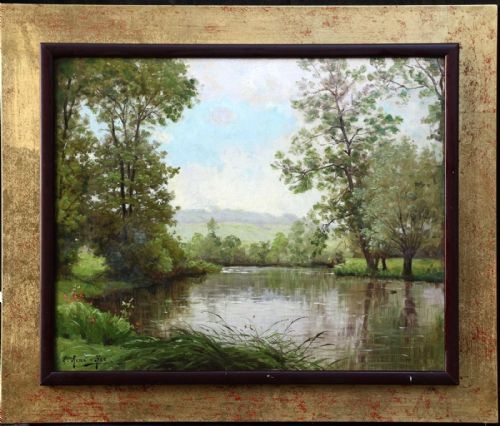
Impressionist Woodland Scene Painting
Impressionist woodland scene painting brings light and shadow through trees into a room, capturing a fleeting moment in nature.
Impressionist Woodland Scene Painting
An impressionist woodland scene painting captures the interplay of light and shade among trees using loose brushwork and vibrant colour. These artworks range from late nineteenth-century British landscapes to mid-century continental views, focusing on natural settings like bluebell woods and riverbanks.
The pieces on this page appear in various forms, including oil on canvas, watercolour, and pastel on paper. Artists render the forest floor, canopy, and surrounding water with varied textures that give a sense of immediate atmospheric presence.
How they were made
Artists applied oil paint or watercolour to canvas, wood, or paper, often building up texture with gesso beneath the primary pigment. Canvases are frequently stretched over wooden frames, sometimes accented with gold leaf on the accompanying frames.
Makers utilised rapid brush techniques to capture changing light outdoors, translating direct observation of trees, lakes, and paths into finished compositions.
Squirrels and birds frequently share these leafy retreats with wandering artists.
What varies in quality
Depth of perspective and control over natural light separate standard works from superior examples. The handling of foliage and the transition of shadow across the forest floor reveal the painter's command of tone and composition.
The integrity of the primary support, whether canvas or paper, and the preservation of the original paint surface determine the overall standard of the piece.
Arthur Herbert Rigg·David Watts·James Proudfoot·Rowland Henry Hill·Edward H. Holder·George F. Wetherbee·Walter Emsley·Charles Edmond Rene His·George Neil
The Impressionist Woodland Scene Painting Glossary
- Impressionist
- A style of painting focusing on light, loose brushstrokes, and everyday subjects rather than strict academic detail.
- Canvas
- A heavy woven fabric stretched across a wooden frame to serve as a sturdy painting surface for oils.
- Gesso
- A white primer mixture consisting of a binder mixed with chalk or pigment, applied to prepare a surface for painting.
- Watercolour
- A painting method where paints are made of pigments suspended in a water-based solution, usually applied to paper.
Impressionist Woodland Scene Painting: Frequently Asked Questions
How do I hang a canvas painting?
Secure appropriate fixings into a solid wall stud to support the weight of the wooden stretcher frame.
Ensure the painting hangs at eye level out of direct sunlight to protect the pigments on the canvas.
What periods do these paintings span?
The selection includes works from the nineteenth century through to the mid-twentieth century.
Styles shift across these decades from early naturalist approaches to mid-century impressionism.
How should I clean an oil painting?
Dust the surface very gently with a soft, dry brush to remove loose particles without disturbing the paint layer.
Avoid using water or chemical cleaners, and consult a professional conservator for deeper restoration.
Are watercolours framed differently than oils?
Watercolours on paper require glass protection and a mount to keep the paper from touching the glazing.
Oils on canvas remain open to the air and are housed in robust decorative wooden frames.