

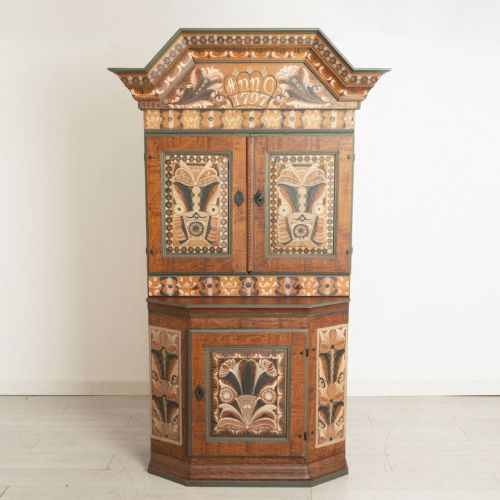
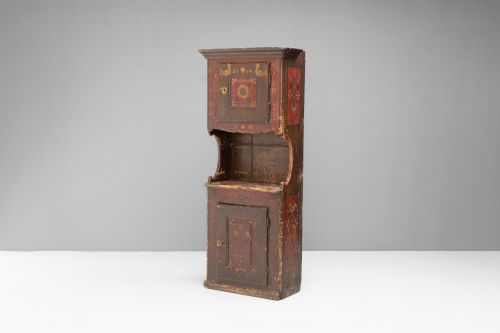


Antique Folk Art Cabinet
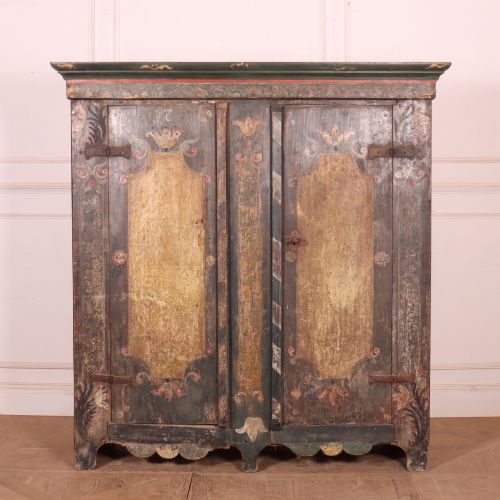
An antique folk art cabinet brings vernacular character and regional charm into a room through hand-painted surfaces and robust pine construction.
Antique Folk Art Cabinet
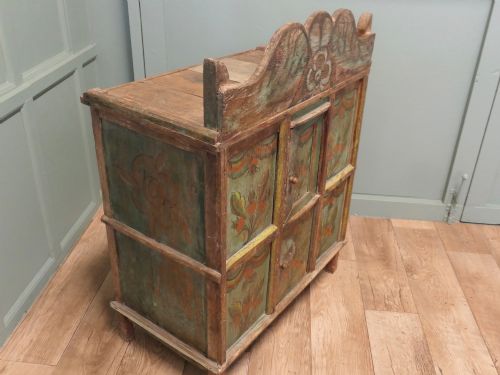
An antique folk art cabinet encompasses regional cupboards, wall cabinets, dressers, and chests originating from nineteenth-century European workshops. These domestic storage pieces reflect local rural traditions rather than formal academic design schools.
Scandinavian country and Hungarian examples dominate the selection, often presenting painted finishes in cream, teal, and green. Wall cupboards and larger kitchen dressers represent the primary forms encountered on this page.
Pieces span the eighteenth and nineteenth centuries, including Georgian and Victorian periods, alongside specific regional expressions like Gustavian style and French tramp art.
How they were made
Carpenters constructed these items primarily from solid pine and native woods, utilising iron and brass for hinges, locks, and structural reinforcement. Joinery methods relied on traditional domestic carpentry techniques suited to rural workshops.
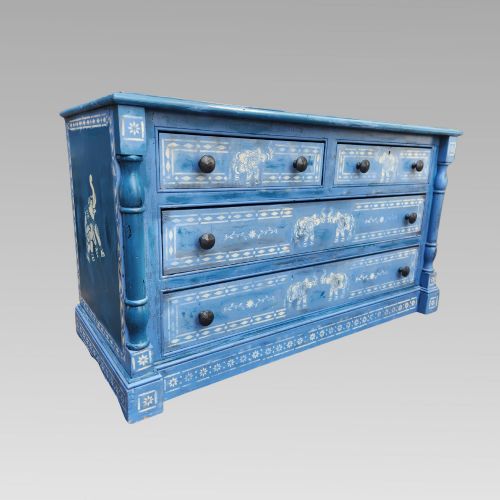
Decoration involved hand-applied paint, ragwork finishes, and polychrome detailing, sometimes incorporating carved floral motifs or geometric tramp art layering. Surfaces frequently display layers of original or historic pigment applied over softwood.
Antique Folk Art Cabinet Retail Price Guide 2026
Typical asking prices for folk art cabinet among the pieces listed under this phrase on Sellingantiques today, from the lower quarter to the upper quarter. They describe what is for sale here now, not the wider market.
Pine and paint dominate the material palette across these nineteenth-century European country pieces.
What varies in quality
The integrity of the painted surface distinguishes examples, with original regional pigments and untouched decorative schemes holding greater visual weight than later overpainting. The harmony between the vernacular form and the native folk decoration determines the overall coherence of a piece.
Structural honesty and the survival of original ironwork or brass hardware contribute to the standing of individual cupboards and dressers. Regional idiosyncrasies in carving and joinery reflect the skill of provincial makers working within distinct European traditions.
Melissa White
The Antique Folk Art Cabinet Glossary
- Ragwork
- A paint decoration technique where rags or cloths impart texture and patterned effects onto the surface of pine furniture. This method was widely used in Swedish rural cabinetmaking.
- Gustavian
- The Swedish interpretation of neoclassical style, characterised by restrained proportions and pale painted finishes. It forms a distinct contrast to more exuberant folk art ornamentation.
- Tramp art
- A form of woodwork created by chipping, notching, and layering small pieces of wood, often from discarded packing boxes. Cabinets finished in this style display dense geometric relief patterns.
- Polychrome
- The practice of decorating furniture with multiple colours. Spanish and Central European folk pieces frequently employ this technique on religious or domestic items.
Antique Folk Art Cabinet: Frequently Asked Questions
Where were these painted cupboards made?
The pieces originate from various European regions, with a strong representation from Sweden, Hungary, France, and Austria. Local rural communities produced them for domestic storage.
Makers utilised native timber and regional painting styles, resulting in distinct aesthetic traditions across Scandinavia and Central Europe.
How do I care for an antique pine cabinet?
Keep the cabinet away from direct heat sources and dramatic humidity fluctuations to protect the old pine and historic paint layers. Normal indoor conditions and gentle dusting preserve the surfaces.
Avoid harsh chemical cleaners that might strip or damage fragile nineteenth-century pigments and ragwork finishes.
What is the difference between a dresser and a wall cupboard?
Dressers typically stand on the floor as large storage furniture, often combining base cupboards with shelving or drawer sections for kitchen use. They provide substantial capacity for household goods.
Wall cupboards are smaller storage units designed to be mounted directly onto walls, saving floor space while displaying regional decorative painting at eye level.
Are the painted finishes original?
Many items retain their original or early historic paint schemes, ranging from simple cream coats to complex floral polychrome decoration. Documentation in the titles often highlights genuine original surfaces.
Evaluating the patina and wear patterns helps determine the age and continuity of the decorative finish on pine and softwood.