




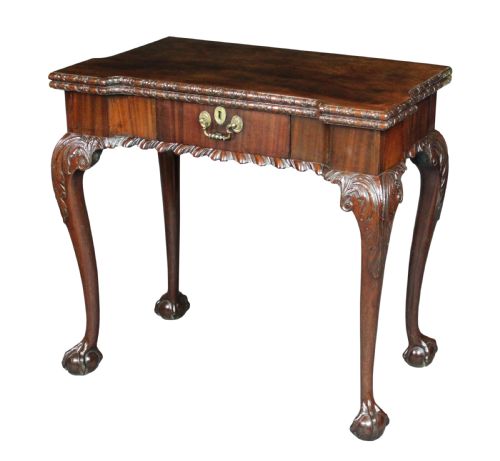


Antique Fold Over Desk
These antique fold over desk and table designs offer ingenious convertible surfaces, combining compact elegance with practical domestic function.
Antique Fold Over Desk
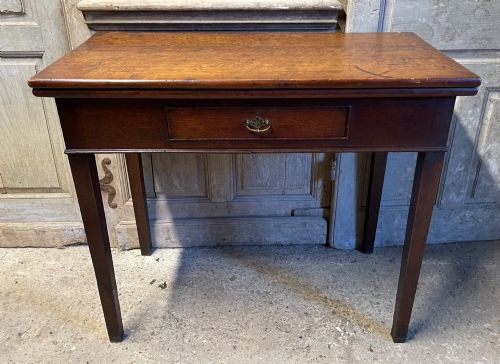
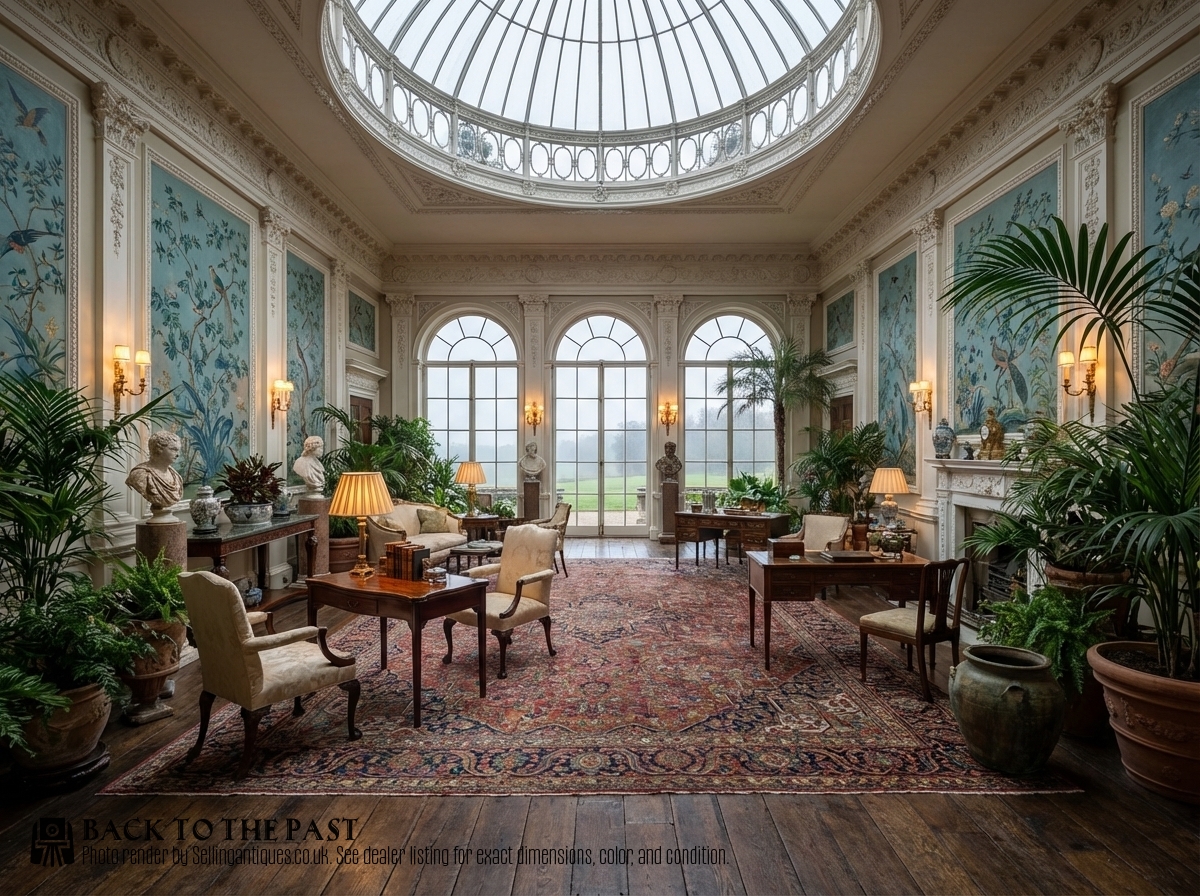
When you search for an antique fold over desk, you encounter versatile convertible furniture spanning the Georgian, Regency, and Victorian periods. Most examples on this page function primarily as tea, card, or games tables, opening from a compact console to a double-sized playing or writing surface.
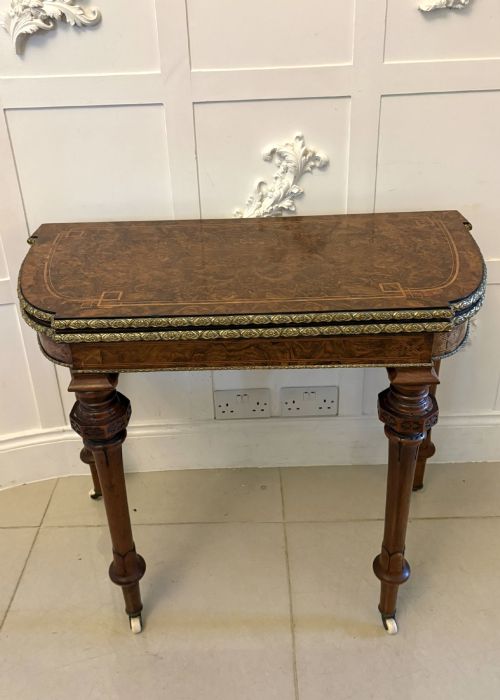
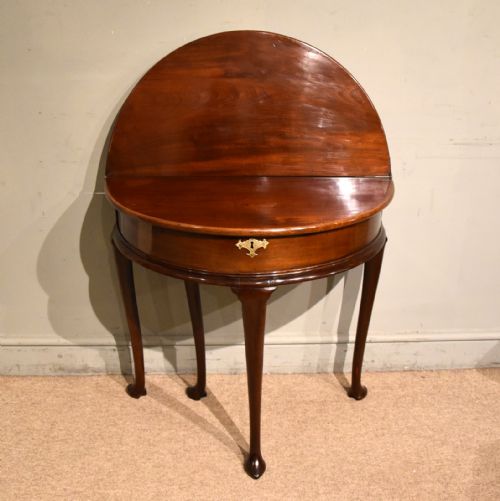
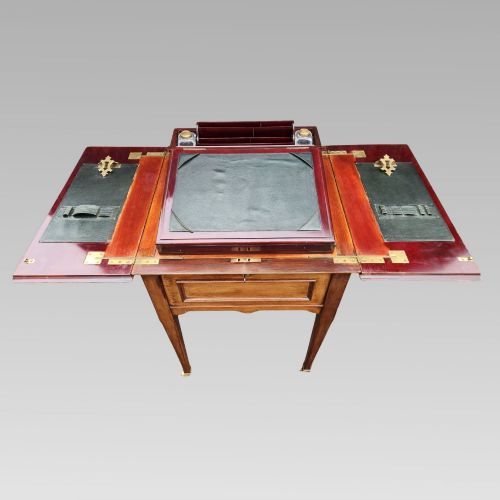
The selection ranges from early Georgian mahogany tea tables to elaborate Victorian walnut and marquetry pieces, alongside Edwardian writing tables with specialised lift action mechanisms. These pieces served multiple social roles in period drawing rooms, adapting swiftly from intimate side tables to gaming or correspondence centres.
Materials and construction methods
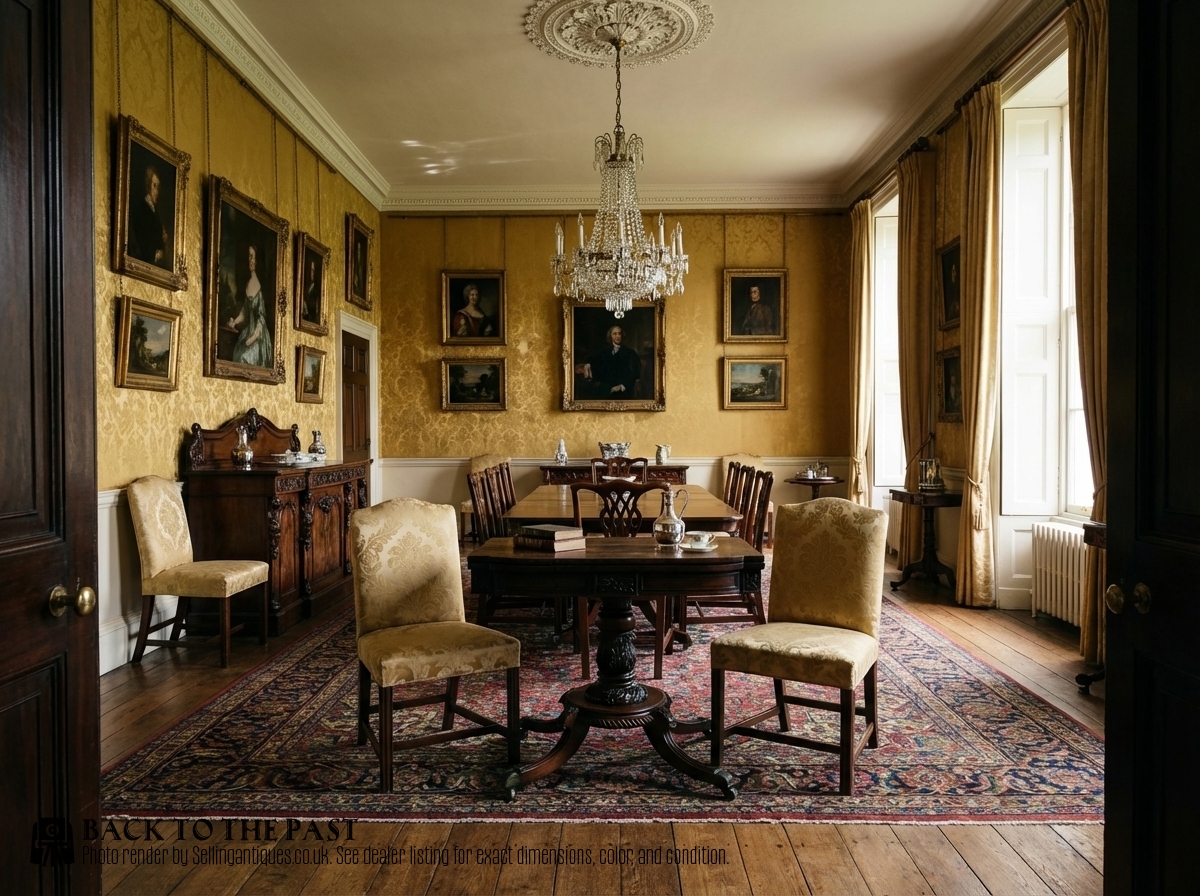
Cabinetmakers utilised dense timbers such as mahogany, walnut, and rosewood, frequently incorporating exotic veneers like satinwood, burr walnut, and kingwood. These surfaces often display intricate marquetry inlay, delicate boxwood stringing, and contrasting brass or ormolu mounts.
Structural ingenuity defines these pieces, employing concertina actions, swivel tops, and fold over hinges to support the heavy timber leaves securely when opened. Joinery relied on traditional techniques to ensure stability across both folded and extended configurations.
Antique Fold Over Desk Retail Price Guide 2026
Typical asking prices for fold over desk among the pieces listed under this phrase on Sellingantiques today, from the lower quarter to the upper quarter. They describe what is for sale here now, not the wider market.
Listings feature mahogany, walnut, and rosewood predominantly, spanning Georgian, Regency, and Victorian periods with card, tea, and writing table forms.
Distinctions in craftsmanship and design
Quality rests in the crispness of the timber carving, the precision of the marquetry and brass inlay, and the fluidity of the folding mechanism. Superior examples display carefully matched grain patterns across the fold over leaves and employ heavier, higher-grade hardwoods throughout.
Proportion and restrained decorative detail separate finer Georgian and Regency works from later revival pieces. The integration of secondary woods and the refinement of the internal action further distinguish workshop standards.
Chippendale
The Antique Fold Over Desk Glossary
- Concertina action
- A table frame design where the rear legs extend outward on a folding wooden frame to support the opened top evenly. This mechanism requires precise joinery to operate smoothly.
- Marquetry
- The art of applying pieces of veneer to a structure to form decorative patterns and pictures. Craftsmen used various tinted woods to achieve elaborate floral or geometric motifs.
- Ormolu
- Gilded bronze mounts applied as decorative ornaments to furniture. This technique added metallic contrast to dark woods during the nineteenth century.
- Turnover top
- A table leaf hinged to double the surface area when unfolded and rotated into place. It provides a dual purpose without occupying excessive floor space when closed.
- Stringing
- Thin inlaid lines of contrasting timber used to outline borders and panels. This subtle banding highlights the geometric shapes of the cabinet work.
Antique Fold Over Desk: Frequently Asked Questions
How were these tables used?
Historically, these pieces served multiple functions in the home, moving between tea service, card playing, and letter writing. The baize-lined interiors offered a soft surface for card games.
When closed against a wall, they functioned as decorative console or lamp tables. Their adaptability made them essential furniture for period drawing rooms.
How do I date these pieces?
Dating relies on identifying timber choices, stylistic details, and mechanical construction methods. Georgian examples often showcase solid mahogany and restrained lines, while Victorian pieces lean toward burr walnut and marquetry.
Hardware types and inlay styles further assist in narrowing the decade of production. Examining the secondary woods inside the frame confirms the period.
Are these tables sturdy when opened?
Well-constructed examples remain stable through sturdy leg placement and reliable hinge mechanisms. Concertina frames and swing-out rear legs distribute the weight evenly across the extended leaf.
Properly maintained joints ensure the double-top surface sits flat and secure during daily use. Quality original construction prevents sagging over time.